Becoming Leader of a Nation

On 1 October 1949, China became the People’s Republic of China under communist rule. Shortly afterward, it began invading neighboring regions, including Tibet. On 7 October 1950, more than 40,000 Chinese troops launched an attack on Chamdo, the capital of Tibet’s eastern province of Kham. Tibet’s small military force was quickly overwhelmed. Within 11 days, thousands of Tibetan soldiers were killed. On 25 October, China announced its intent to advance toward Lhasa, Tibet’s capital.

Amid this national emergency, His Holiness the 14th Dalai Lama was urged to assume full political responsibility for Tibet. On 17 November 1950, at just 15 years old, he was formally enthroned as the spiritual and temporal leader of Tibet.

Due to escalating threats, concerns for His Holiness’s safety led the Tibetan Cabinet to temporarily relocate the seat of government to Dromo (Yatung), near Tibet’s southern border. Before departing, His Holiness appointed two prime ministers to oversee governance in Lhasa during his absence.

In an effort to prevent a full-scale invasion, His Holiness dispatched a delegation to Beijing to open negotiations with the Chinese Communist leadership. However, on 23 May 1951, the Tibetan delegation—under duress and without the authorization of the Tibetan government—was coerced into signing the so-called Seventeen-Point Agreement, formally marking the imposition of Chinese rule over Tibet and the loss of its independence.

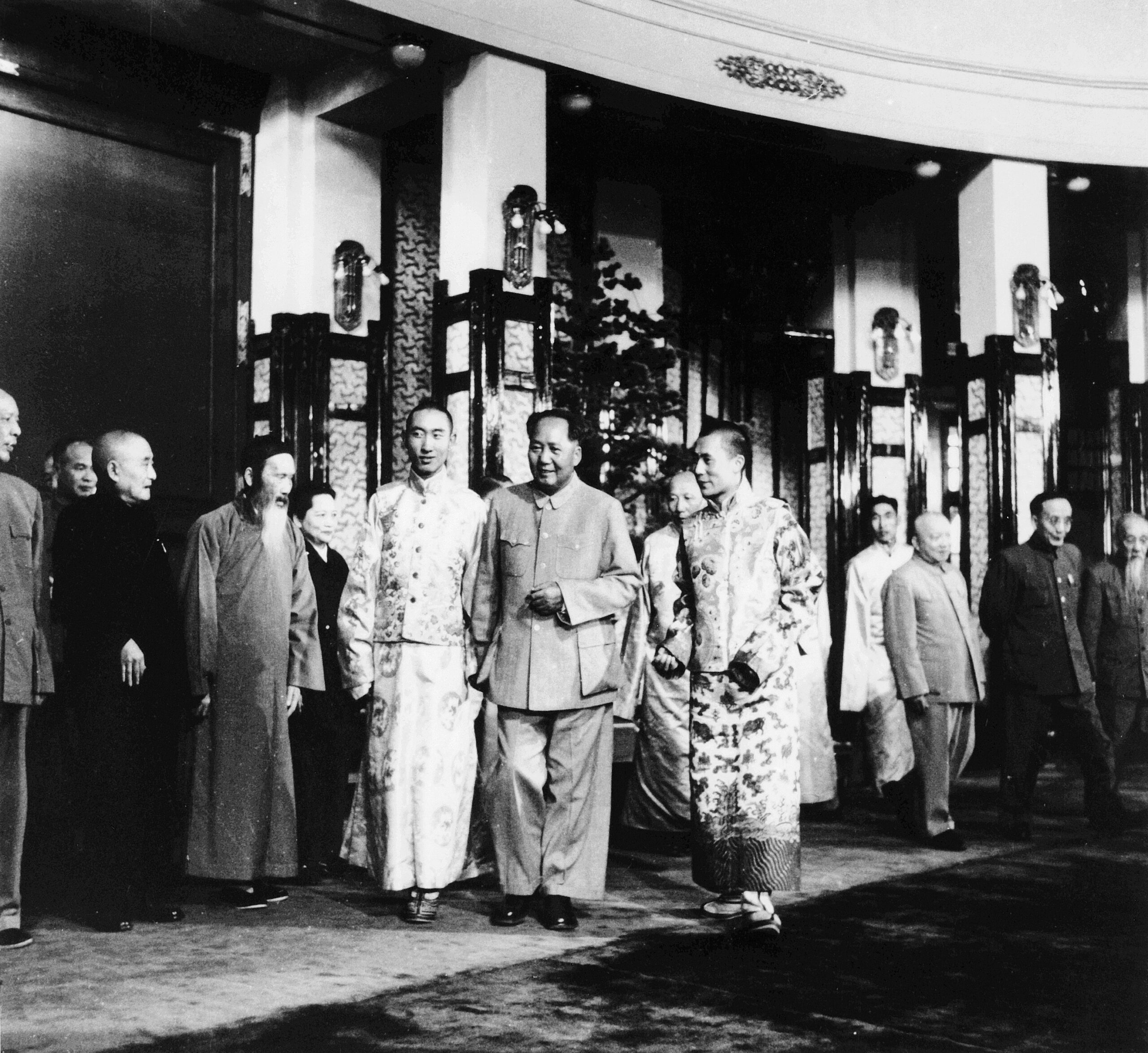
In 1954, committed to finding a peaceful resolution, His Holiness traveled to Beijing with members of his Cabinet and over 100 Tibetan officials. There, he met with Chairman Mao Zedong and other top leaders, including Zhou Enlai and Deng Xiaoping. Despite these high-level discussions, hopes for coexistence were soon shattered as Chinese repression in Tibet deepened.

In 1956, His Holiness made his second international visit—to India—to attend the 2500th Birth Anniversary of the Lord Buddha. During this visit, he traveled to major Buddhist pilgrimage sites and met Indian Prime Minister Pandit Jawaharlal Nehru and other senior leaders, forging a relationship that would prove pivotal in the years ahead.

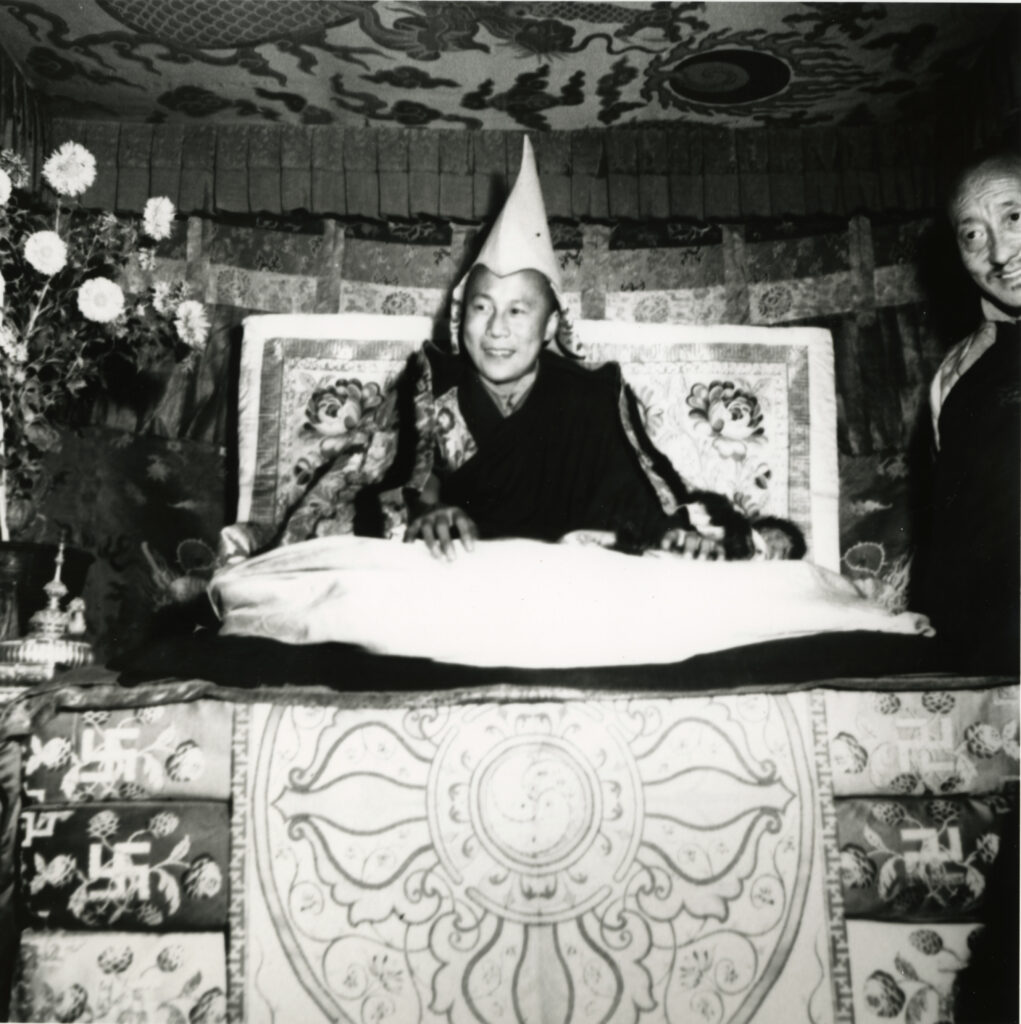
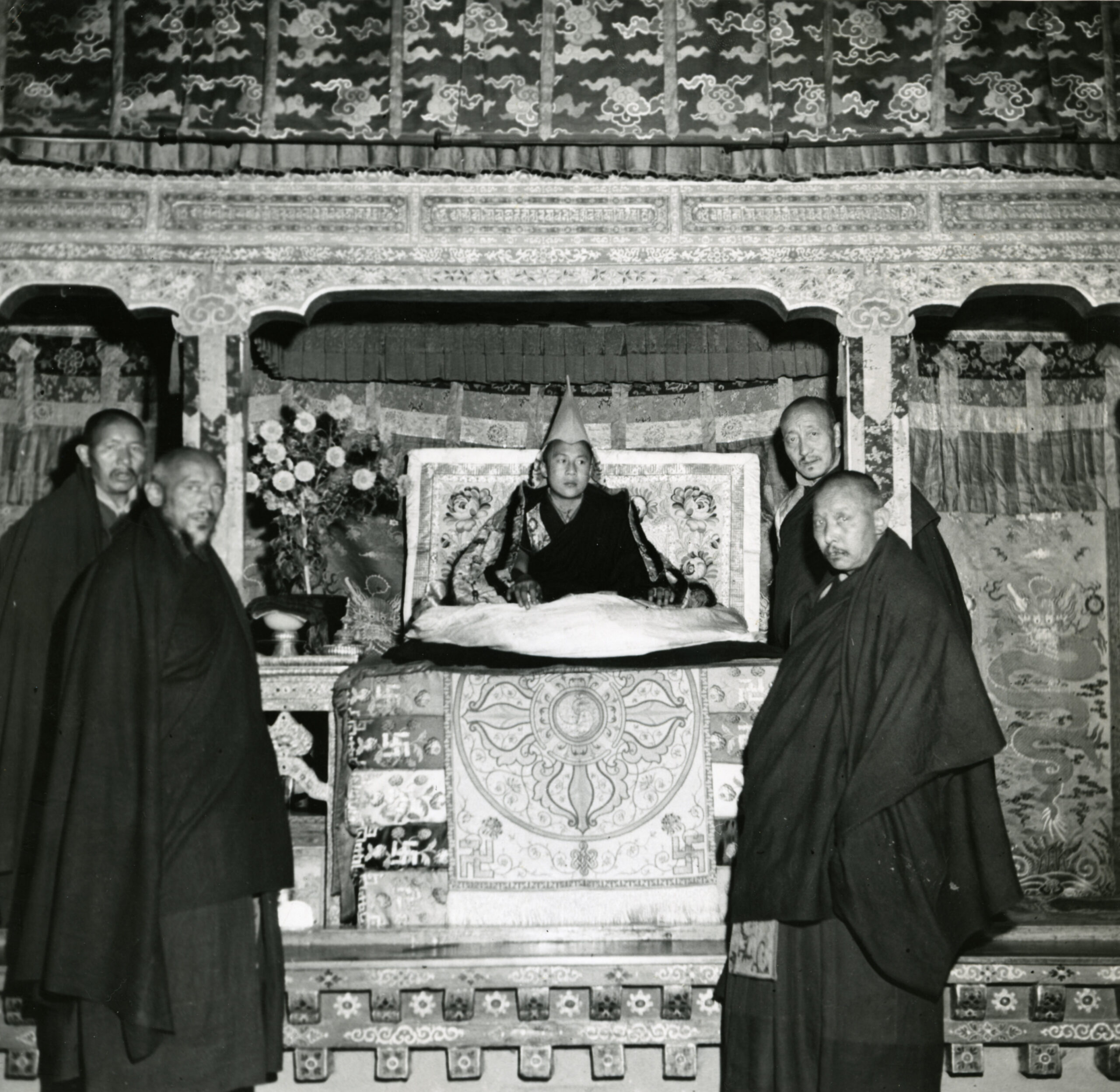
On November 17, 1950, at just 15 years old, His Holiness the Dalai Lama was formally enthroned as the spiritual and temporal leader of Tibet. This formal portrait shows the Dalai Lama with his attendant, including Lord Chamberlain Phala (standing behind the pillar). Copyright: Lowell Thomas Collection, Marist College
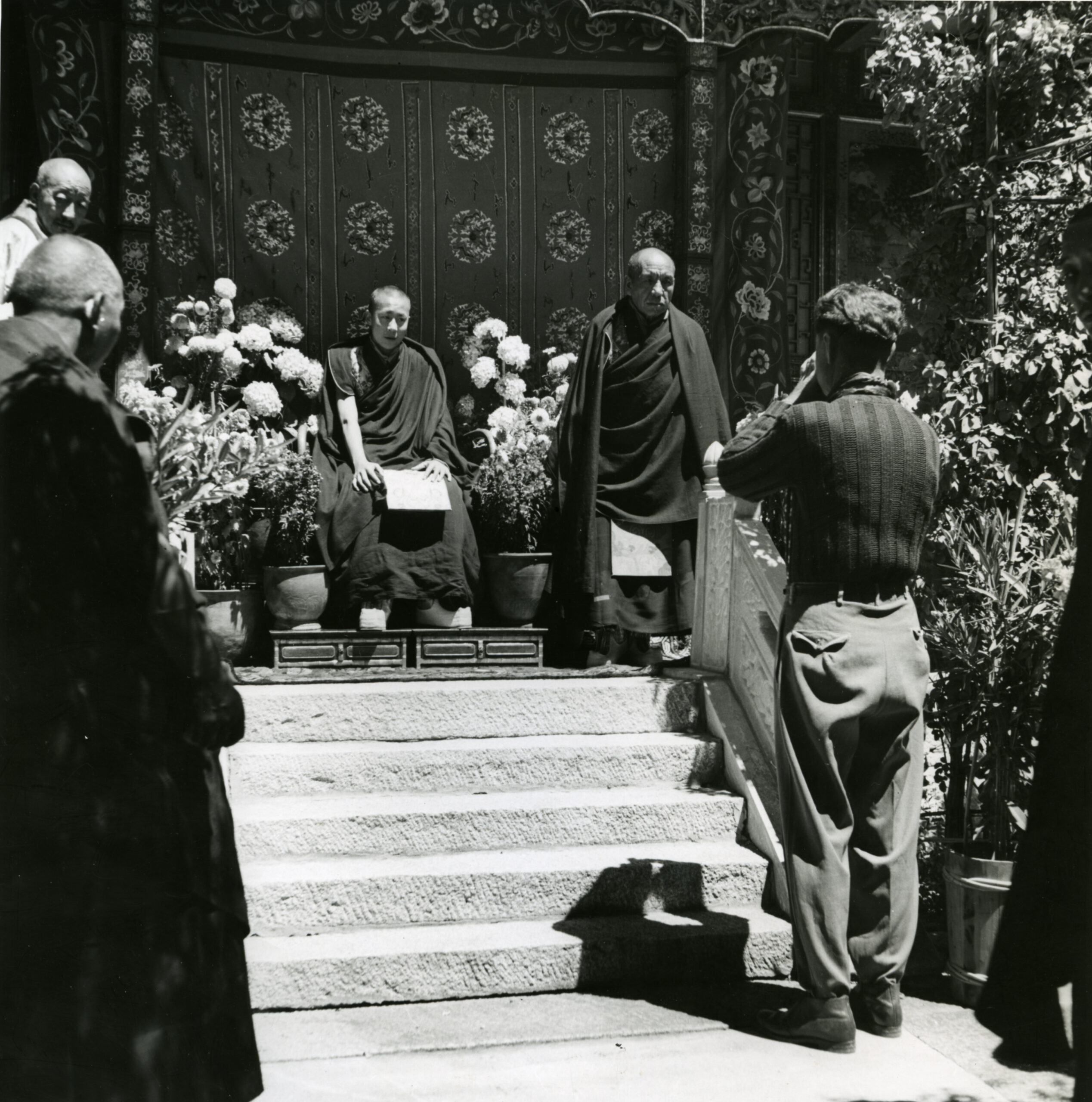
At his summer residence Norbulingka Palace, His Holiness the Dalai Lama poses for famed American writer and traveller Lowell Thomas (facing back). The 1949 journey of Lowell Thomas Sr. and Jr. to Tibet resulted in scores of photographs, articles, radio programs and books that introduced Tibet to millions of Americans. They were among the last Westerners to visit Lhasa before it was annexed by China. Copyright: Lowell Thomas Collection, Marist College
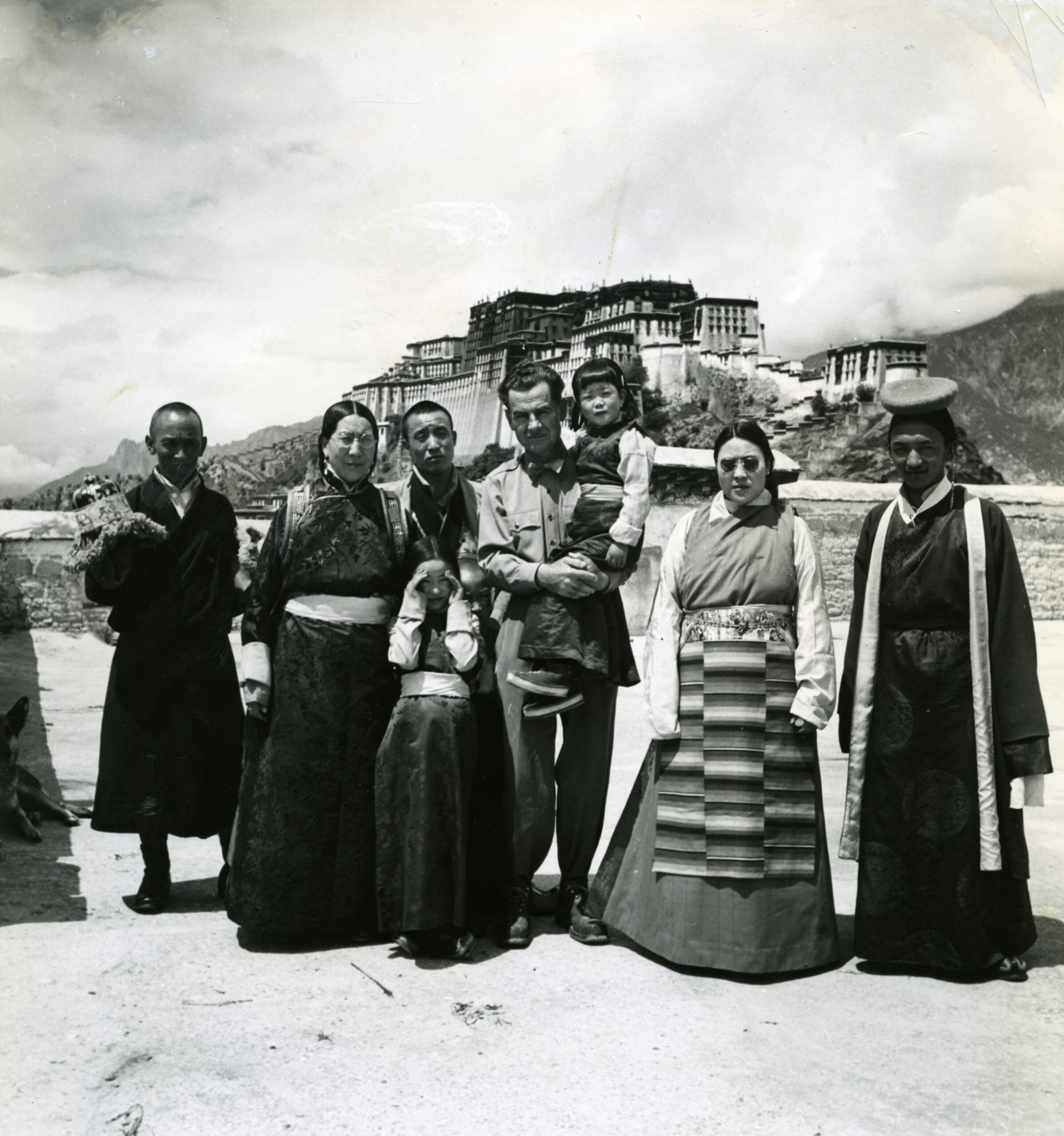
Lowell Thomas Sr. photographed with His Holiness the Dalai Lama’s mother, sister, brothers, nieces and nephew in front of the Potala Palace, Lhasa, 1949. Copyright: Lowell Thomas Collection, Marist College
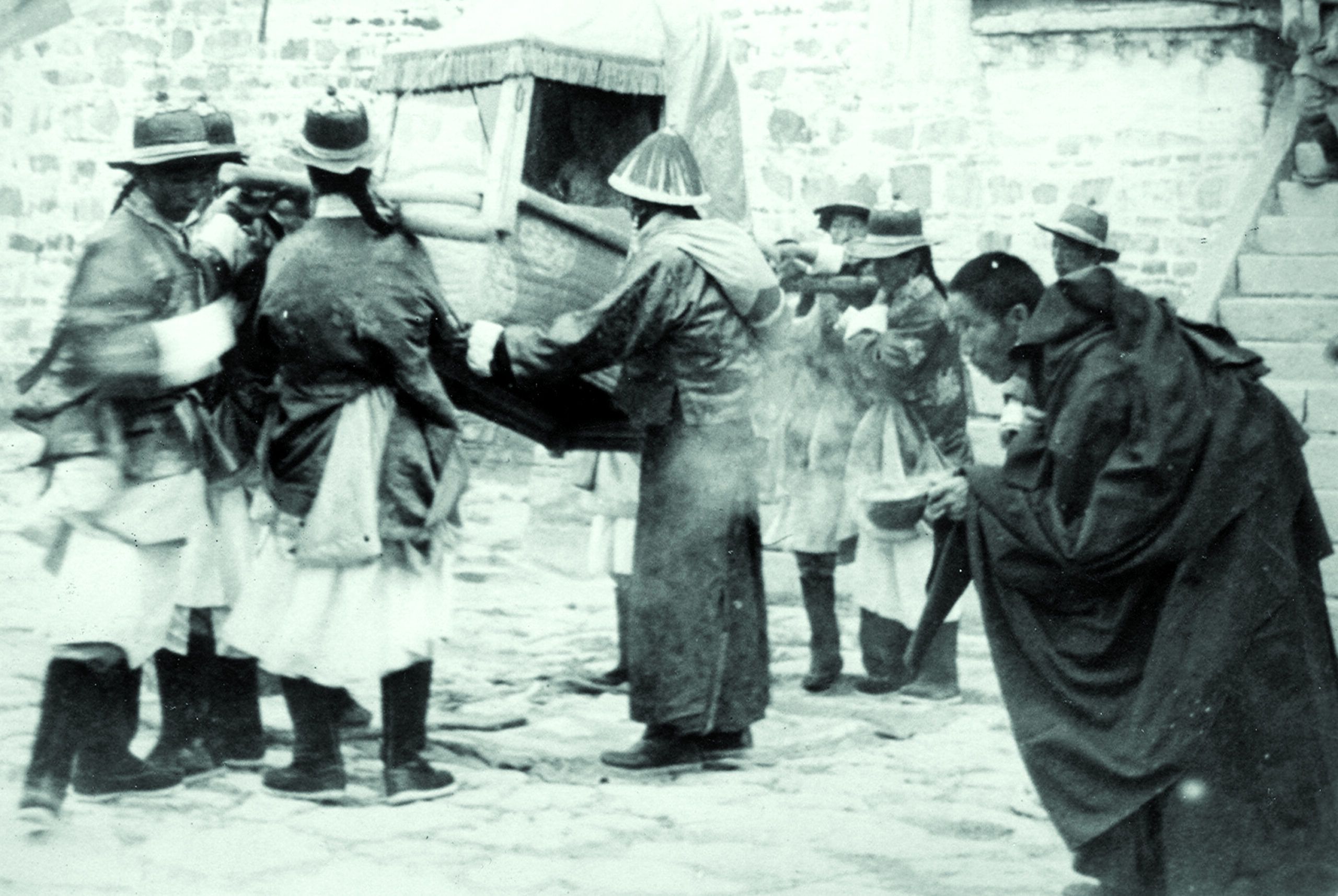
His Holiness the Dalai Lama arriving in a sedan chair at Dromo (Yatung) near Tibet’s southern border, where the Tibetan government was temporarily relocated due growing threats following China’s invasion of Tibet that began from the North East.
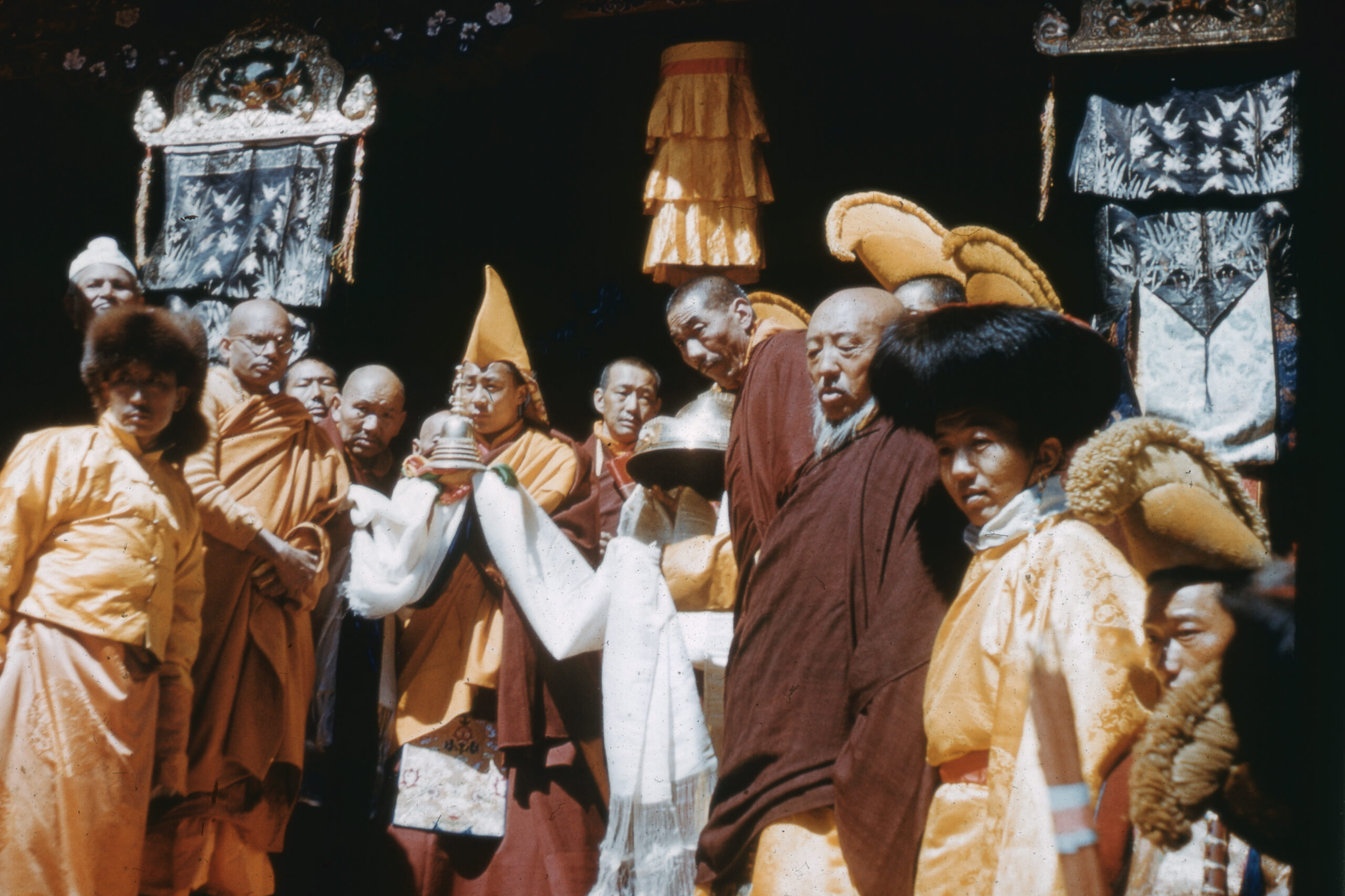
His Holiness the Dalai Lama holding a golden urn containing sacred relics of the Buddha, brought by the Mahabodhi Society of Sri Lanka for his blessings. Photo taken at Dungkar Monastery, Dromo (Yatung), 1951. Photographer: Heinrich Harrer. Copyright: Pitt Rivers Museum, University of Oxford
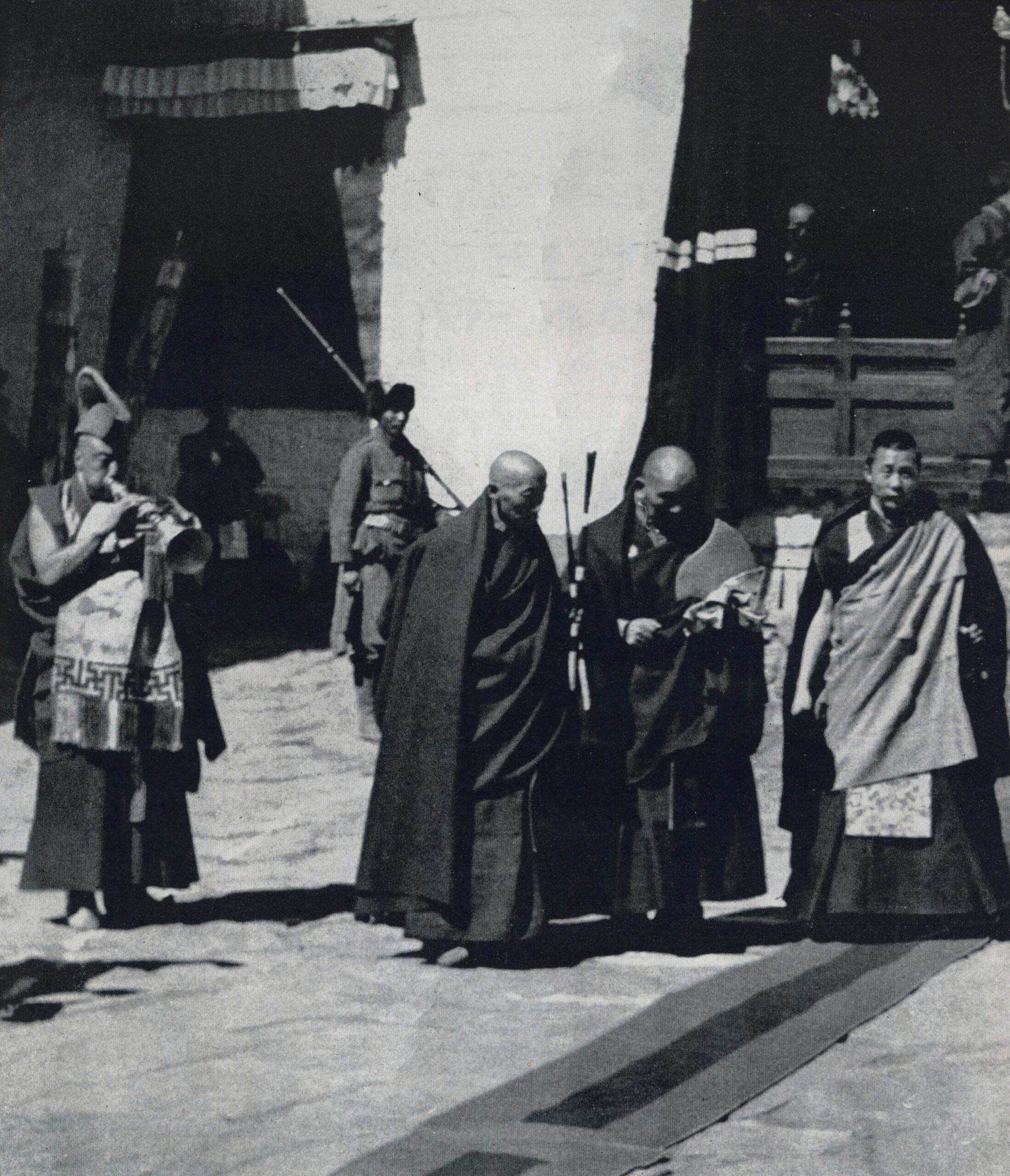
His Holiness the Dalai Lama standing with two of the three Khenpo (abbots), at Dungkar Monastery in Dromo (Yatung) during the arrival of sacred Buddha relics, 1951.
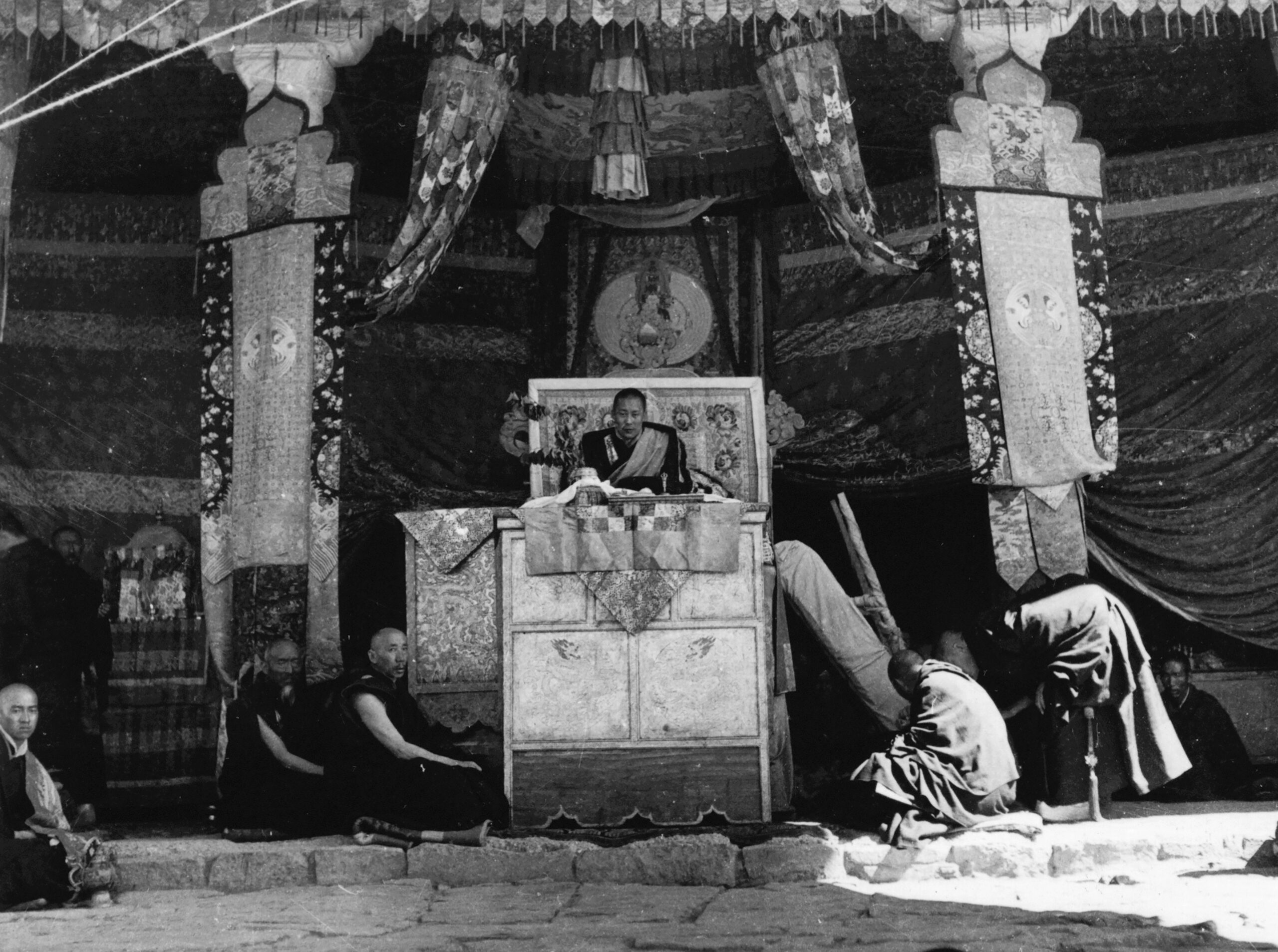
In May 1954, His Holiness the Dalai Lama bestowed the first Kalachakra Initiation at Norbulingka, Lhasa, Tibet. Photo courtesy: The Tibet Museum
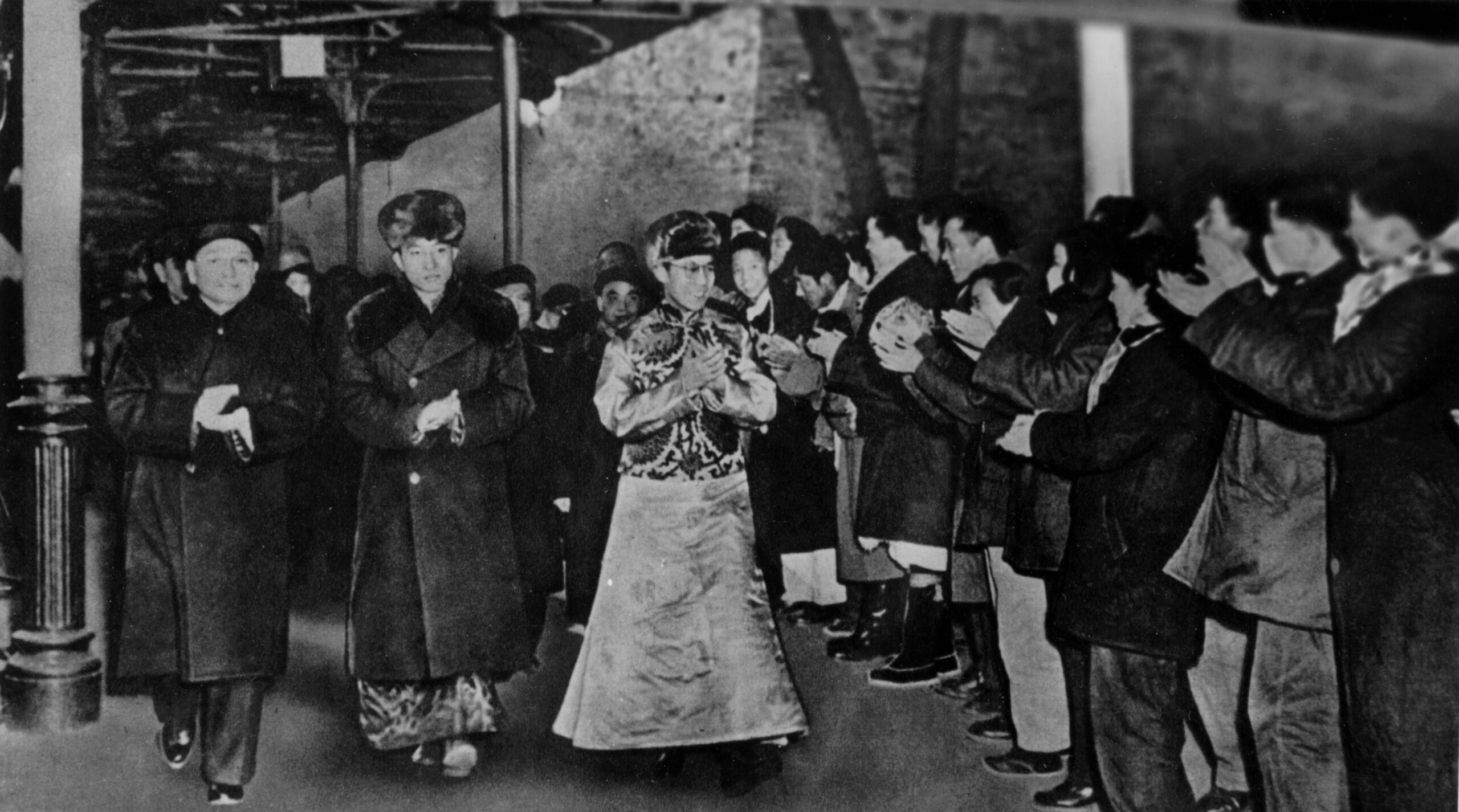
His Holiness the Dalai Lama and the 10th Panchen Lama were received by Chinese Vice Premier Deng Xiaoping during their visit to China, Peking, March 12, 1955. Photo courtesy: Library of Tibetan Works and Archives
His Holiness the Dalai Lama and the Panchen Lama in Peking with China’s paramount leader Chairman Mao Zedong (center) during one of their many meetings in 1954. Photo courtesy: Office of His Holiness the Dalai Lama
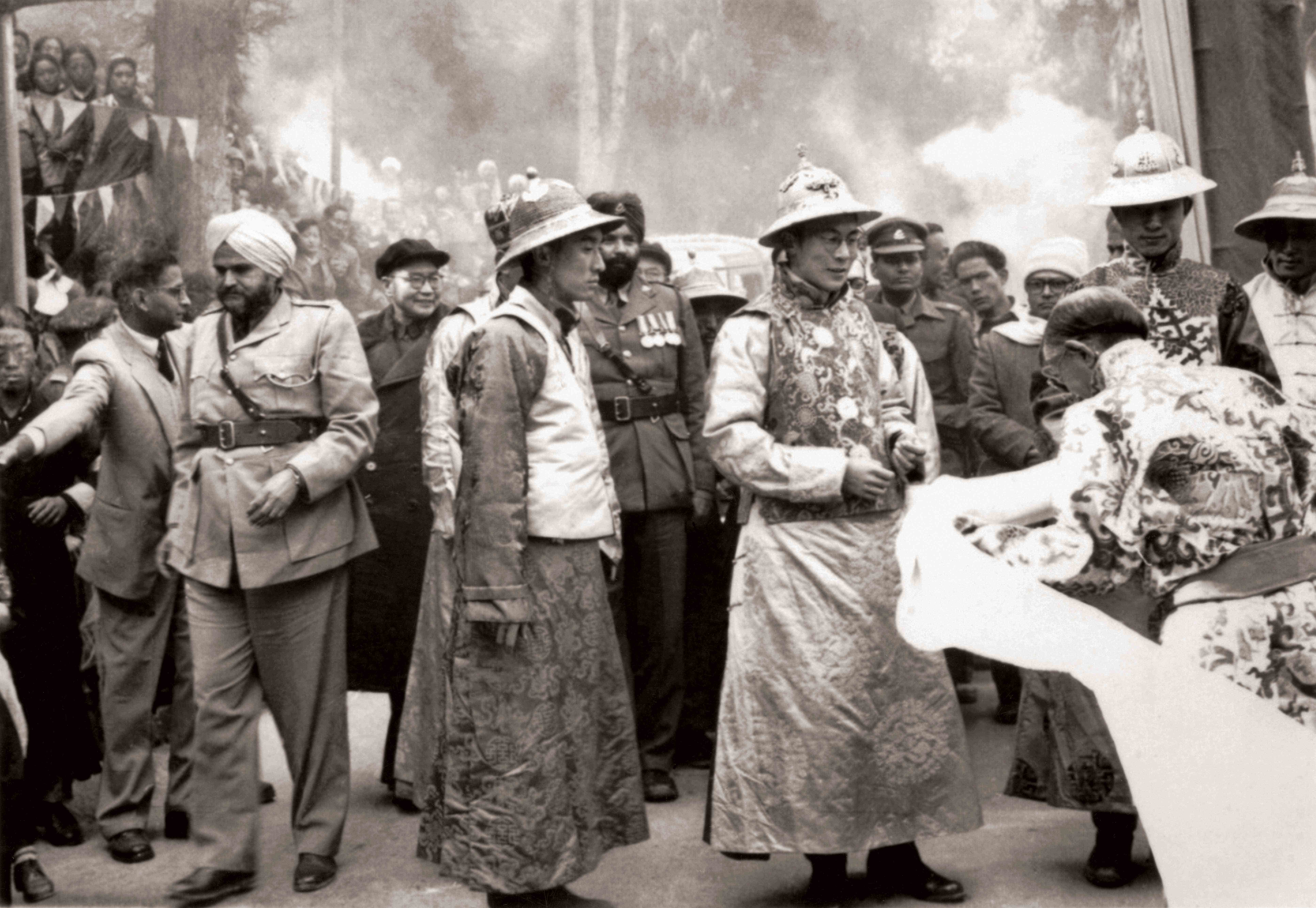
His Holiness the Dalai Lama being welcomed by Maharaja Tashi Namgyal of Sikkim in 1956. The Dalai Lama is seen in traditional attire with a choksha hat, accompanied by his brother Lobsang (left) and Panchen Lama (right). Photo courtesy: Office of His Holiness the Dalai Lama
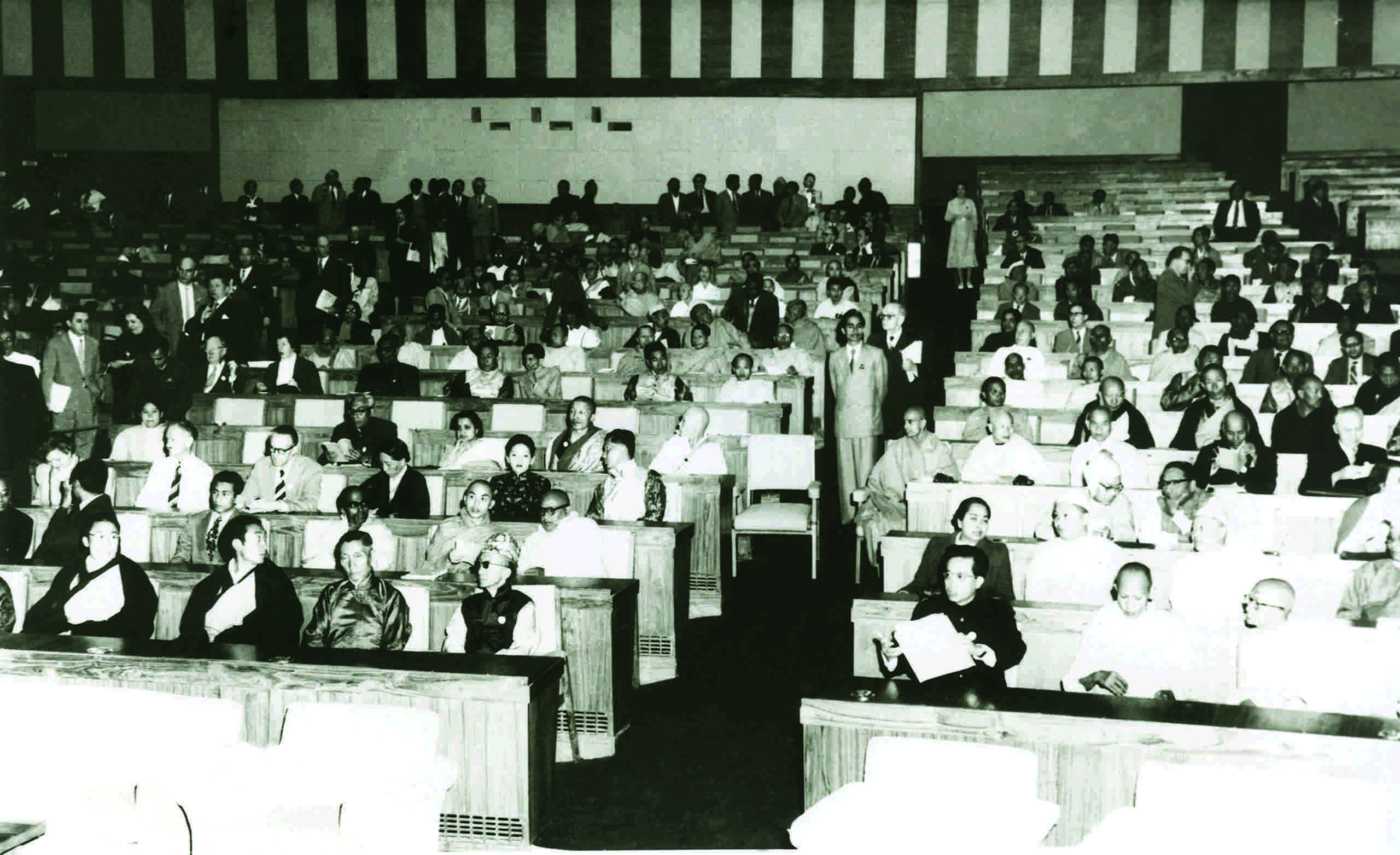
His Holiness the Dalai Lama and the Panchen Lama at the 2500th Birth Anniversary commemoration of the Lord Buddha in Delhi, India, 1956. Photo courtesy: The Tibet Museum
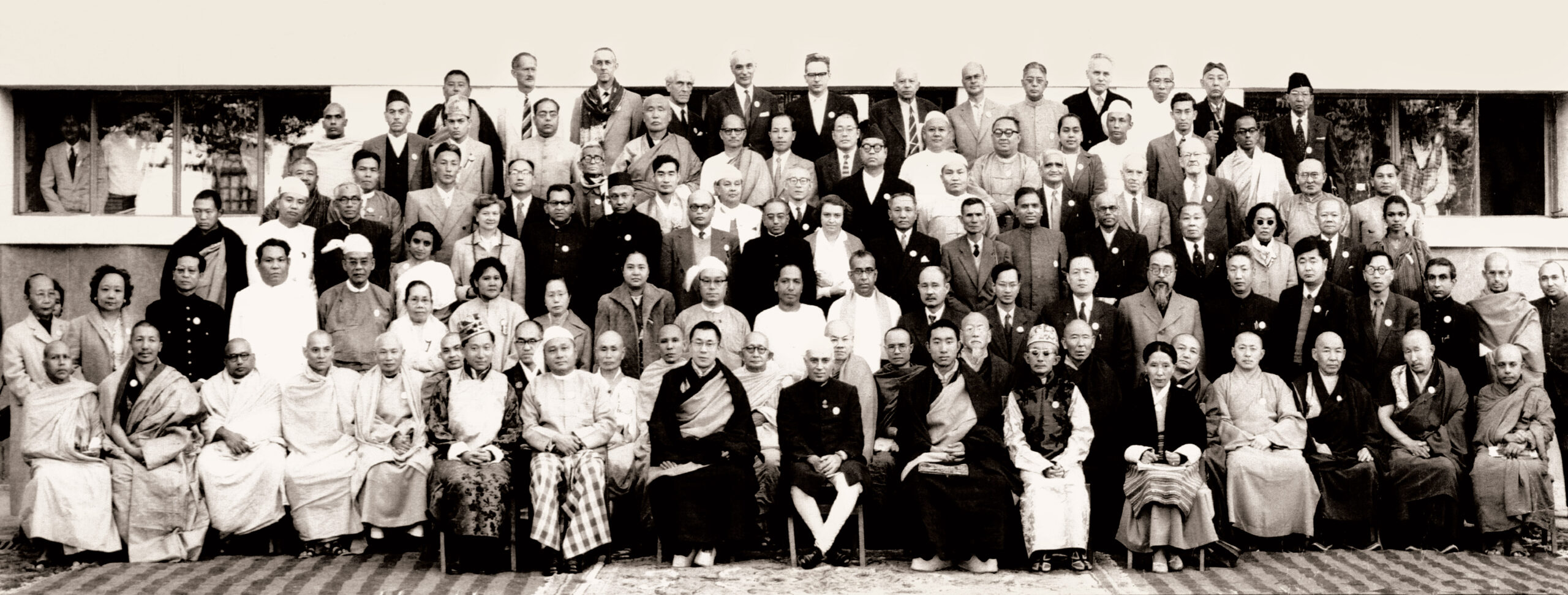
A group photo of Buddhist delegates with Indian Prime Minister Pandit Jawaharlal Nehru, the Maharaja of Sikkim and Burma’s Prime Minister, during the 2500th Birth Anniversary commemoration of the Lord Buddha, in Delhi, 1956. Photo courtesy: Library of Tibetan Works and Archives
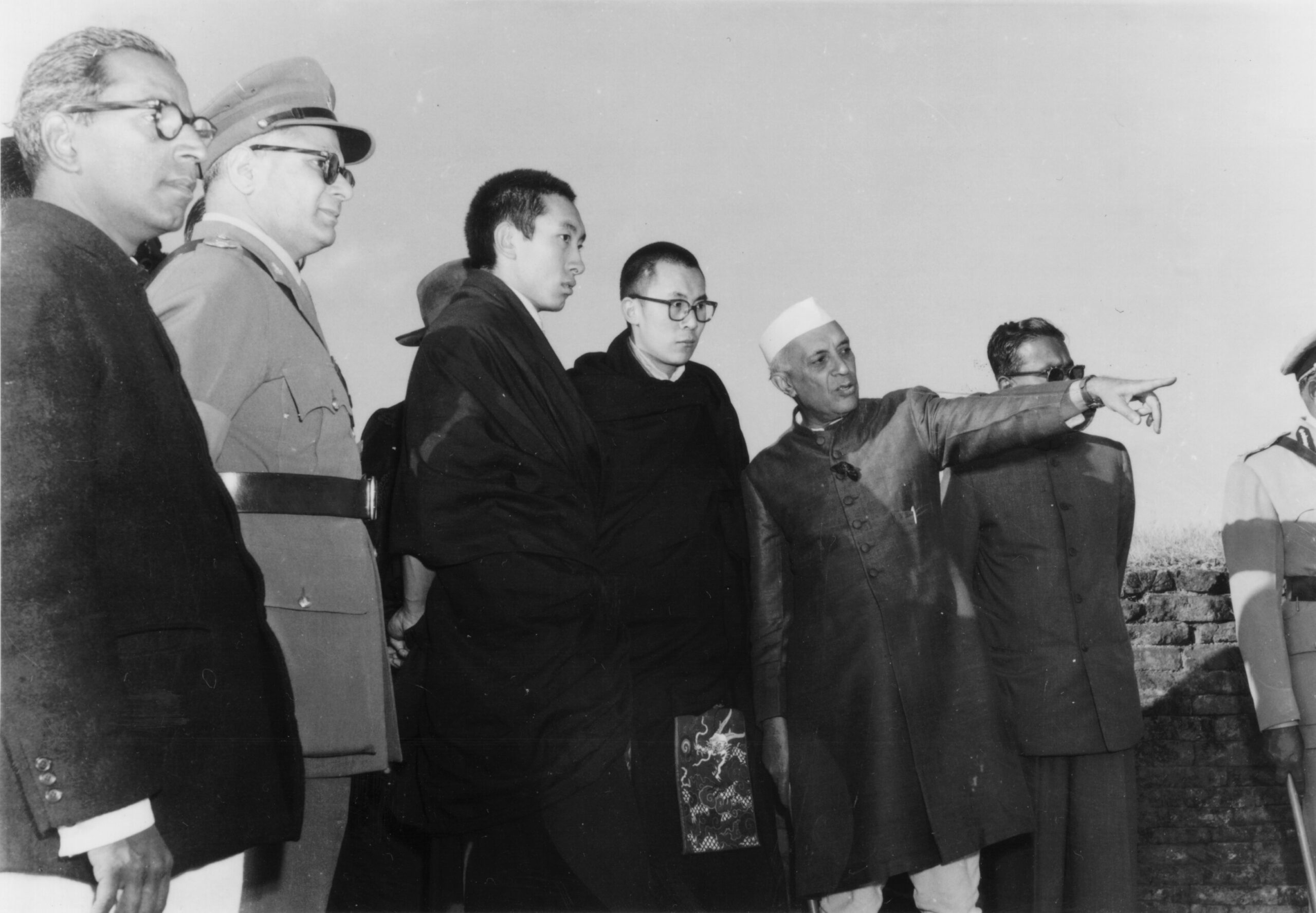
Indian Prime Minister Pandit Jawaharlal Nehru points out a landmark to His Holiness the Dalai Lama and the Panchen Lama during their travel to India in 1955-1956, to observe the 2500th birth anniversary of the Buddha. Photo courtesy: Library of Tibetan Work and Archives
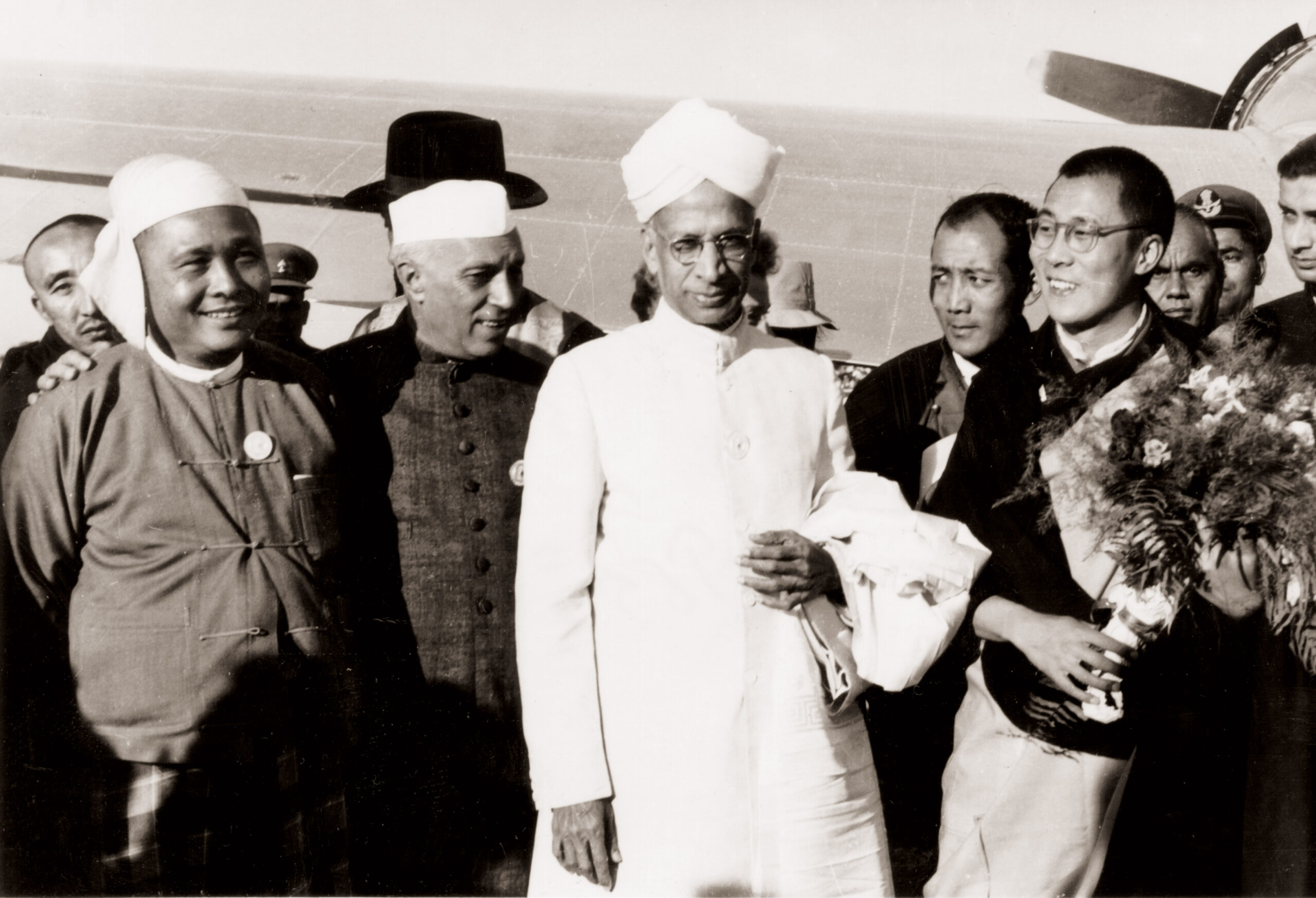
His Holiness the Dalai Lama with Indian Vice-President S. Radhakrishnan and Prime Ministers Jawaharlal Nehru, Delhi, India, 1956. Photo courtesy: The Tibet Museum
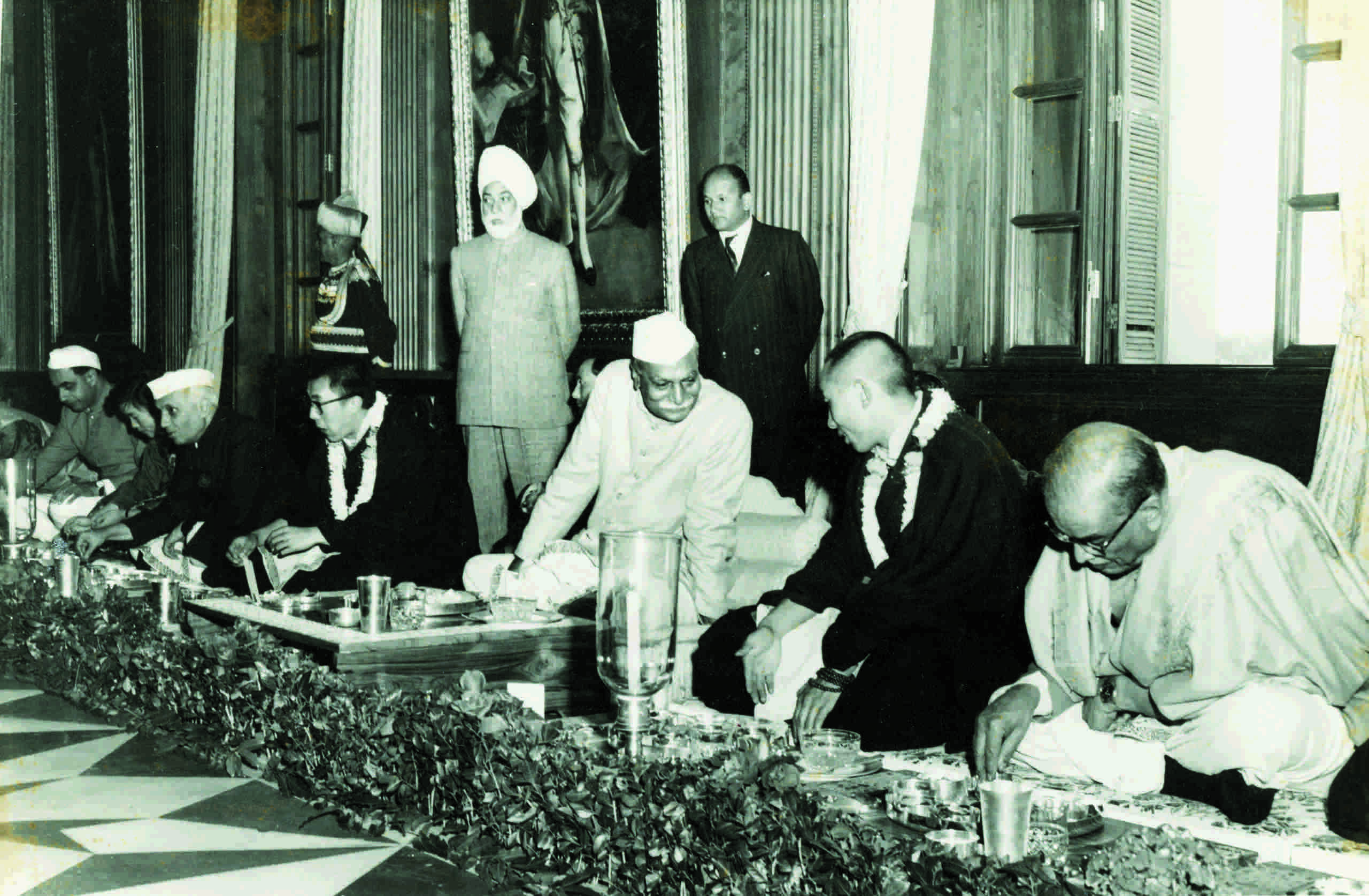
His Holiness the Dalai Lama and the Panchen Lama with Indian Prime Minister Nehru (left) and President Dr. Rajendra Prasad (right) during a state banquet at the Presidential Estate, Rashtrapati Bhavan, Delhi, 1956. Photo courtesy: The Tibet Museum
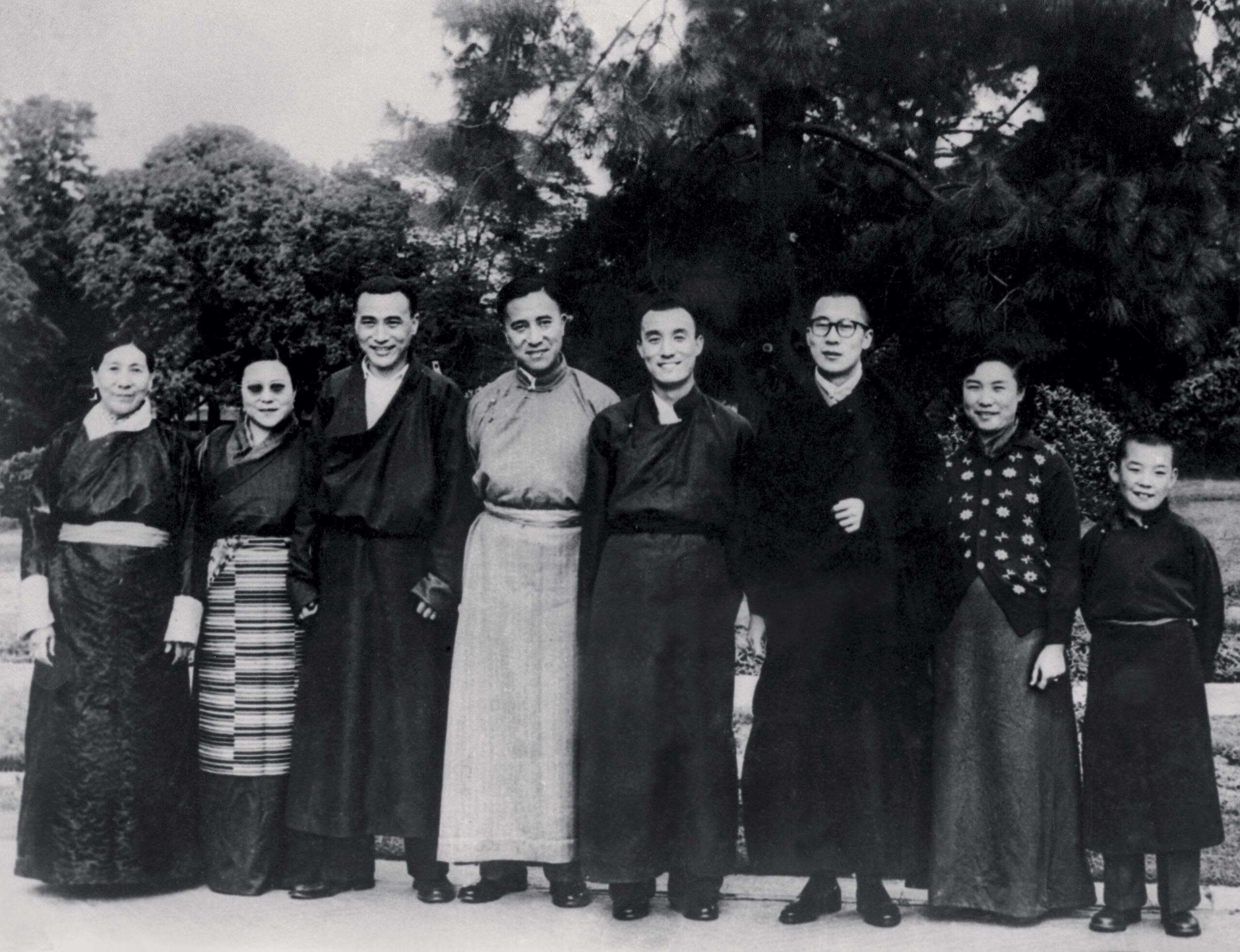
A rare portrait of His Holiness the Dalai Lama with his family at Hyderabad House, Delhi,1956. From left to right: his great mother Dekyi Tsering; elder sister Tsering Dolma; elder brother Thubten Jigme Norbu (Taktser Rinpoche), Gyalo Thondup and Lobsang Samten; His Holiness the Dalai Lama; younger sister Jetsun Pema; and younger brother Tenzin Choegyal (Ngari Rinpoche).