Early Life and Recognition

His Holiness the 14th Dalai Lama, born Lhamo Thondup, was born on 6 July 1935 in the remote village of Taktser in Amdo, northeastern Tibet. He was the fifth of seven surviving children born to a farming family—Choekyong Tsering and Deki Tsering.

Following the death of the 13th Dalai Lama in 1933, Reting Rinpoche, at the age of 24, was appointed Regent of Tibet. One of his primary responsibilities was to identify the reincarnation of the Dalai Lama. In keeping with tradition, Regent Reting and Kalon Trimon journeyed to the sacred lake of Lhamo Lhatso in April 1935. Located near Chokhorgyal Monastery, around ninety miles southeast of Lhasa, the lake is revered for offering prophetic visions. After days of prayer and meditation, the Regent reported seeing three Tibetan letters—Ah, Ka, and Ma—along with the image of a monastery with jade-green and golden roofs, and a house with turquoise tiles. The vision was interpreted as pointing to Amdo (Ah), Kumbum Monastery (Ka), and Karma Rolpai Dorjee Monastery (Ka and Ma), which had ties to the 13th Dalai Lama.

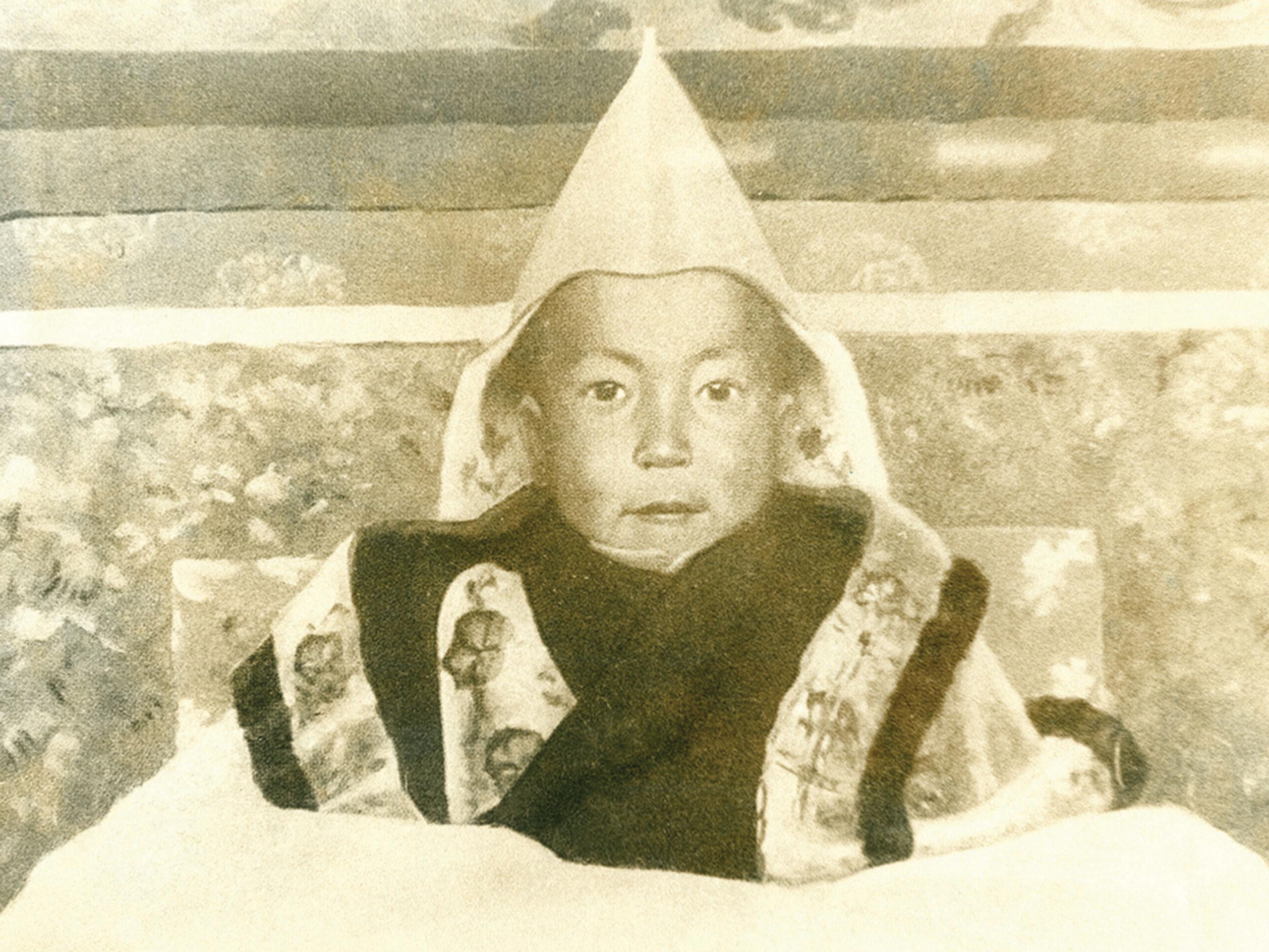
Subsequently, three search parties were dispatched across eastern Tibet. One, led by Kewtsang Rinpoche of Sera Monastery, performed traditional tests and rituals and identified the two-year-old Lhamo Thondup of Taktser as the unmistakable reincarnation. He was taken to Kumbum Monastery to await travel to Lhasa. However, the local Chinese warlord Ma Bufang delayed his departure, demanding a large ransom. After 18 months, and upon payment in July 1939, the young boy and his family embarked on a journey to Lhasa that lasted over three months.

Lhamo Thondup was formally enthroned at the Potala Palace on 22 February 1940, receiving the name Jetsun Jamphel Ngawang Lobsang Yeshe Tenzin Gyatso (Holy Lord, Gentle Glory, Eloquent, Compassionate, Learned Defender of the Faith, Ocean of Wisdom).

At age six, he began monastic studies under tutors including Regent Reting Rinpoche, Taktra Rinpoche, and Ling Rinpoche. He later received full monastic ordination from Ling Rinpoche. At 24, he earned the Geshe Lharampa degree—the highest honor in Tibetan Buddhist scholastic tradition.

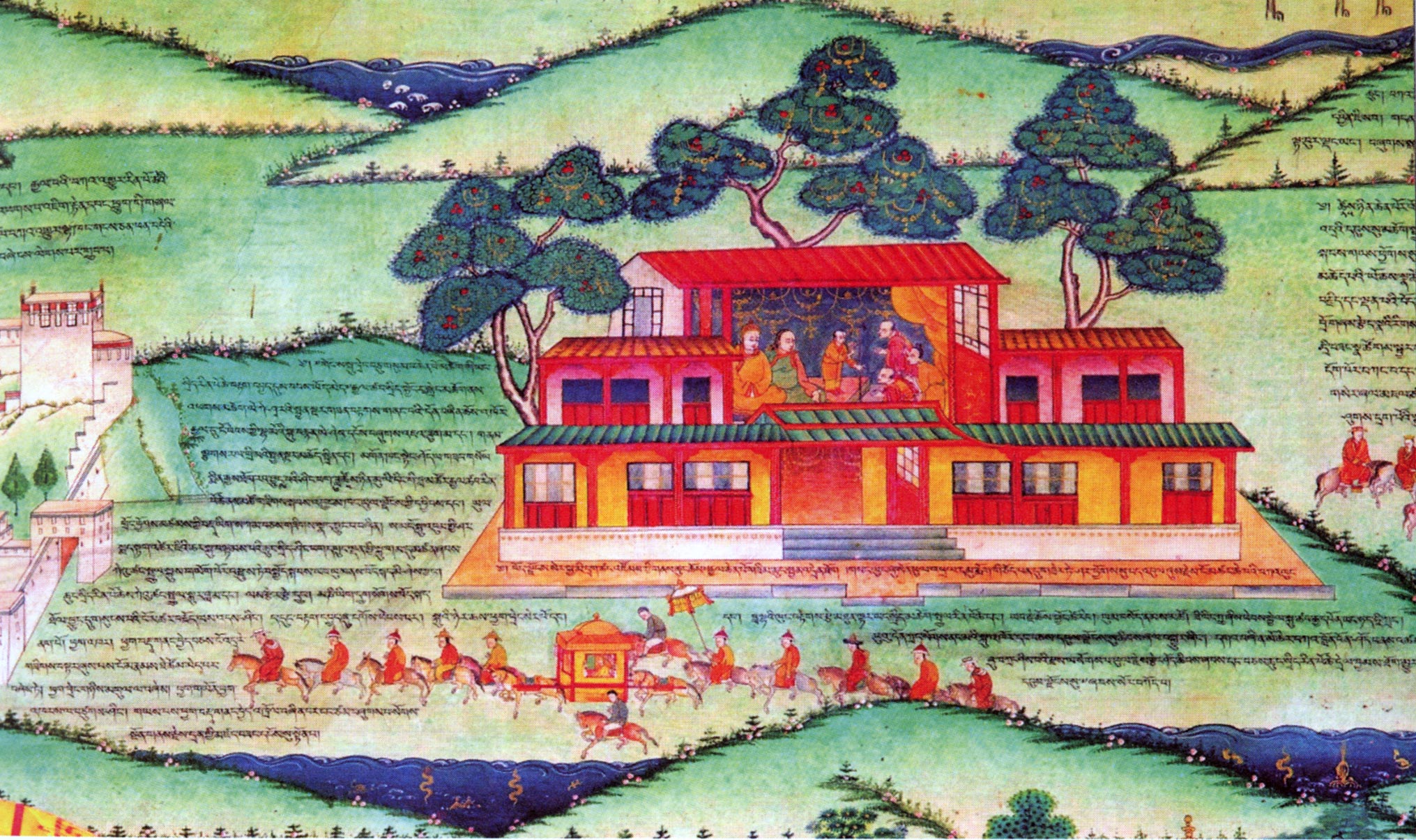
A mural inside the Norbulingka Palace depicts the young Lhamo Thondup—later recognized as the 14th Dalai Lama—identifying the personal belongings of the 13th Dalai Lama. Below, he is shown being carried to Lhasa in a golden palanquin, symbolizing the sacred journey of his recognition.
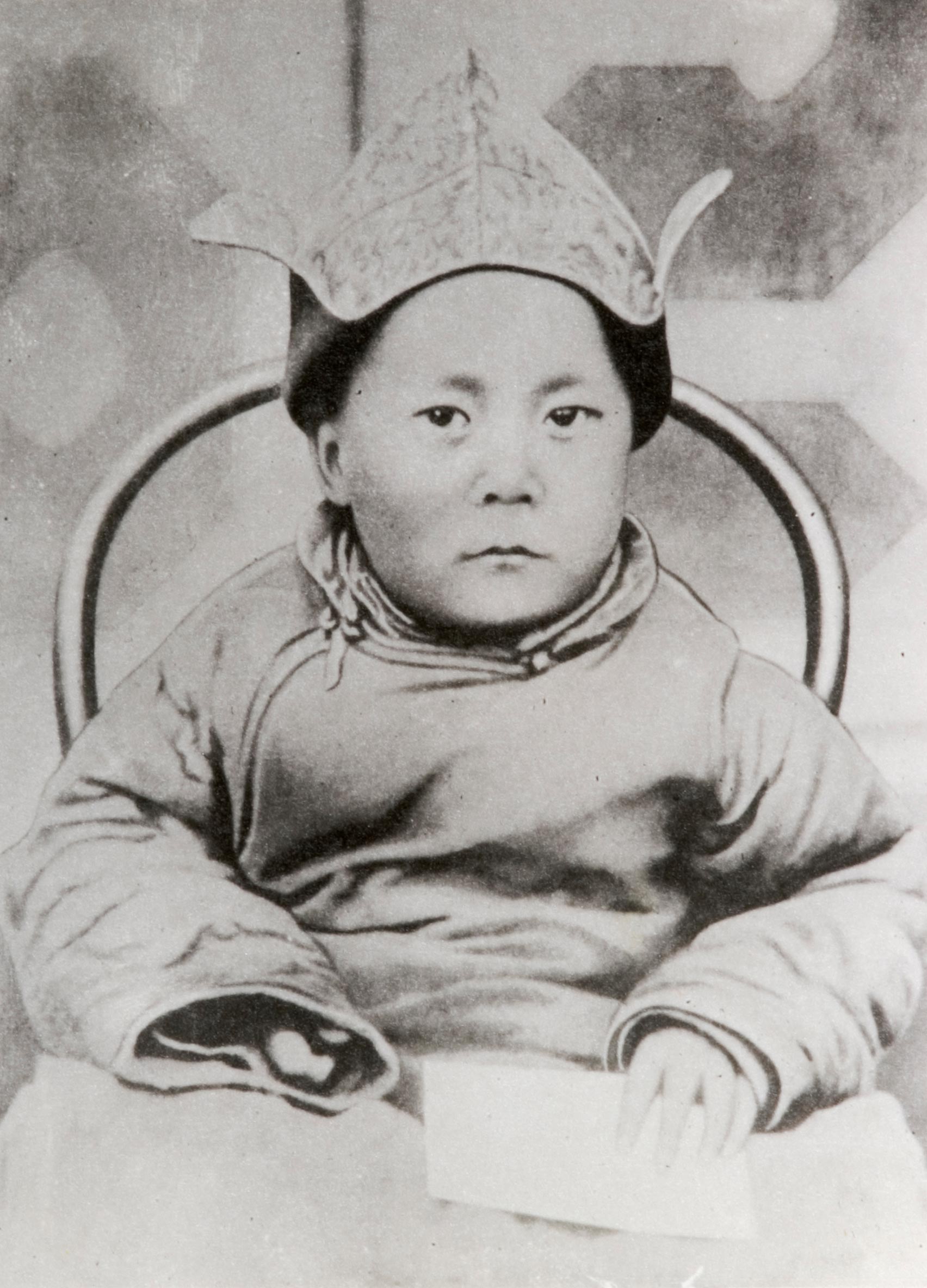
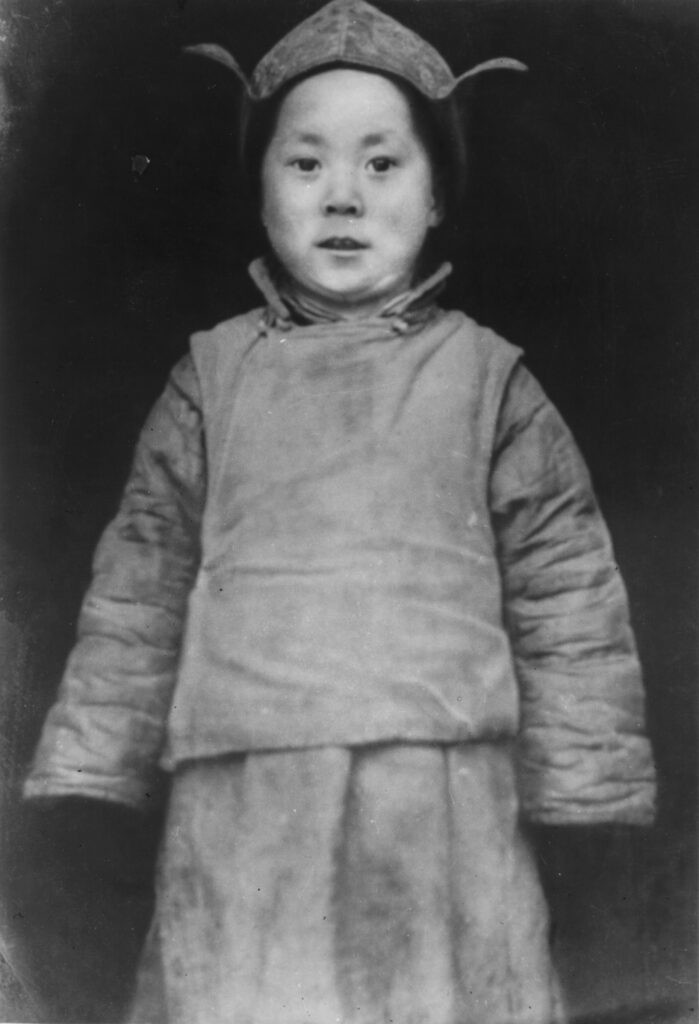
One of the earliest known photographs of the young Dalai Lama, taken in Amdo in 1939 by an unknown Chinese photographer, captures him at the age of four at the time of his identification. Seated on a bentwood chair, he wears a Tibetan robe and a distinctive hat with upturned ear flaps, holding a sheet of paper in his hand. Copyright: Pitt Rivers Museum, University of Oxford
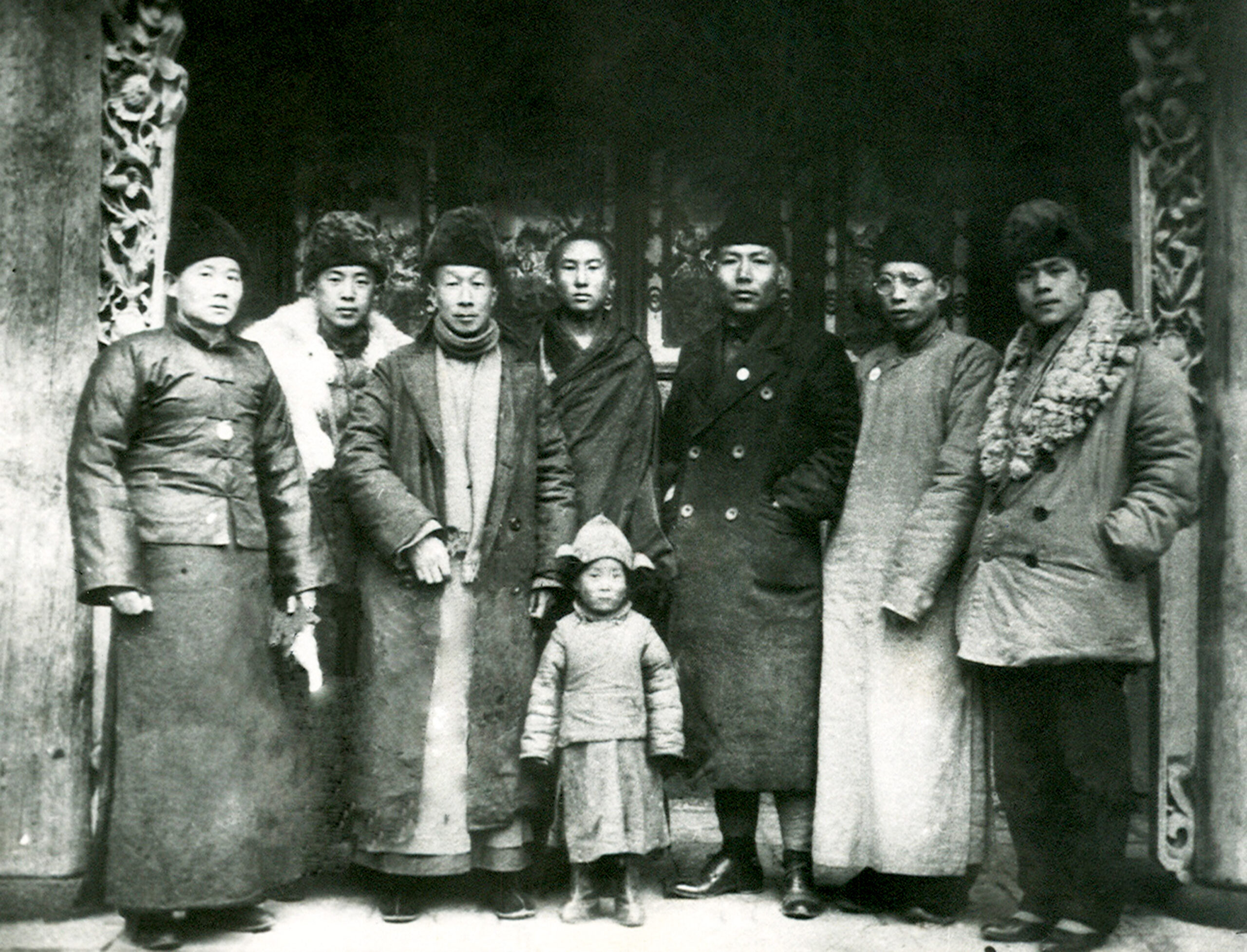
The newly discovered Dalai Lama with Chinese warlord Ma Bufang (third from right) and other Chinese officials, shortly before leaving Amdo for Lhasa. Ma Bufang held the child Dalai Lama, demanding ransom before allowing the departure—a three-month-long caravan trek to the Tibetan capital.
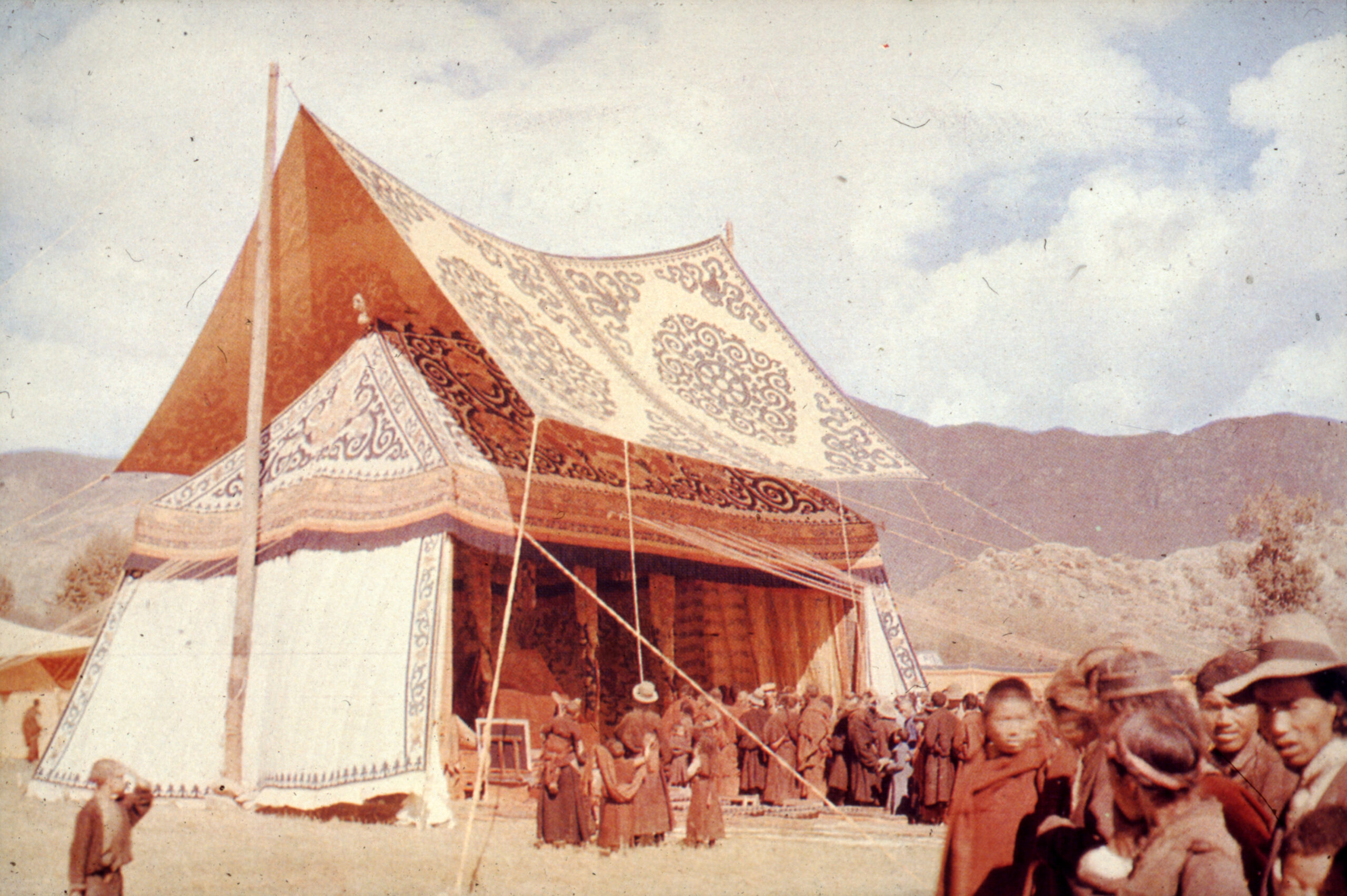
The “Macha Chenmo” or “Great Peacock” tent— ornately decorated appliqué—was erected on the Doeguthang Plain outside Lhasa as a ceremonial reception space for the new Dalai Lama. The elaborate encampment marked his formal welcome to Lhasa in 1939. Photographer: Hugh Edward Richardson. Copyright: Pitt Rivers Museum, University of Oxford
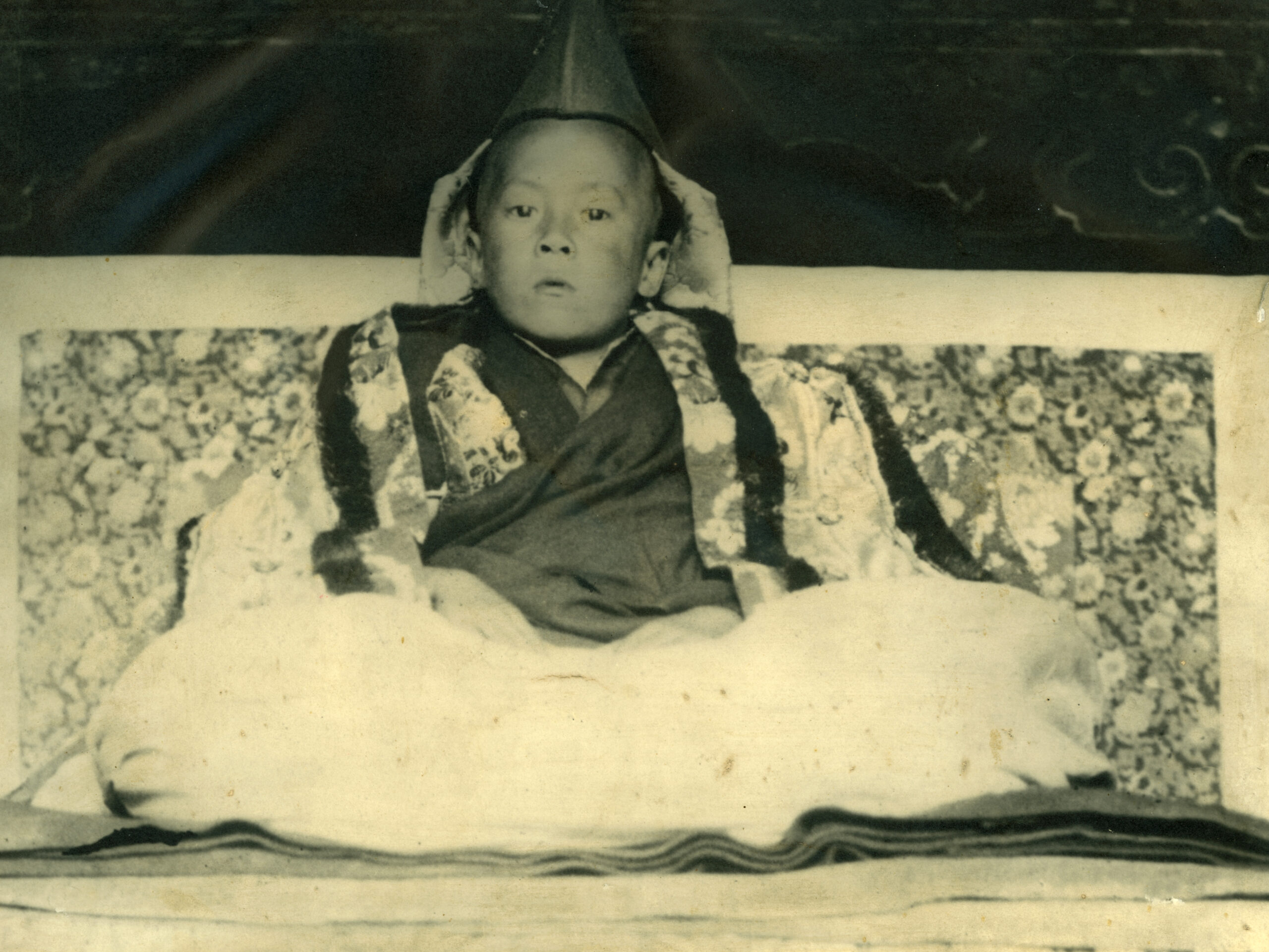
A formal portrait of the 14th Dalai Lama, Tenzin Gyatso, around the age of six, seated on his installation throne in Lhasa. Copyright: Pitt Rivers Museum, University of Oxford
An oil painting by Kanwar Singh captures the enthronement of His Holiness the Dalai Lama at the Potala Palace, Lhasa, in 1940. Copyright: Pitt Rivers Museum, University of Oxford
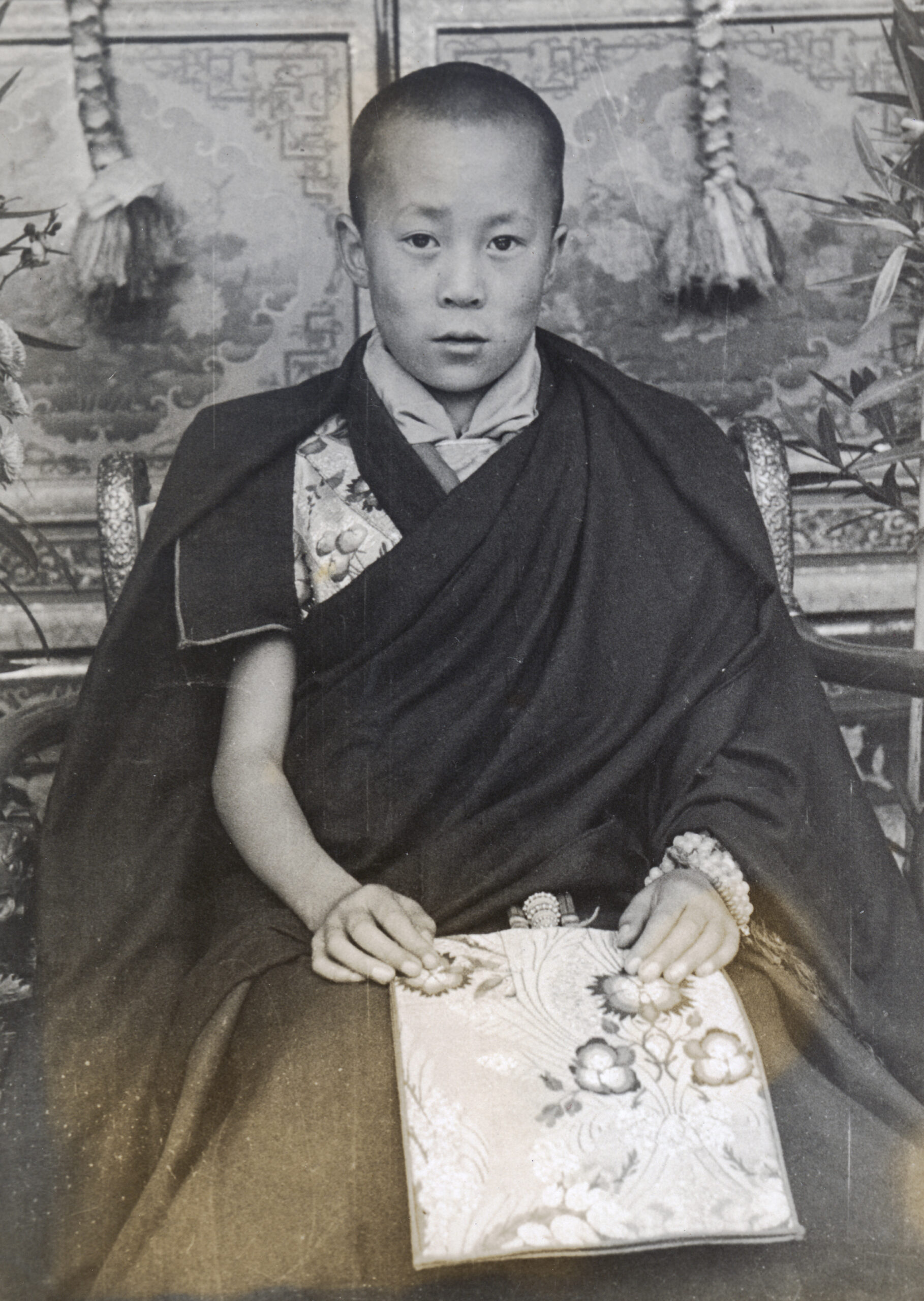
A rare portrait of the Dalai Lama around the age of 12, taken in Lhasa in 1947. He is pictured holding a brocade-covered water bottle (chaplug) on his lap and wearing prayer beads around his wrist. Photographer: Possibly Amaury de Riencourt. Copyright: Pitt Rivers Museum, University of Oxford
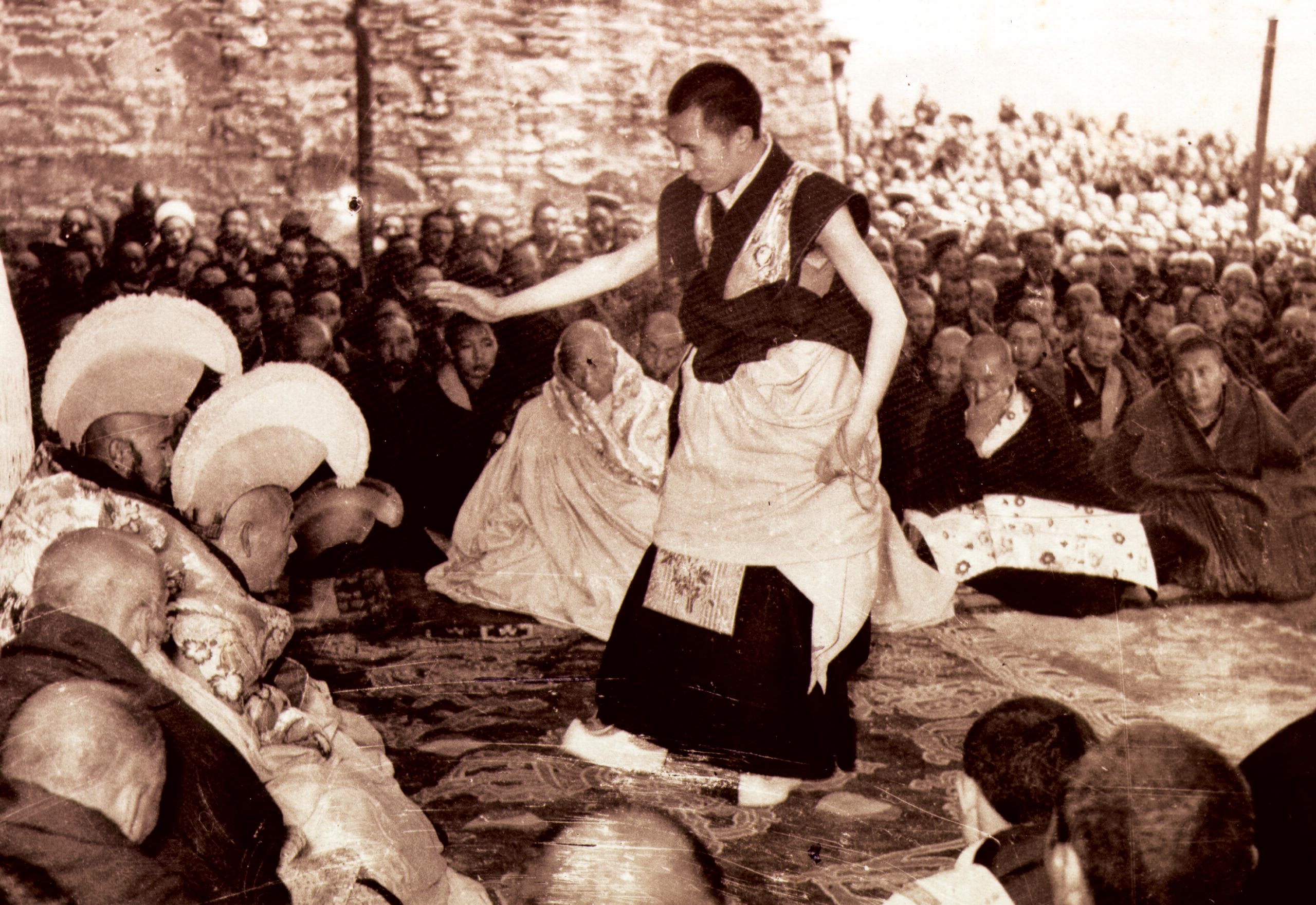
His Holiness the Dalai Lama undertaking the rigorous Geshe Lharampa examination—the highest degree in Tibetan monastic education—during the Monlam Festival at Drepung Monastic University, Lhasa, February 1959. Copyright: Pitt Rivers Museum, University of Oxford