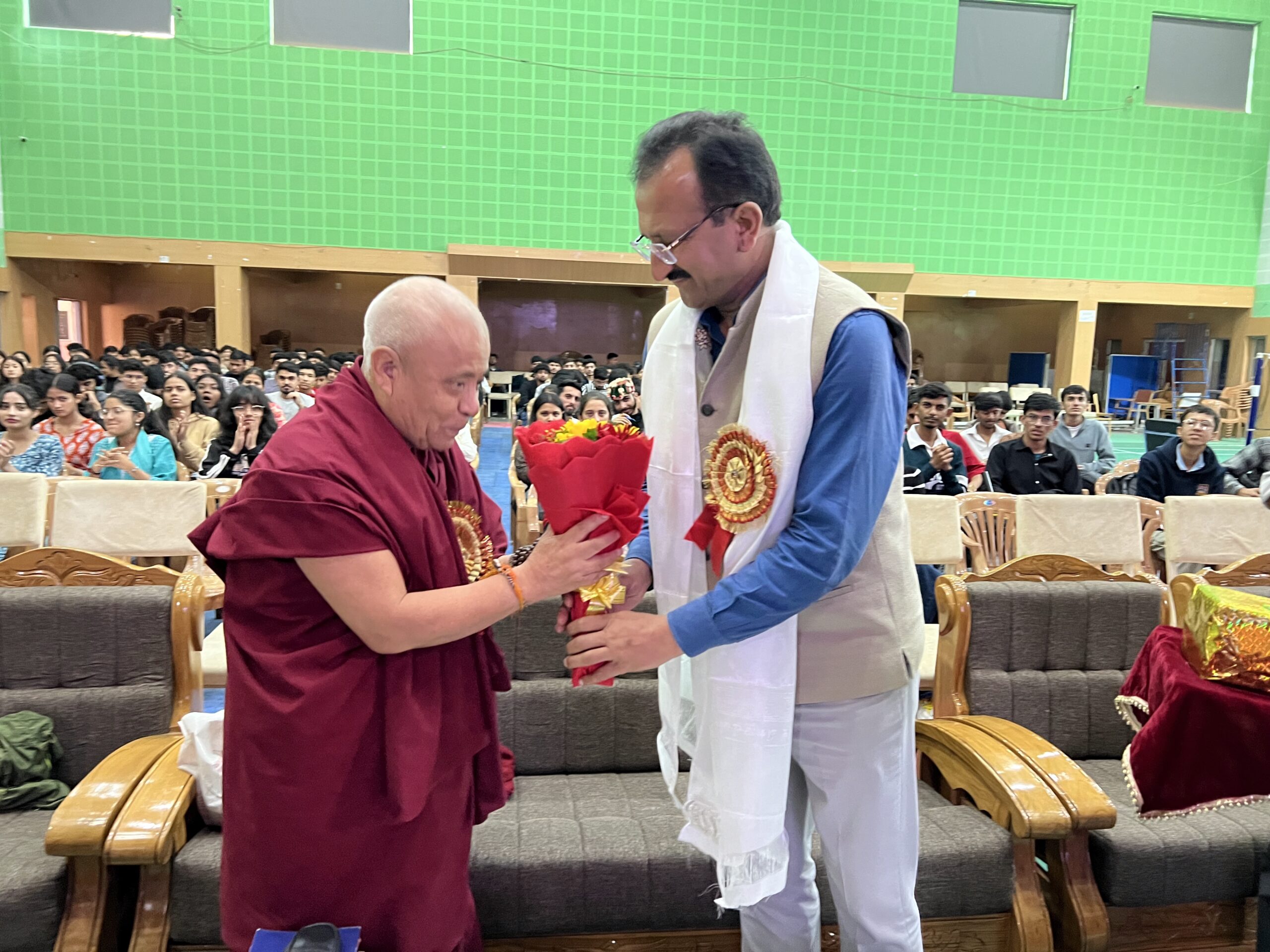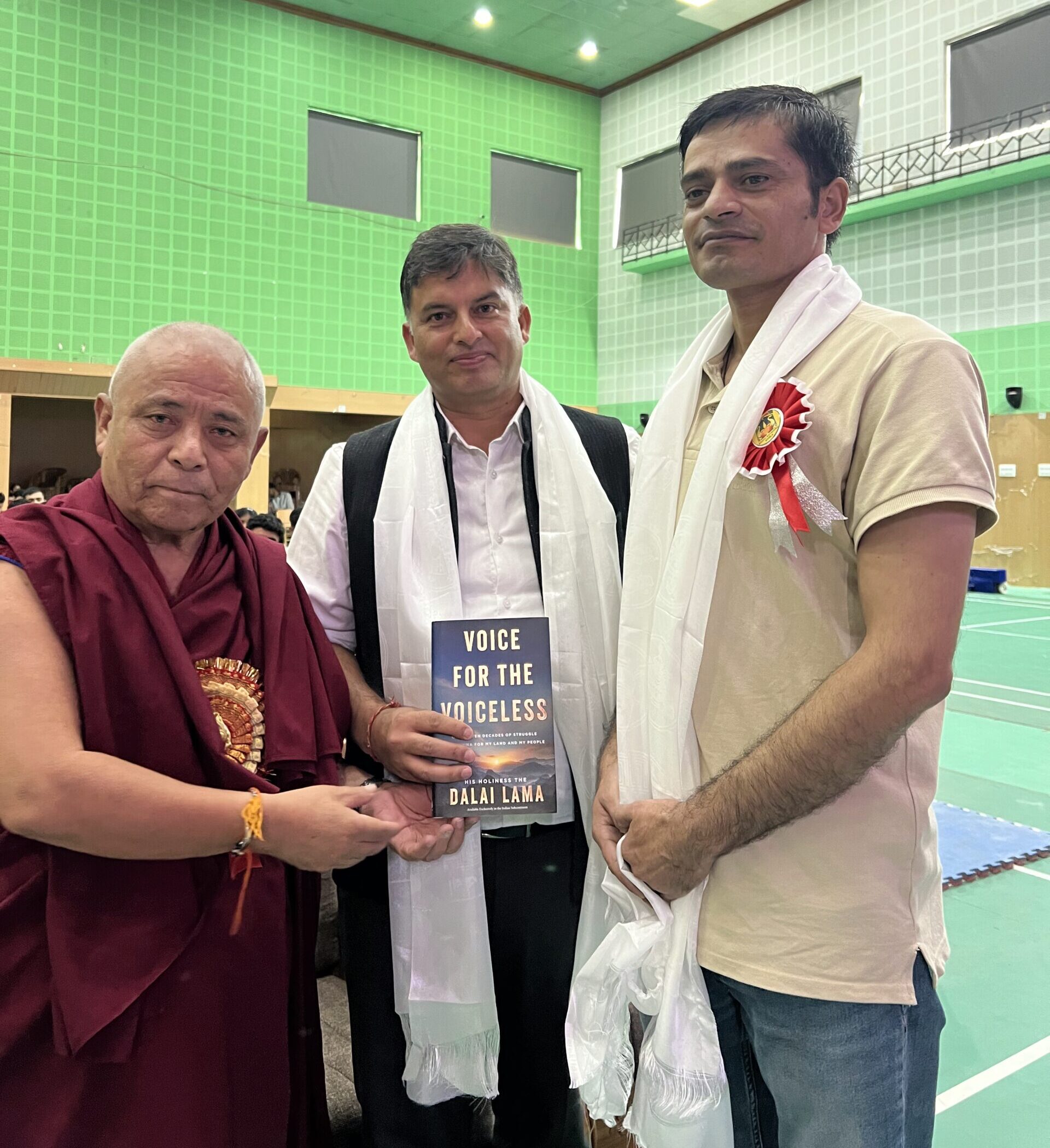
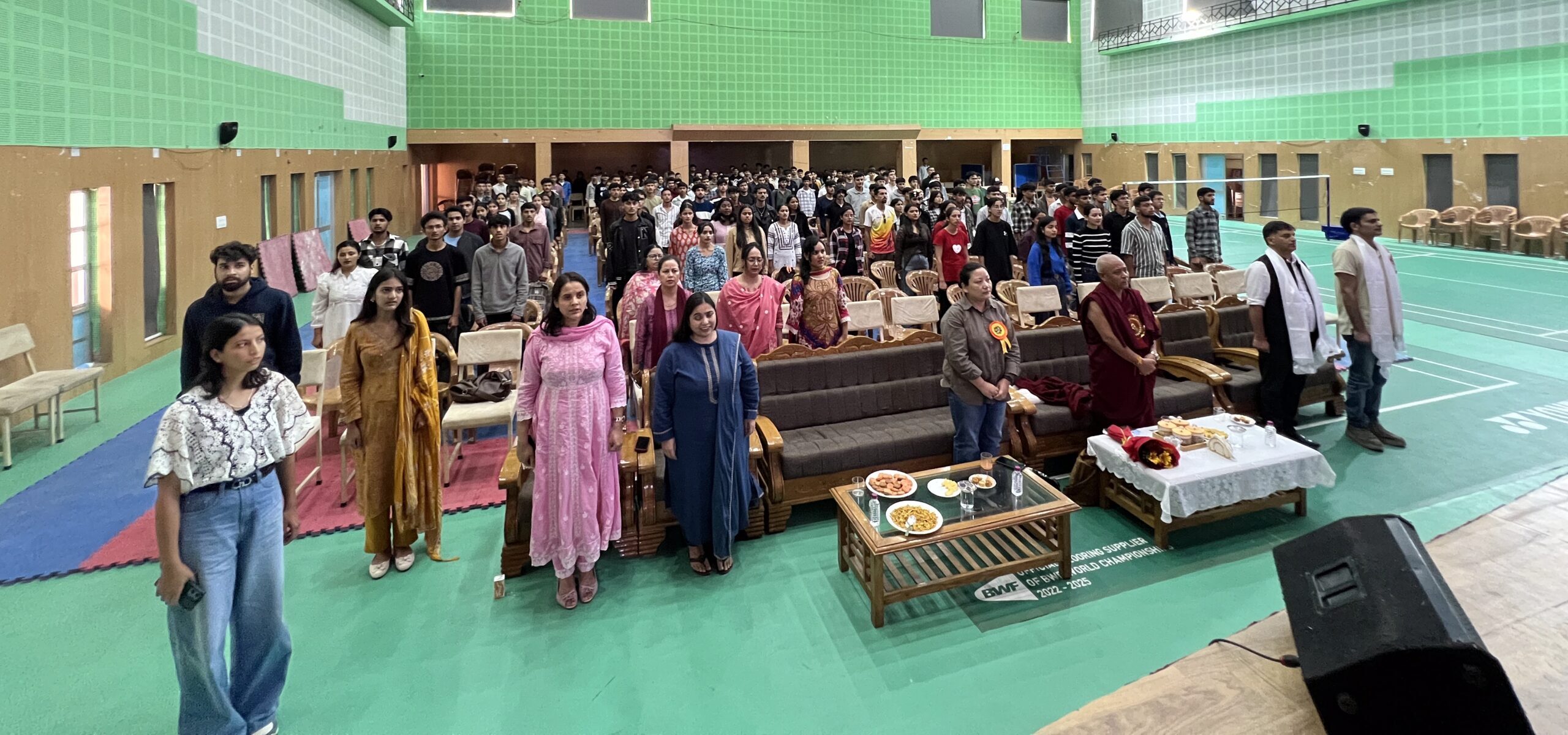
On 19 August 2026, the 108 Peace Institute, in collaboration with the Department of Political Science, Rajiv Gandhi Government Degree College, Shimla, successfully organized a lecture on India–Tibet Relations. The lecture, delivered by Venerable Acharya Yeshi Phuntsok, Former Deputy Speaker of the Tibetan Parliament-in-Exile, explored India–Tibet relations through four interconnected themes: shared civilizational heritage, border security, historical trade, and environmental interdependence.
Acharya Yeshi Phuntsok emphasized the deep civilizational bonds between India and Tibet. He noted that Buddhism travelled from India to Tibet in the seventh century, while the Tibetan script was developed drawing upon Indian linguistic traditions. Tibetan monastic architecture, philosophy, and scholarship likewise reflect the profound influence of Indian Buddhist traditions. He emphasized that Tibet preserved the Nalanda tradition of Buddhist learning after it had largely declined in India, making Tibetan Buddhist institutions important custodians of India’s ancient intellectual and spiritual heritage.
The speaker also referred to Tibet’s participation in the Asian Relations Conference in New Delhi in 1947, highlighting the historical and cultural relationship between the two independent regions. He further acknowledged India’s support for Tibetan education and cultural preservation following 1959, particularly through institutions such as the Central Institute of Higher Tibetan Studies in Sarnath.
Turning to geopolitics and security, the speaker highlighted the strategic importance of the approximately 4,000-kilometre India–Tibet frontier, connecting Tibet with Ladakh, Himachal Pradesh, Uttarakhand, Sikkim, and Arunachal Pradesh. Among India’s 7 land borders, the one with Tibet is the longest, yet he observed that the Himalayan frontier was relatively peaceful and only a few guards patrolled the border before 1959. However, the border underwent a fundamental transformation following the 1962 Sino-Indian War. Discussing the 1914 Simla Convention, he highlighted the participation of British India and Tibet in the negotiations, indicating Tibet as an independent nation that signed its treaties with neighboring regions.
The lecture also examined the evolution of India–Tibet trade, including traditional routes through Lipulekh, Nathu La, and Shipki La. The speaker contrasted contemporary cross-border trade between India and China, which is subject to designated commodities, restricted trading periods, and regulatory controls, with earlier commercial exchanges that were shaped largely by local needs and longstanding trading practices.
He highlighted the Lavi Mela of Rampur Bushahr, traditionally held from 11 to 14 November, as an enduring symbol of the historic commercial and cultural relationship between Bushahr and Tibet. Although traders from Tibet can no longer participate because of present border restrictions, Tibetan communities from Bir and Chauntra continue to attend the fair, helping preserve this important historical tradition.
A major focus of the lecture was the ecological and strategic importance of the Tibetan Plateau, often described as the “Water Tower of Asia.” The speaker explained that the plateau is the source of major river systems, including the Indus, Brahmaputra, Sutlej, and Karnali, which sustain millions of people across South and Southeast Asia. He introduced their traditional Tibetan names, Senggé Khabab (Lion’s Mouth), Tamchok Khabab (Horse’s Mouth), Langchen Khabab (Elephant’s Mouth), and Mapcha Khabab (Peacock’s Mouth), and emphasized that developments affecting Tibet’s water resources have far-reaching consequences for downstream countries.
Referring to the 2005 Parechu Lake outburst, which caused extensive damage in Himachal Pradesh, particularly in Kinnaur and Lahaul-Spiti, he underscored the vulnerability of downstream communities to environmental events originating on the Tibetan Plateau. He stressed the importance of protecting Tibet’s glaciers, forests, biodiversity, and water systems.
The speaker also highlighted the longstanding environmental advocacy of His Holiness the 14th Dalai Lama, emphasizing that protecting Tibet’s fragile ecosystem is not only a matter of concern for Tibetans but also for the millions of people across Asia who depend on its rivers and natural resources.
Encouraging students to engage critically with historical sources, Acharya Yeshi Phuntsok recommended the writings of Sarat Chandra Das and the travel accounts of Pandit Nain Singh Rawat, along with Man Mohan Sharma’s The Tragedy of Tibet. He added that students should read these scholars’ books to understand independent Tibet. He also reflected on the perspectives of prominent Indian thinkers and leaders, including Dr. B. R. Ambedkar, Sardar Vallabhbhai Patel, Dr. Ram Manohar Lohia, and Swami Vivekananda, on China’s Occupation of Tibet, Himalayan security, and India’s strategic interests.
Concluding the lecture, Acharya Yeshi Phuntsok urged the students to recognize and preserve India’s rich civilizational heritage. He drew attention to the contrasting challenges faced by India and Tibet: while India has the opportunity to freely preserve and develop its ancient traditions, Tibetans continue to struggle to safeguard their language, culture, religion, and identity under restrictive conditions. Addressing 300 students and faculty members, he emphasized the importance of preserving these traditions through education, awareness, and peaceful engagement, and encouraged the students to recognize the enduring cultural and historical bonds between India and Tibet.