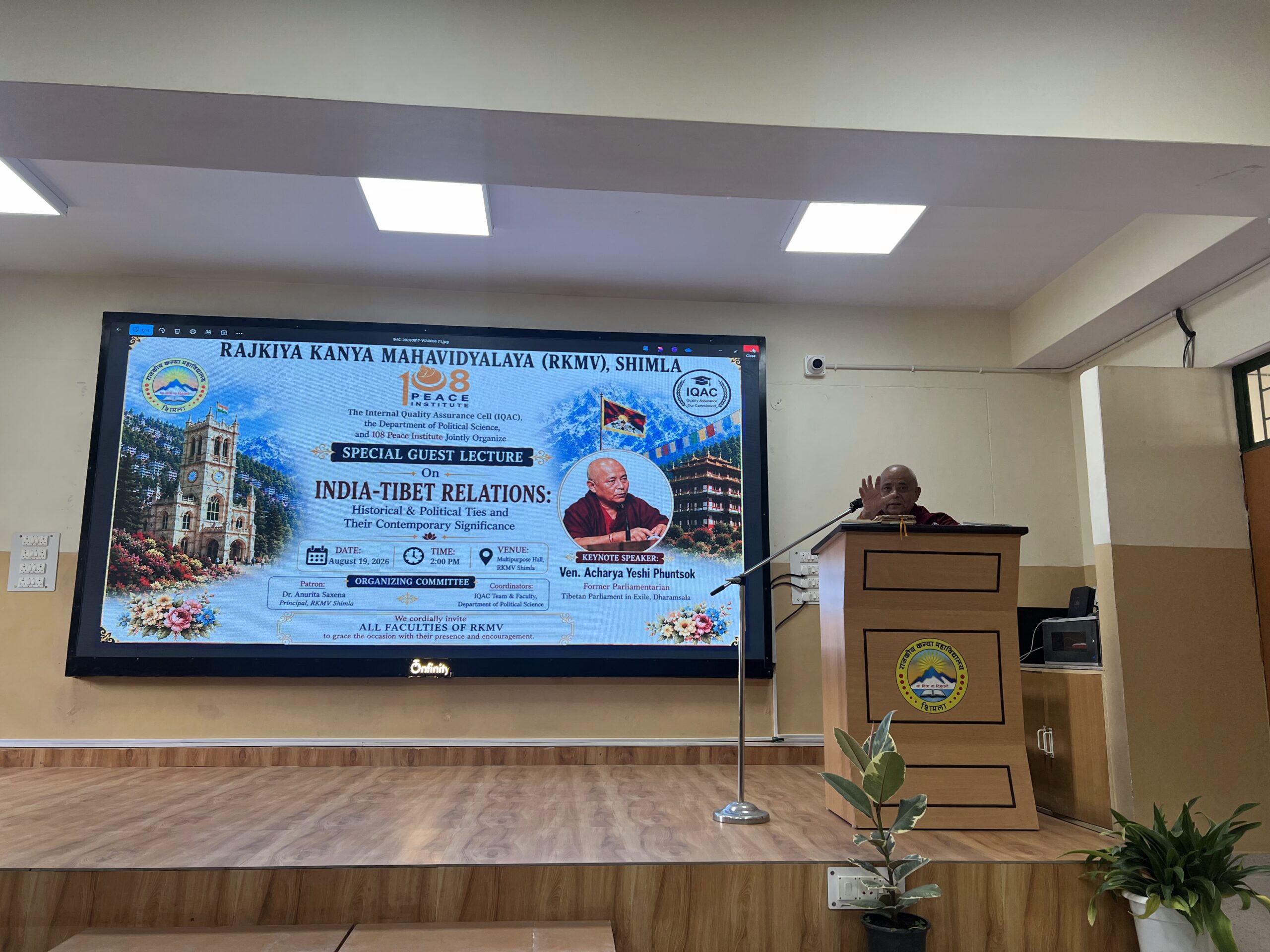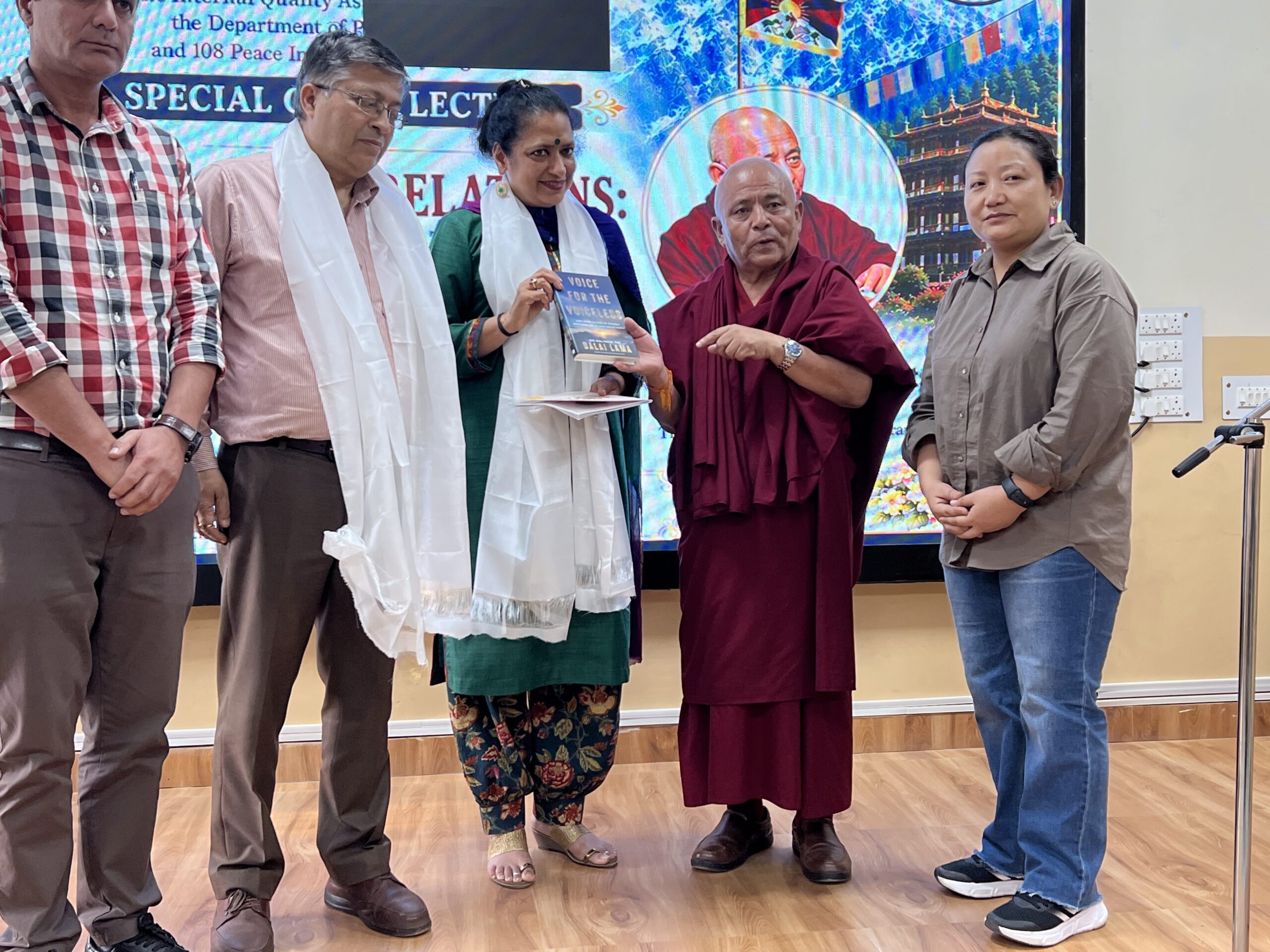
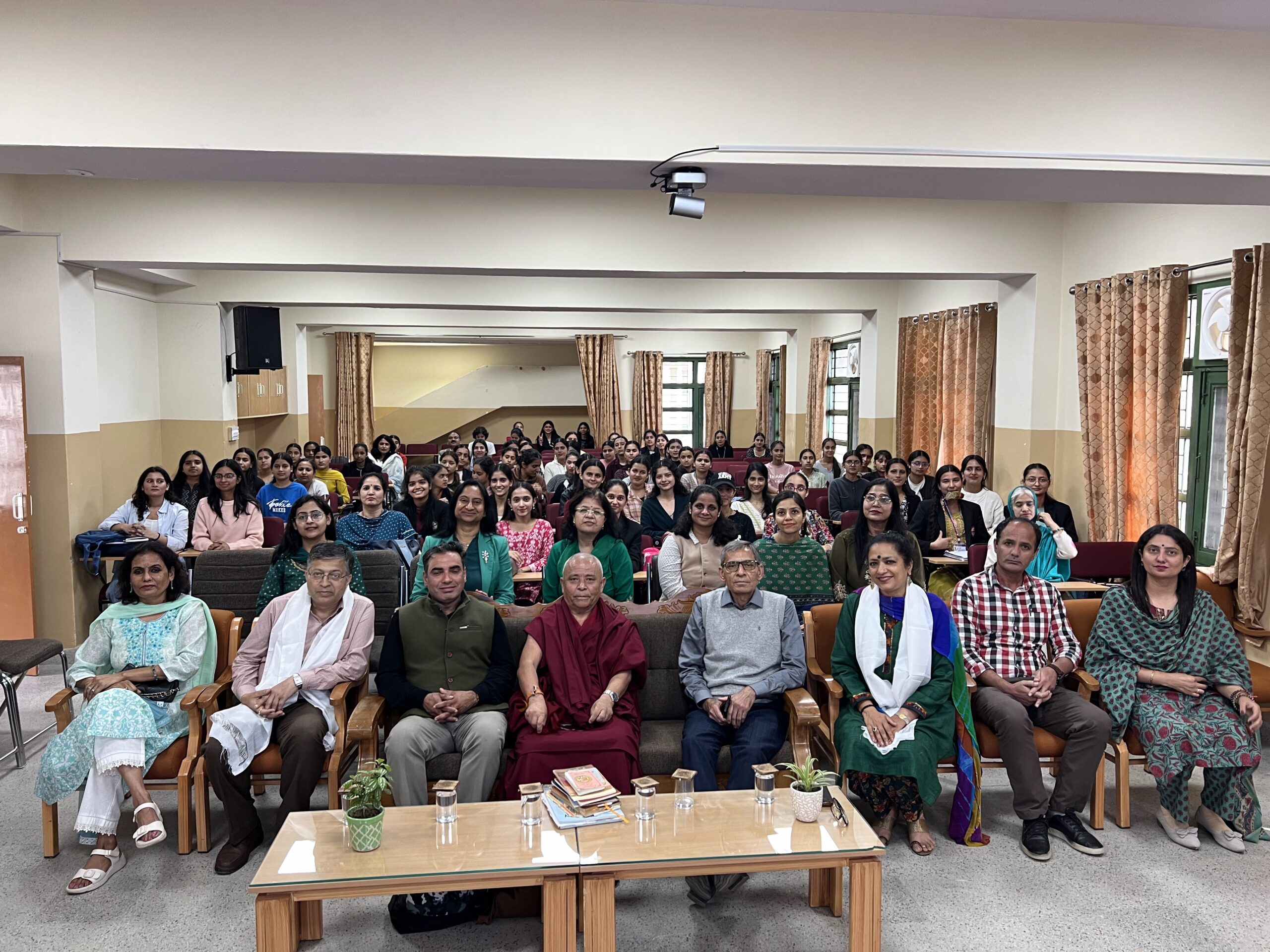
On 19 August 2026, 108 Peace Institute, in collaboration with the Department of Political Science, Rajakiya Kanya Mahavidyalaya, Shimla, organized a lecture on “India–Tibet Relations: Historical and Political Ties and Their Contemporary Significance.” The lecture was delivered by Venerable Acharya Yeshi Phuntsok, Former Deputy Speaker of the Tibetan Parliament-in-Exile, and attended by around 150 students, faculty members, and college heads.
Acharya Yeshi Phuntsok highlighted the deep civilizational and cultural ties between India and Tibet, particularly the transmission of Buddhism and the preservation of the Nalanda tradition in Tibet. He also discussed Tibet’s participation in the 1947 Asian Relations Conference and India’s contribution to Tibetan education and cultural preservation after 1959.
On border security, he emphasized the strategic importance of the approximately 4,000-km India–Tibet frontier, noting its transformation following the 1962 Sino-Indian War and discussing the historical significance of the 1914 Simla Convention. He stressed that Tibet signed the treaty independently with British India.
The speaker also examined the history of India–Tibet trade, including traditional routes through Lipulekh, Nathu La, and Shipki La, and highlighted the Lavi Mela of Rampur Bushahr as a continuing symbol of historic commercial and cultural ties between Bushahr and Tibet.
A major focus was Tibet’s ecological significance as the “Water Tower of Asia.” The speaker highlighted the origins of major rivers, including the Indus, Brahmaputra, Sutlej, and Karnali, and stressed the importance of protecting Tibet’s water resources and ecosystems. Referring to the 2005 Parechu Lake outburst, he underscored the environmental risks faced by downstream communities and the need for greater regional cooperation.
The speaker encouraged students to explore historical perspectives through the works of Indian scholars such as Sarat Chandra Das, Pandit Nain Singh Rawat, and Man Mohan Sharma, and discussed the views of prominent Indian thinkers on Tibet and Himalayan security.
Concluding the lecture, Acharya Yeshi Phuntsok urged students to preserve India’s civilizational heritage and recognize the enduring cultural bonds between India and Tibet. He emphasized that while India can freely preserve its traditions, Tibetans continue to face challenges in protecting their language, culture, religion, and identity, making education and awareness essential to preserving this shared heritage.