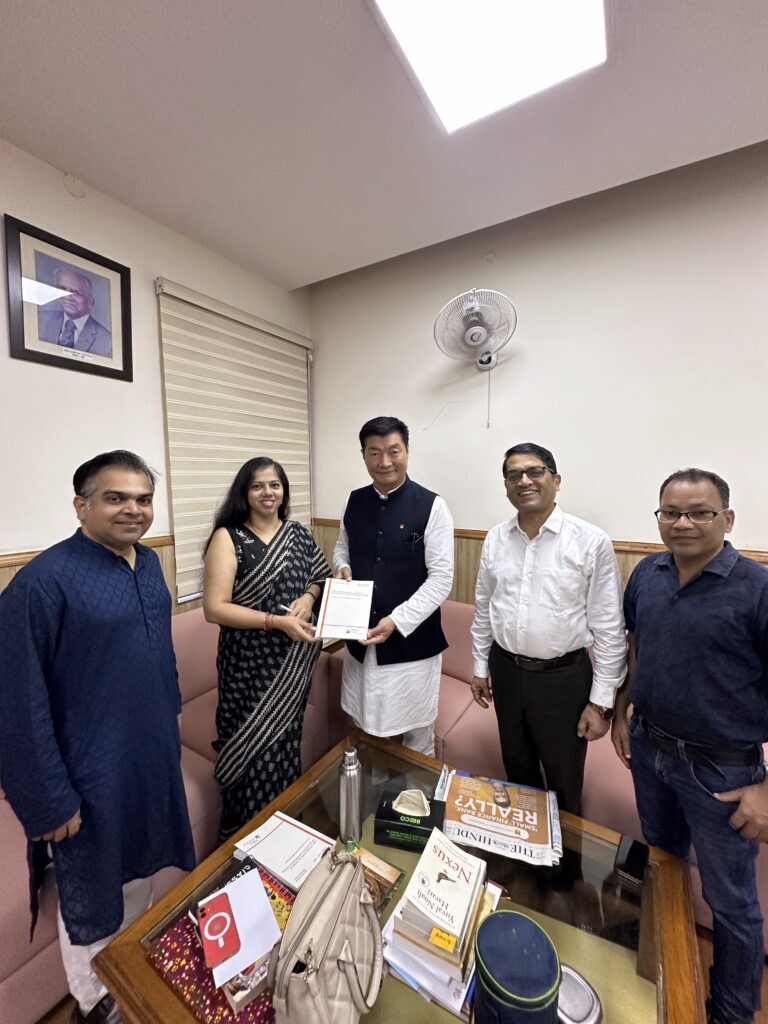
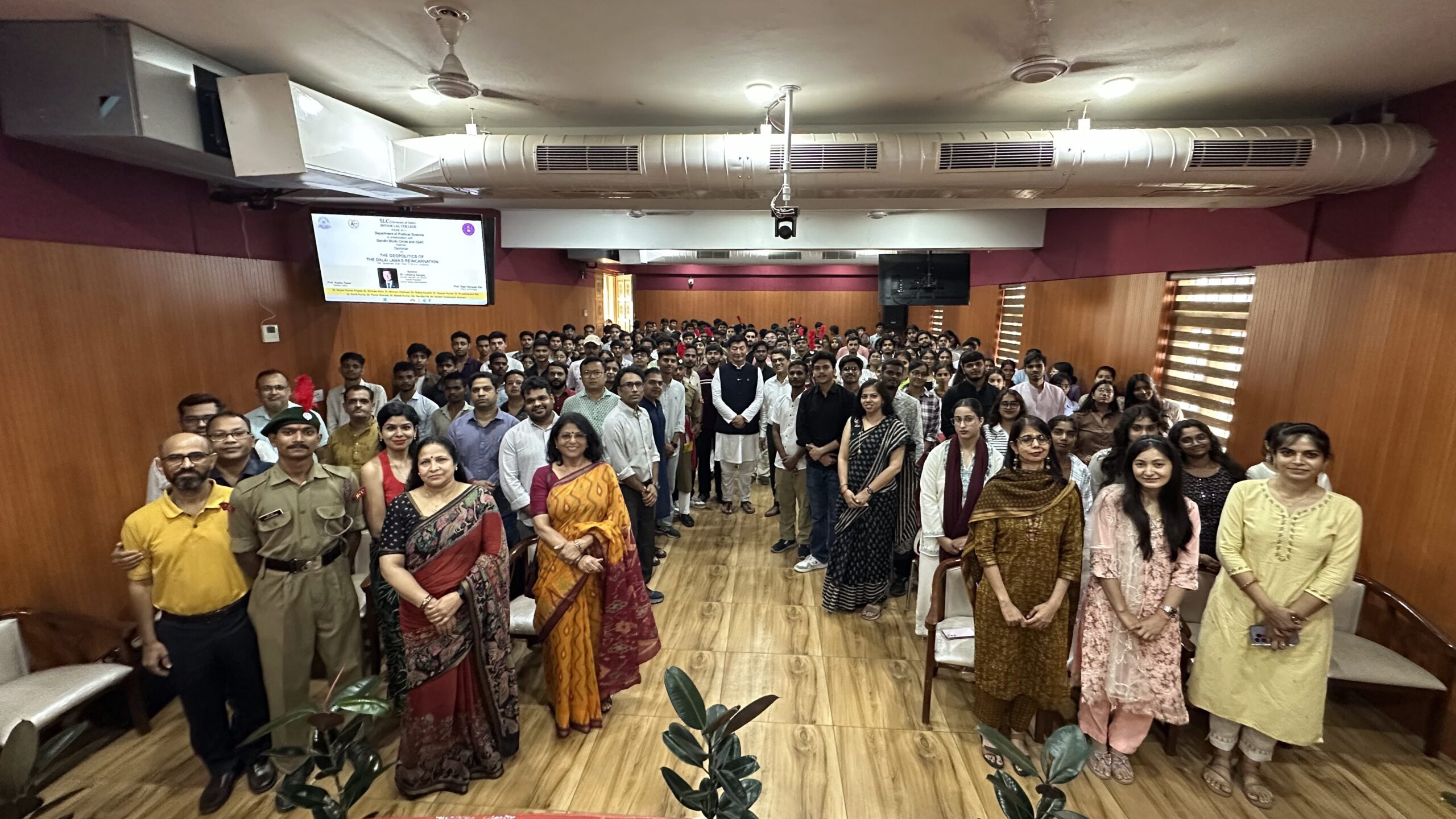
September 24th, New Delhi: The 108 Peace Institute, in collaboration with the Department of Political Science, Shyam Lal College, Delhi University, organised a talk by Dr. Lobsang Sangay on ‘The Geopolitics of the Dalai Lama’s Reincarnation’. The talk was attended by more than 200 students and the faculty members.
During the talk, Dr. Sangay connected the Dalai Lama question with what has popularly become known as China’s “Five Fingers” strategy. According to this metaphor, Tibet constitutes the palm of a hand, while Ladakh, Nepal, Sikkim, Bhutan and Arunachal Pradesh constitute its five fingers. Sangay related this strategic imagination to developments such as Doklam, Galwan and continuing Chinese claims concerning Arunachal Pradesh.
Dr. Sangay went further. China, he argued, now possesses substantial economic, political or strategic influence beyond the traditional “five fingers,” including in Pakistan, Afghanistan, Bangladesh, Sri Lanka and the Maldives. With characteristic rhetorical flourish, he described the contemporary environment as one of “ten fingers.” This too should be understood as Sangay’s geopolitical metaphor, not as an officially declared Chinese strategy. Yet the question behind it deserves reflection: as Chinese influence expands across India’s continental and maritime neighbourhood, how should India conceptualise the changing strategic environment around itself?
At the end of the talk, Dr. Sangay appreciated the Guard of Honour and the wonderful host by the Department of Political Science, Shyam Lal College, Delhi University.