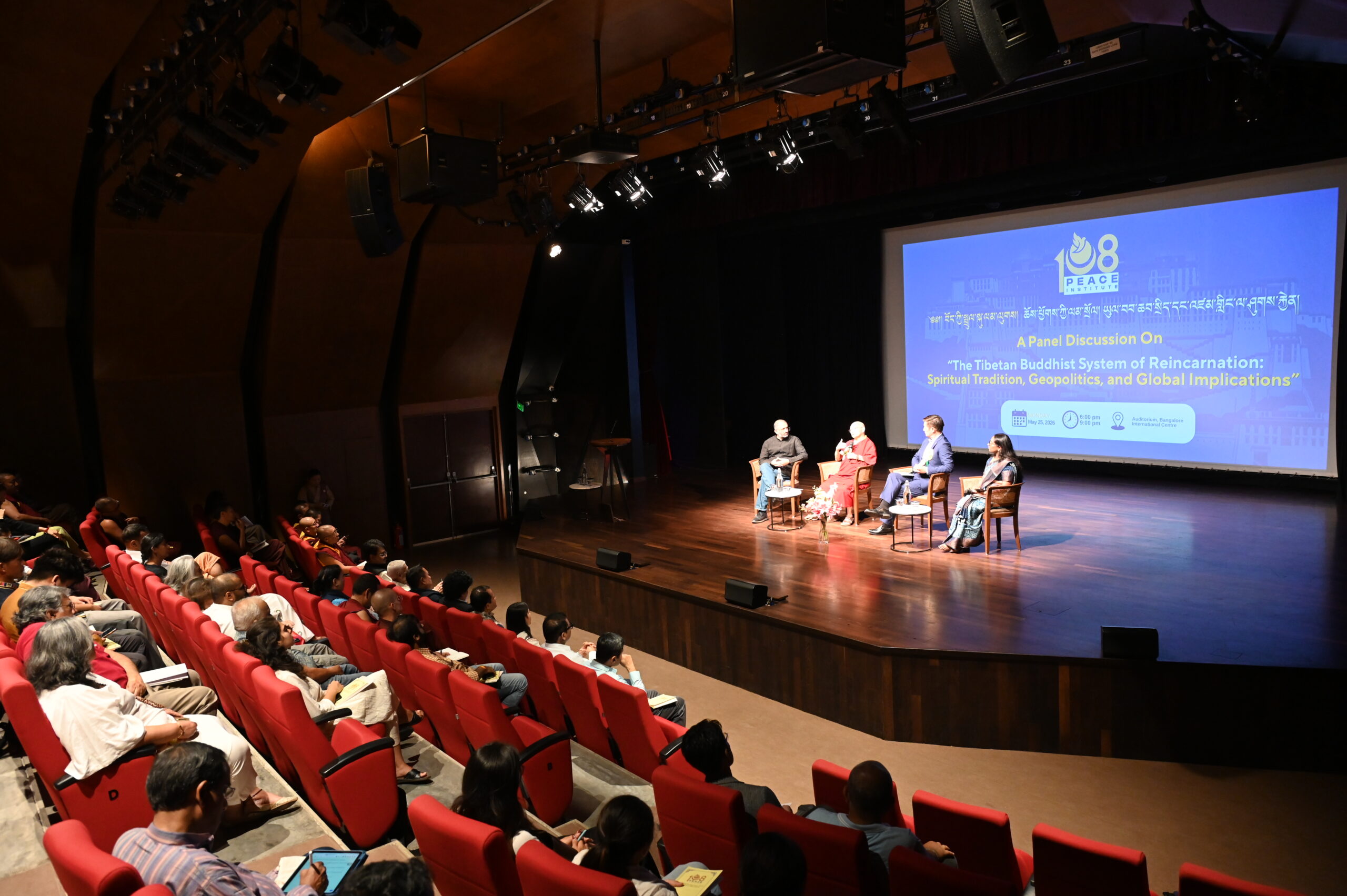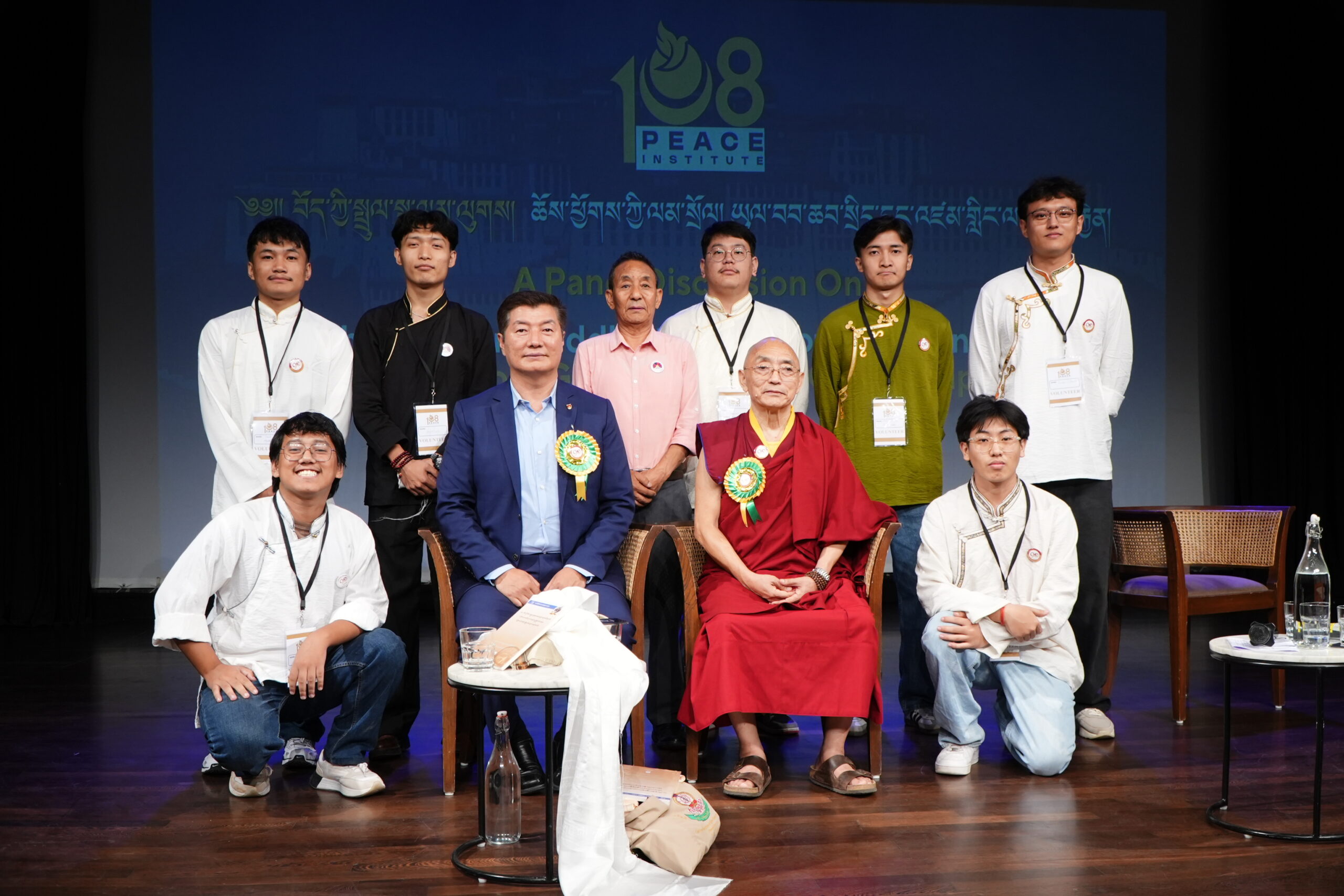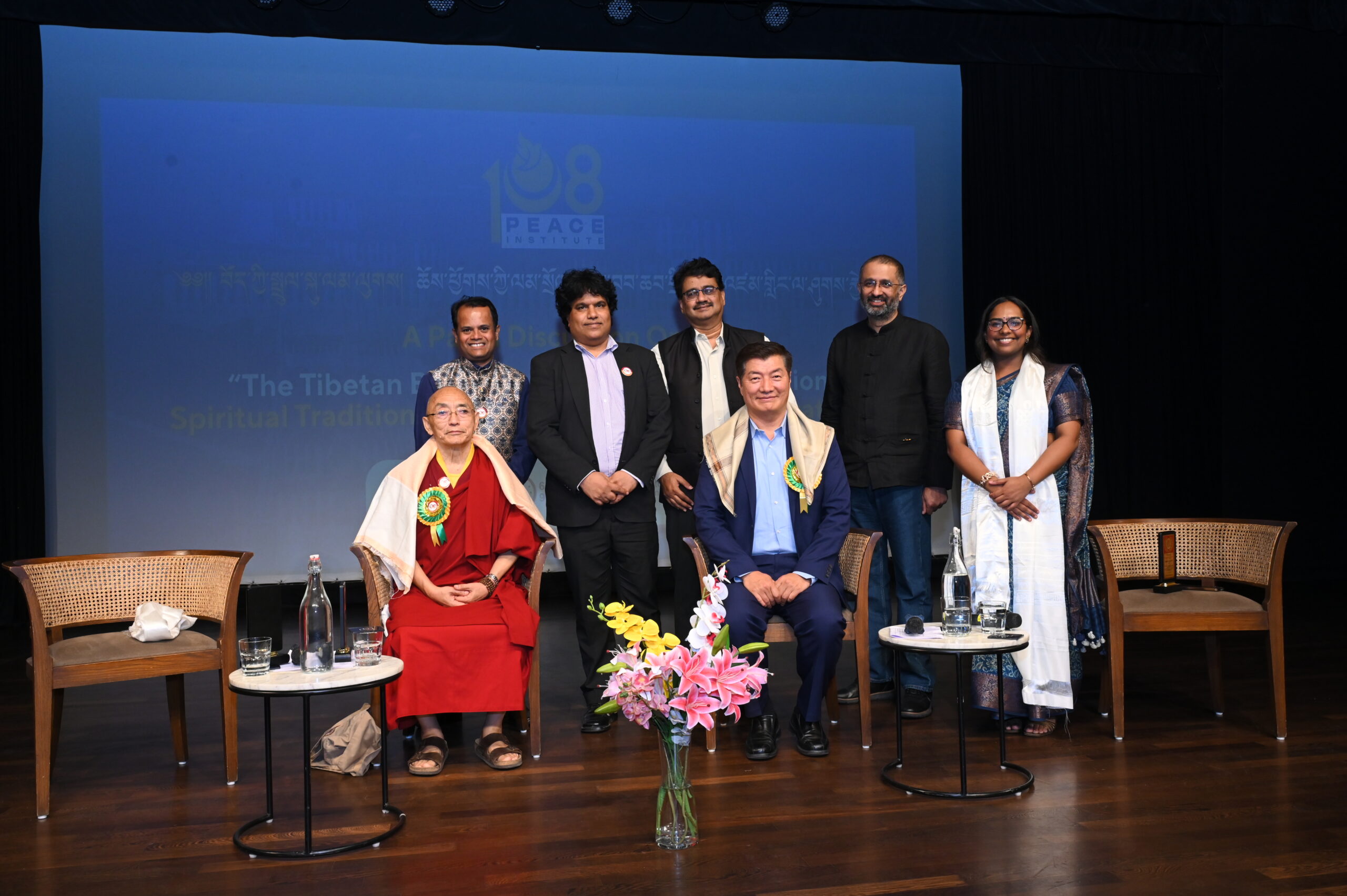
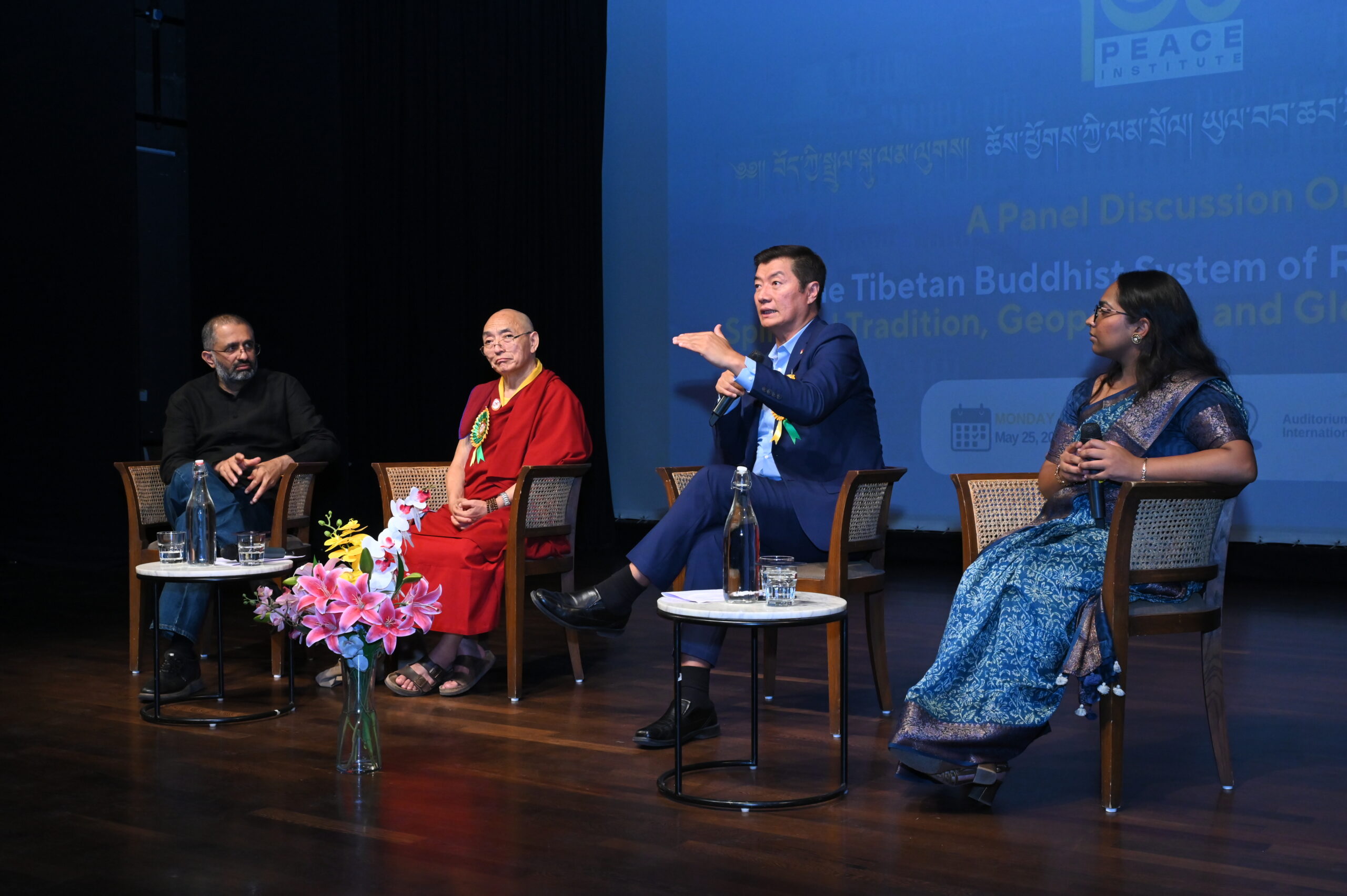
May 25, 2026: 108 Peace Institute successfully hosted a high-level panel discussion on “The Tibetan Buddhist System of Reincarnation: Spiritual Tradition, Geopolitics, and Global Implications” at Bangalore International Centre (BIC), Bangalore.
The event commenced with a welcome address and introduction to the 108 Peace Institute by Ms. Tenzin Donzey, Program Manager at the Institute. In her remarks, she highlighted the organization’s mission to promote freedom, democracy, climate action, and compassionate leadership inspired by the teachings of His Holiness the great 14th Dalai Lama of Tibet.
The Panel featured distinguished speakers: Dr. Lobsang Sangay, Lecturer at Harvard Law School and former President of the Tibetan Government-in Exile; Pama Shree Geshe Ngawang Samten, Former Vice-Chancellor, Central Institute of Higher Tibetan Studies, Varanasi; Mr. Nitin Pai, Co-founder and Director, Takshashila Institution, Bangalore. Ms. Ansukha Saxena, Researcher, Takshashila Institution, Bangalore, moderated the discussion.
Ms. Anushka Saxena introduced the panel by framing the Tibetan Buddhist reincarnation system as both a spiritual tradition and a geopolitical issue with global consequences. She highlighted the significance of the recent statement by the 14th Dalai Lama regarding the recognition of the 15th Dalai Lama and explained that the process would be overseen by the Gaden Phodrang Trust in consultation with senior Buddhist authorities. She contrasted this position with China’s claim that the state has authority over the recognition of reincarnated lamas, creating a source of political and diplomatic tension. Her remarks established the discussion’s central theme: understanding how an ancient religious tradition intersects with modern international politics, Tibetan identity, and the interests of regional and global powers.
Padma Shree Geshe Ngawang Samten focused on the spiritual and philosophical foundations of reincarnation within Tibetan Buddhism. He argued that the concept of rebirth is not uniquely Tibetan but originates from broader Indian religious and philosophical traditions, particularly those preserved through ancient centers of learning such as Nalanda, Vikramashila, and Takshashila. According to him, the Buddhist understanding of karma, samsara, and liberation explains how ordinary beings are reborn through karmic causes, while highly realized masters can consciously choose their rebirth to continue serving sentient beings. He described the historical development of the tulku (reincarnate lama) system, citing the Karmapas and Dalai Lamas as examples of recognized reincarnations validated by spiritual signs and authoritative teachers. Geshe-la emphasized that Tibetan Buddhism has preserved a complete and authentic transmission of the Nalanda tradition and that the institution of the Dalai Lama is a product of this profound spiritual lineage.
Dr. Lobsang Sangay approached the issue primarily through the lens of geopolitics, environmental security, and strategic competition. He argued that China’s interest in controlling the institution of the Dalai Lama is linked not only to politics but also to Tibet’s immense strategic value, including its water resources, hydropower potential, and deposits of lithium, rare earth minerals, uranium, and other critical resources. He warned that large Chinese dam projects on Tibetan rivers, particularly the Brahmaputra, could have significant environmental and security implications for South and Southeast Asia. Sangay also stressed that Tibetans are clear about the legitimacy of the future Dalai Lama: only a reincarnation recognized through the process authorized by the current Dalai Lama and the Gaden Phodrang Trust would be accepted by Tibetan Buddhists. While he acknowledged the geopolitical importance of China’s attempts to influence the succession process, he maintained that for believers the question is straightforward because spiritual legitimacy comes from religious authority rather than state power.
Mr. Nitin Pai analyzed the issue from the perspective of international relations and Indian strategic interests rather than religious doctrine. He argued that the discussion is taking place during a period of profound global transition, which he described using the Indian philosophical concept of “Yuganta”—a time when an old order is ending and a new one has not yet fully emerged. In this uncertain environment, he said, questions surrounding the Dalai Lama’s reincarnation cannot be separated from broader geopolitical shifts involving China, the United States, and India. Pai contended that India’s ability to shape outcomes related to Tibet and the Dalai Lama depends largely on its economic and strategic strength, as well as its relationships with major powers. He portrayed China as operating from a long-standing “Middle Kingdom” mindset that seeks deference from neighboring states and argued that India must build sufficient national power to engage China on equal terms. In his view, future questions regarding the recognition of the Dalai Lama, the role of a regent, and international responses to the succession process will be influenced as much by geopolitical realities as by religious tradition.
The panel converged on the view that the reincarnation of the Dalai Lama is simultaneously a spiritual, cultural, and geopolitical issue. While Geshe Samten la emphasized religious legitimacy, Dr. Sangay highlighted strategic and environmental concerns, and Nitin Pai focused on international power politics. Together, the speakers presented the Dalai Lama succession as an issue whose implications extend far beyond the Tibetan Buddhist community and into the broader landscape of Asian and global affairs.
The panel was followed by a vibrant question-and-answer session during which participants engaged the speakers on a wide range of issues related to Tibetan Buddhism, the reincarnation process, China’s policies toward Tibet, and the geopolitical implications of the Dalai Lama’s succession. The audience expressed both admiration for the speakers’ expertise and keen interest in the complex issues discussed.
The event concluded with the felicitation of the speakers, moderator, and supporters of the program. Ms. Tenzin Donzey delivered the vote of thanks, expressing gratitude to the distinguished panelists, participants, and partner organizations for contributing to the success of the event.
The discussion witnessed the active participation of more than 100 attendees, including representatives from universities, research institutions, Tibet Support Group, civil society organizations, policy think tanks, and the broader public, reflecting the growing interest in Tibet-related issues and their global significance.