
Published by Firstpost on 18th August 2026
Tai Situ Rinpoche’s high-profile return to Tibet has brought renewed attention to the Karmapa and his geopolitical significance for India and China
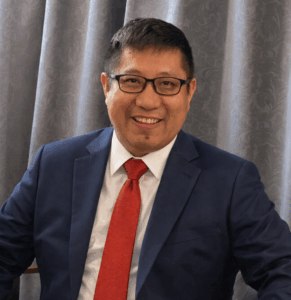
In recent weeks, social media platforms across Tibet and China have been flooded with videos and photographs of Tai Situ Rinpoche’s visit to his hometown in Dege County, eastern Tibet. The images quickly went viral, capturing thousands of Tibetans lining the streets to welcome one of the most revered figures in Tibetan Buddhism. Equally striking was the exceptionally high-level reception he received upon arrival, including VIP treatment at the airport, an indication that Chinese authorities had extended considerable official support to his homecoming.
Tai Situ Rinpoche occupies one of the highest positions within the Karma Kagyu school, one of the major traditions of Tibetan Buddhism. He is also a close friend and follower of His Holiness the 14th Dalai Lama. He is widely recognised as one of the principal teachers and spiritual mentors of His Holiness the 17th Karmapa, Ogyen Trinley Dorje, having played a pivotal role in identifying him as the reincarnation of the 17th Karmapa. Within the Karma Kagyu tradition, Tai Situ Rinpoche’s religious authority and influence are immense.
His visit therefore extends beyond a simple pilgrimage or reunion with his homeland. It carries significant religious, political and geopolitical implications at a time when Tibet has become an increasingly important arena in the strategic competition between India and China.
For more than two decades, the 17th Karmapa has remained outside India despite repeatedly expressing his desire to return. Over the years, he has spoken publicly of his hope to rejoin his monasteries and followers in India, yet that aspiration remains unfulfilled.
One of the principal complications emerged after the Karmapa acquired citizenship of the Commonwealth of Dominica, a move that reportedly surprised Indian authorities. According to several media reports, New Delhi viewed the decision with concern because the Karmapa had previously travelled on an Indian-issued Identity Certificate, commonly known as the “Yellow Book”, issued to Tibetan refugees residing in India.
Indian officials subsequently maintained that any future return would need to comply fully with Indian immigration procedures, including the formal surrender of the Identity Certificate before entry under a different nationality.
Reports have also suggested that the Karmapa sought to return the document through the Indian Embassy in Washington, D.C. However, embassy officials reportedly declined to accept it without explicit authorisation from New Delhi. Whether due to bureaucratic complications or broader policy considerations, the practical result has remained unchanged: despite the expectations of thousands of followers across the Himalayas and the Tibetan diaspora, the Karmapa has yet to return to India.
The Karmapa’s acquisition of Dominican citizenship has also generated considerable debate. Critics questioned the decision, while others argued that it should not have become an obstacle to his return. After all, many prominent religious leaders around the world have acquired foreign citizenship without it diminishing either their religious standing or their ability to travel internationally. From this perspective, supporters ask why Dominican citizenship should be treated differently.
Meanwhile, calls for the Karmapa’s return have continued to grow. Political leaders, Buddhist organisations and communities across India’s Himalayan region, including voices from Sikkim, where the Karmapa commands deep spiritual respect, have repeatedly urged the Indian government to facilitate his return. Yet despite these appeals, the Karmapa remains unable to set foot in India.
Over the past several decades, China has increasingly incorporated religious affairs into its governance and frontier policies, particularly in Tibetan areas. Many analysts argue that religious institutions and influential Buddhist leaders have become an important component of Beijing’s broader strategy for strengthening political authority and consolidating its presence in the Himalayan region. From this perspective, China’s sustained interest in the succession of His Holiness the Dalai Lama extends beyond religious considerations and also reflects strategic and geopolitical concerns.
As part of this broader approach, Beijing has maintained engagement with senior Tibetan Buddhist leaders from different traditions. While leaders closely associated with His Holiness the Dalai Lama have generally maintained limited official engagement with Chinese authorities, a number of other prominent Tibetan Buddhist figures have visited Tibet or mainland China in recent years, in some cases on multiple occasions, where they were received by senior government officials. These interactions have been interpreted in different ways. Chinese authorities present them as part of normal religious and cultural exchanges, while some observers view them as efforts to strengthen Beijing’s influence among Buddhist communities in Tibet and the wider Himalayan region, including areas such as Ladakh and Arunachal Pradesh.
Within this context, the Chinese government’s decision to permit Tai Situ Rinpoche to visit his hometown may be viewed as having significance beyond a personal or religious visit. Some analysts regard such visits as consistent with China’s broader efforts to cultivate relationships with influential religious leaders whose authority extends across borders. Whether this particular visit will have wider political implications remains uncertain, but it may become a relevant factor in shaping future developments involving Ogyen Trinley Dorje, the 17th Karmapa.
The question of whether the Karmapa returns to India is often viewed as having broader implications than simply his personal circumstances. Regardless of where he resides, his religious standing is unlikely to be significantly diminished among either the Chinese authorities or followers who recognise him. However, as senior Tibetan Buddhist leaders, including His Holiness the Dalai Lama and the Sakya Trizin, advance in age, the Karmapa’s influence within Tibetan Buddhism is expected to become increasingly significant. Many observers regard him as one of the most prominent younger Tibetan religious leaders with the potential to shape the future direction of the Tibetan Buddhist community, both inside Tibet and in exile.
The international attention surrounding the future reincarnation of His Holiness the Dalai Lama further elevates the importance of the Karmapa’s position. Historically, the Dalai Lama’s recognition of the Karmapa strengthened the latter’s religious legitimacy within much of the Tibetan Buddhist world. Looking ahead, some scholars suggest that the Karmapa’s recognition or endorsement of a future Dalai Lama could likewise carry considerable religious and political significance, particularly if competing claims to the reincarnation emerge.
From India’s perspective, maintaining stability, public confidence and social cohesion in Himalayan border regions such as Ladakh and Arunachal Pradesh remains an important national security objective. In this context, influential Tibetan Buddhist leaders may contribute to social stability and community engagement among populations with longstanding religious and cultural ties to Tibetan Buddhism. Some strategic analysts therefore argue that the Karmapa’s presence in India could have implications not only for religious affairs but also for India’s broader approach towards the Himalayan frontier and its long-term relationship with China.
From China’s perspective, the Karmapa also occupies a uniquely important position. He is among the few senior Tibetan Buddhist leaders whose religious authority is acknowledged by both the Chinese government and His Holiness the Dalai Lama, while also commanding considerable respect among many Tibetans inside Tibet. Historically, successive Karmapas maintained relationships with several Chinese imperial courts, including the Ming dynasty, a legacy that continues to shape aspects of the Karmapa’s historical significance within China. In recent decades, the Karmapa has also attracted followers among Han Chinese Buddhists, further expanding his influence beyond the Tibetan community.
Given these factors, many observers believe that the Karmapa is likely to remain an important figure in future discussions surrounding the succession of the Dalai Lama. Consequently, both China and India may continue to view engagement with the Karmapa through the broader lens of religion, diplomacy and strategic competition. How each country approaches this relationship could have implications not only for Tibetan Buddhism but also for the wider geopolitical dynamics of the Himalayan region. This issue has become an inevitable geopolitical contest between China and India. Ultimately, which side prevails will depend on how effectively each government seizes the right opportunities and responds swiftly.
(Lobsang Dakpa is a Tibetan writer, lawyer, and former Member of the Tibetan Parliament-in-Exile. He has previously served as the President of the Tibetan Legal Association and currently works as the Operations Director of the 108 Peace Institute. Views expressed in the above piece are personal and solely those of the author. They do not necessarily reflect Firstpost’s views.)