Rebuilding a Nation in Exile

Following His Holiness the 14th Dalai Lama’s escape in March 1959, tens of thousands of Tibetans fled into exile. Many perished due to harsh conditions and attacks by Chinese forces, but thousands reached safety in India, Nepal, and Bhutan.

One of His Holiness’s first priorities was the rehabilitation of the refugee community. At his request, the Government of India established transit camps in Missamari and Buxa, West Bengal. Many Tibetans later moved to higher-altitude regions in northern India. In the early years, most survived by working as road laborers in the Himalayas, enduring harsh and often dangerous conditions.

Recognizing the need for long-term resettlement, His Holiness appealed to Prime Minister Nehru for land. The government of Karnataka (then Mysore) generously leased 3,000 acres for the first Tibetan agricultural settlement. In December 1960, 666 refugees arrived to clear forests, build homes, and cultivate the land. His Holiness named the settlement Lugsum Samdup Ling. Similar settlements soon followed across India, Nepal, and Bhutan, supported by farming, handicrafts, and cooperative enterprises.

Today, 44 Tibetan settlements across South Asia offer homes, livelihoods, and a sense of community.

Education was another urgent priority. With Indian government support, the first Tibetan school opened in Mussoorie in March 1960. The Central Tibetan Schools Administration was later created to manage Tibetan schools across India. By the mid-1960s, schools existed in every major settlement, blending modern education with cultural preservation. In 1960, His Holiness’s elder sister, Tsering Dolma Takla, founded the Tibetan Refugee Children’s Nursery in Dharamsala. It later became the Tibetan Children’s Village (TCV), led for decades by Holiness’s younger sister Jetsun Pema.

Today, the Department of Education of the Central Tibetan Administration (CTA) oversees over 60 schools across India and Nepal, ensuring quality education rooted in Tibetan identity.

The destruction of more than 6,000 monasteries during the Cultural Revolution endangered Tibet’s cultural heritage. In exile, His Holiness prioritized its preservation. Over 200 monasteries and nunneries have been re-established across South Asia. Institutions like the Library of Tibetan Works and Archives, the Tibetan Institute of Performing Arts, Men-Tsee-Khang (Tibetan Medical and Astro Institute), and the Central Institute of Higher Tibetan Studies continue to protect and promote Tibet’s spiritual, artistic, and scholarly traditions.

Though uprooted, the Tibetan people—under His Holiness’s leadership—have rebuilt not just lives, but a resilient nation in exile, where identity, culture, and community continue to flourish.

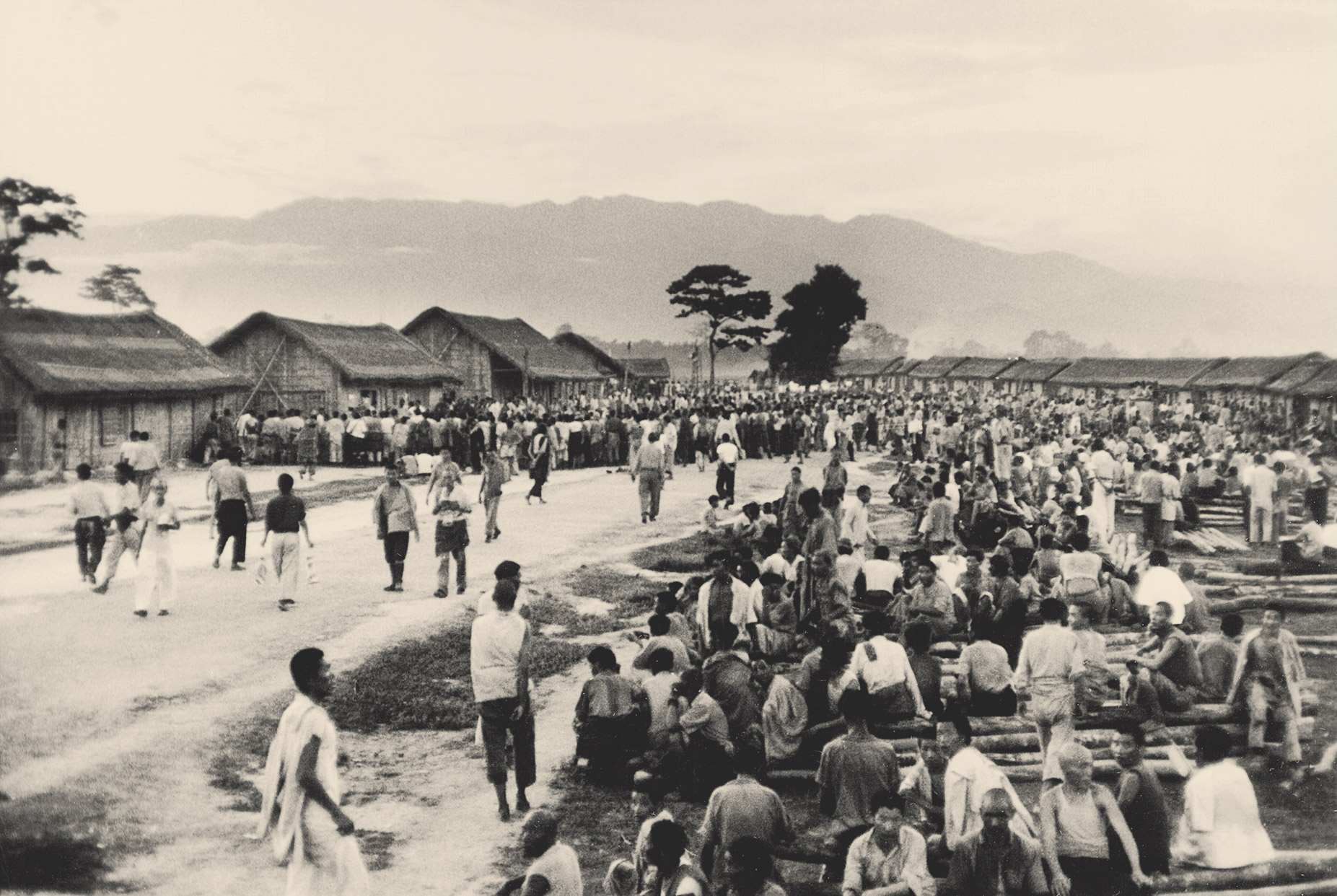
A group of newly arrived Tibetan refugees at Missamari Transit Camp in Assam (formerly West Bengal), April 1959. Within weeks, over 6,000 Tibetans had arrived in Missamari, where they were provided temporary shelter. Photo courtesy: Tibet Documentation
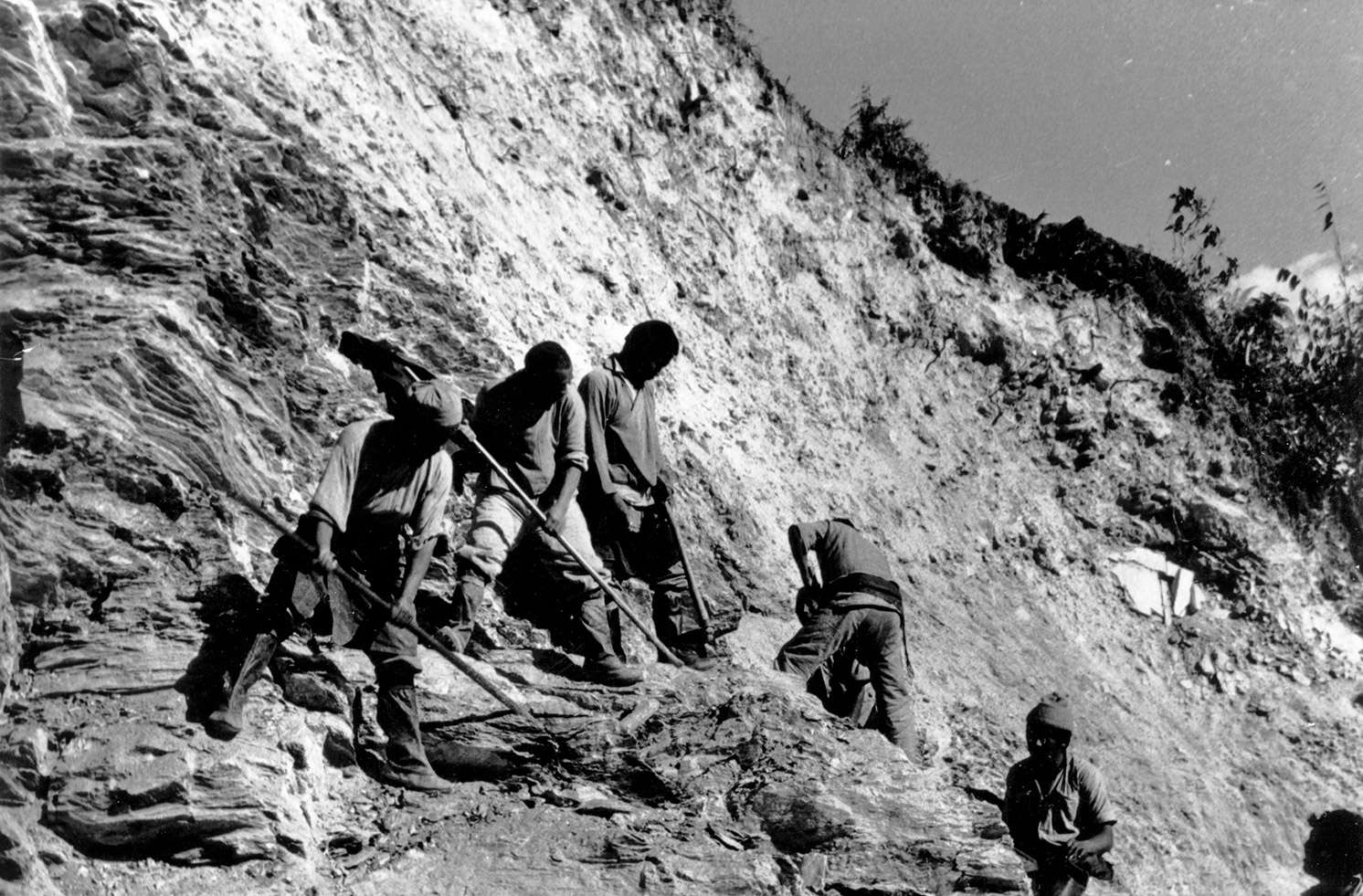
In the early years of exile, many Tibetans worked on road construction projects across the Himalayan regions of India, Nepal, and Bhutan. These labor-intensive jobs provided a livelihood in the absence of formal support. Photo courtesy: The Tibet Museum
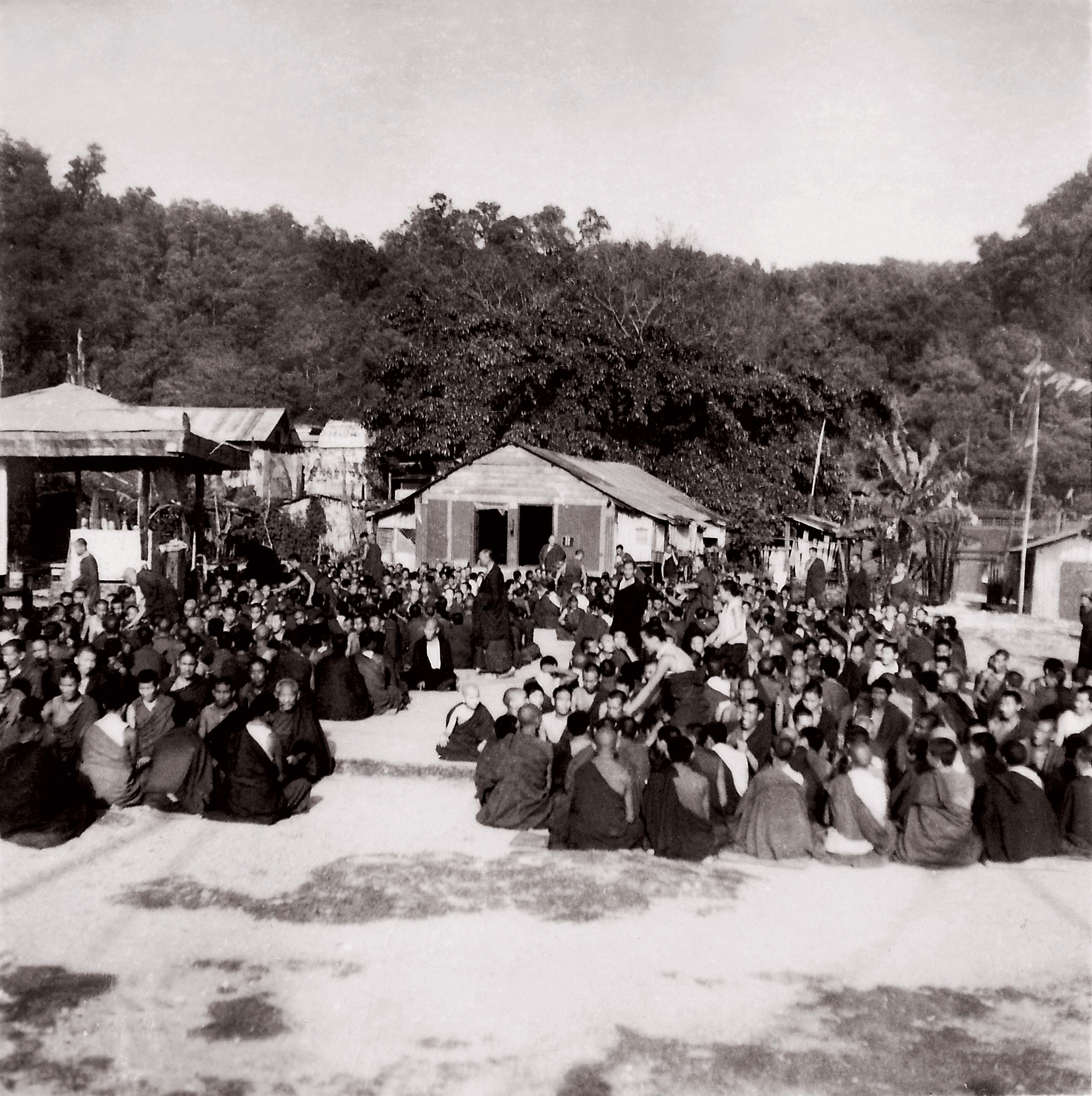
A group of Tibetan monks at Buxa Transit Camp in West Bengal. Initially a transit camp for Tibetan refugees coming via Bhutan, the camp was later designated as a monastic centre—known as “Lama Ashram. The first Tibetan monastery in exile was established here. Photo courtesy: Tibet Documentation
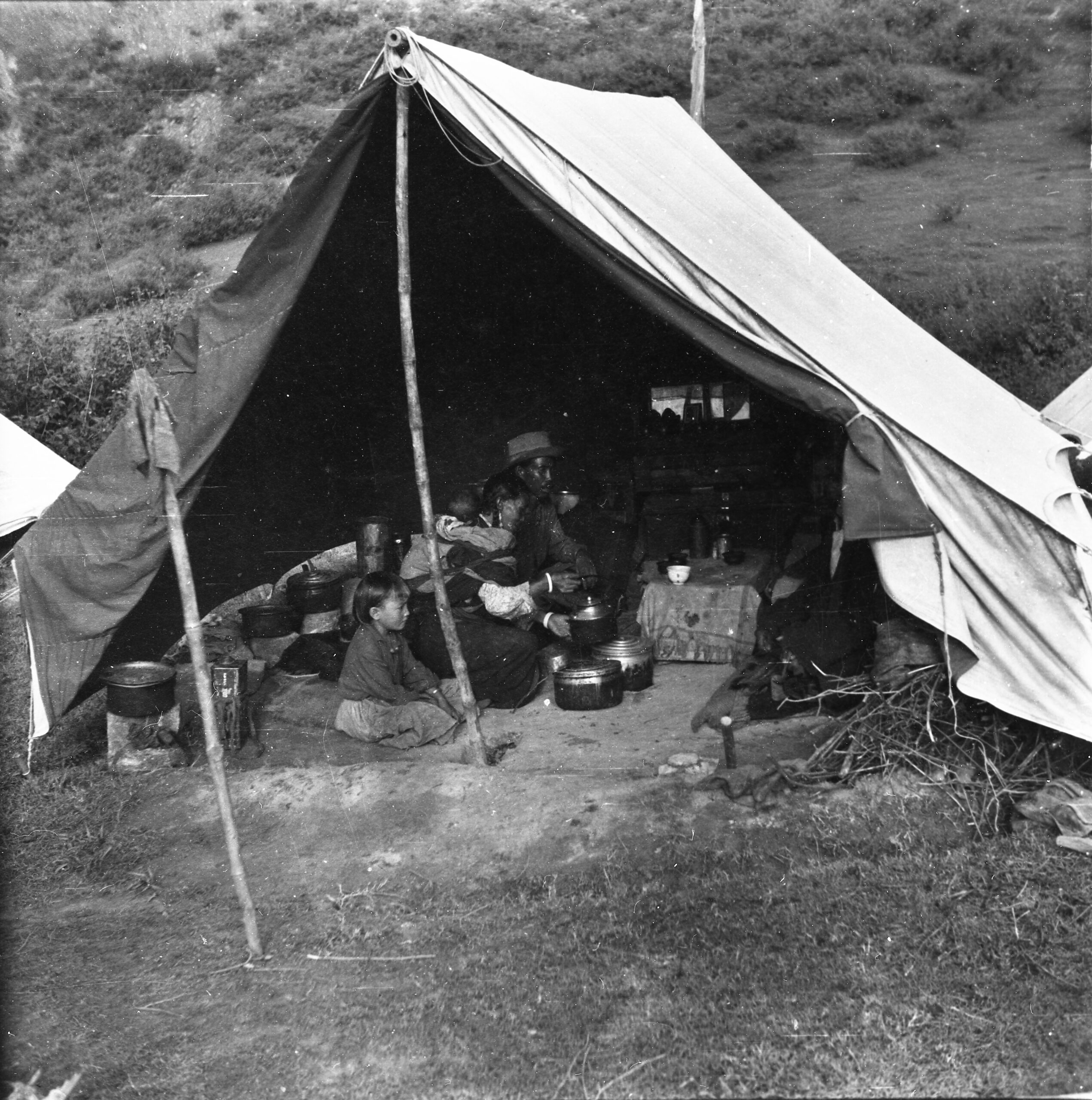
A family of Tibetan road worker families inside their temporary tent in Palampur, Punjab (now Himachal Pradesh), 1960s, reflecting the harsh living conditions of early exile life.
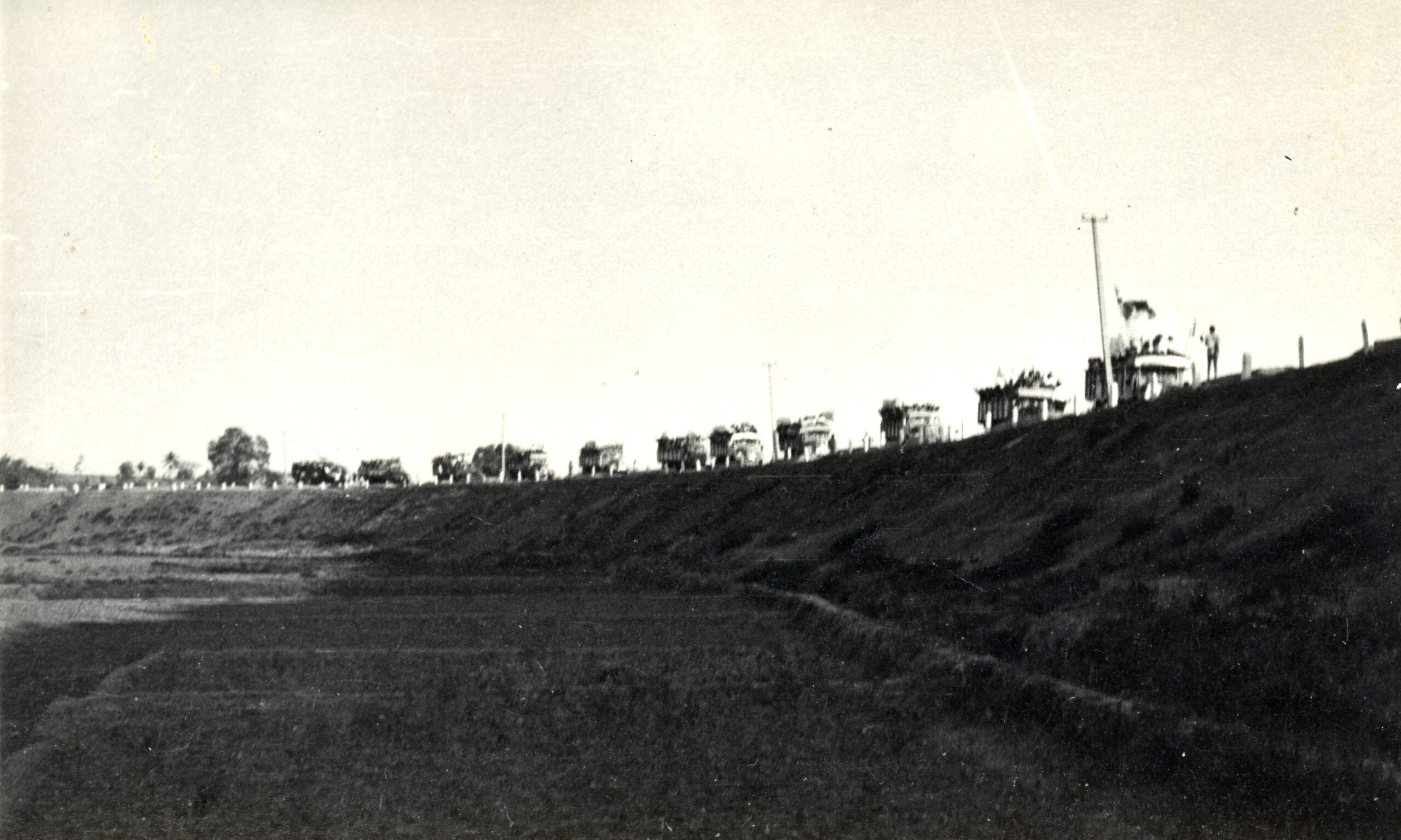
The first group of Tibetan settlers arrive at Bylakuppe in Karnataka State, 10 December 1960. The Tibetan national flag is seen atop the lead vehicle—a symbol of pride and resilience. Photo courtesy: Tibet Documentation
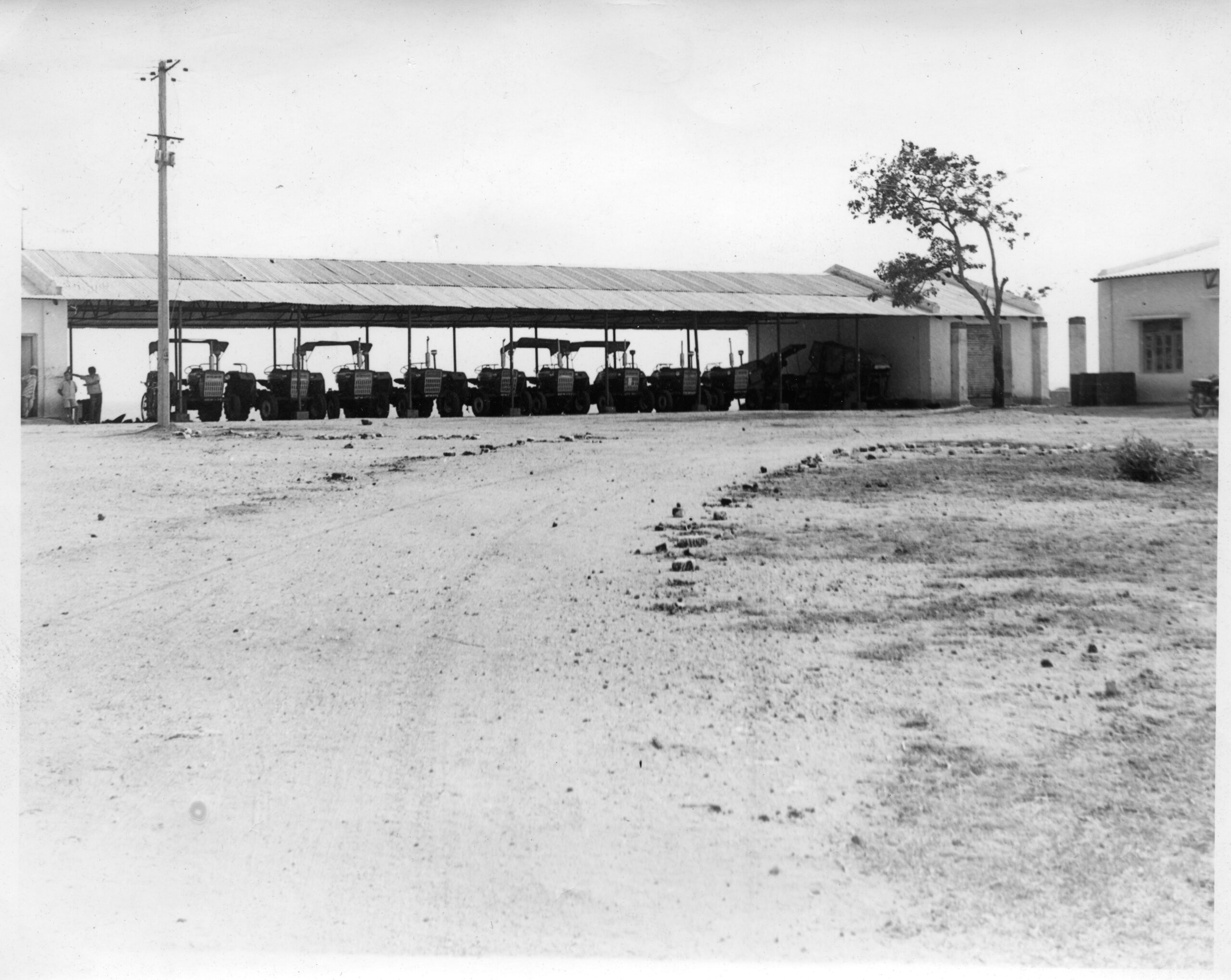
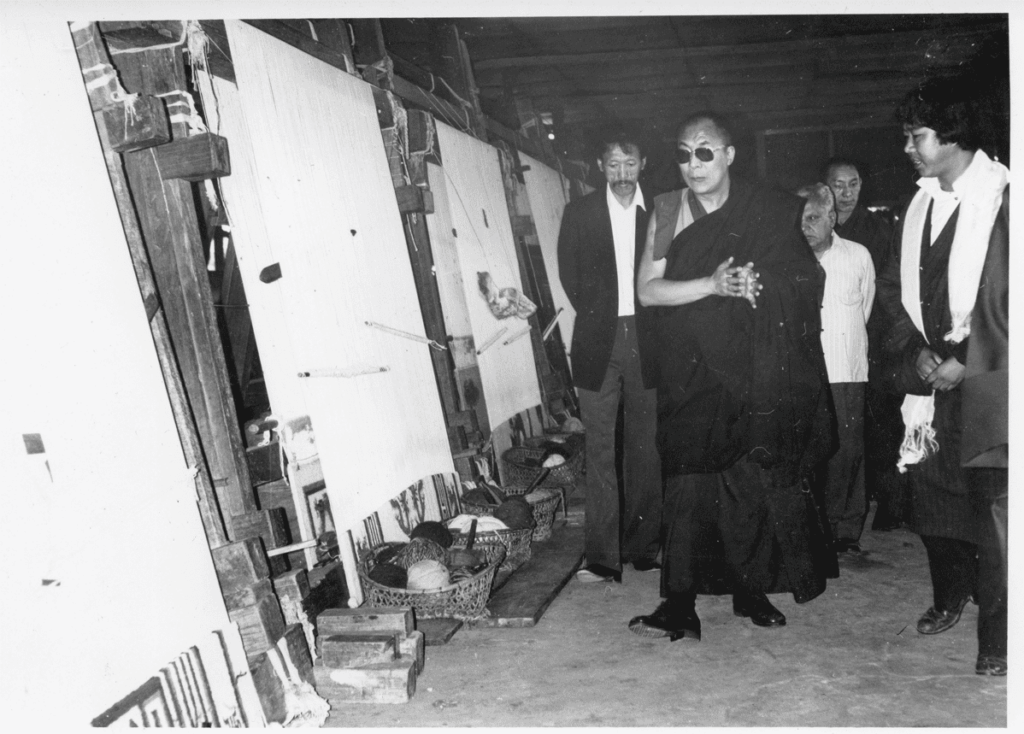
Tractor workshop, Tezu Dhargayling Settlement, Arunachal Pradesh, 1980s. The Tibetan Co-operative Society provides a wide range of services to the residents of the settlement, including tractor rentals, transportation, and mechanical support.
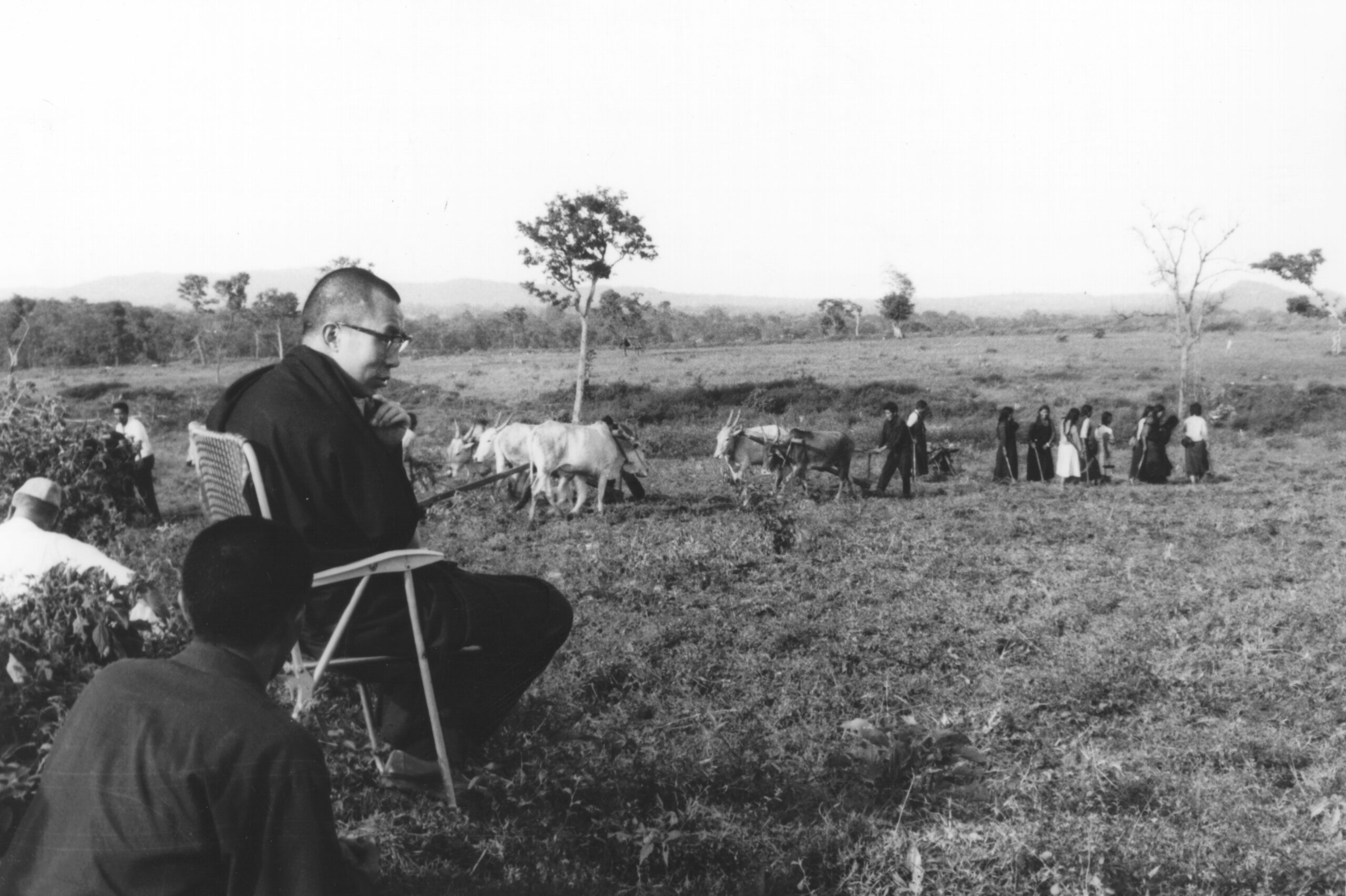
His Holiness the Dalai Lama inspecting agricultural development during his first visit to the Lugsung Samdupling Tibetan Settlement in Bylakuppe, Karnataka State, 1963. Photo courtesy: Library of Tibetan Works and Archives
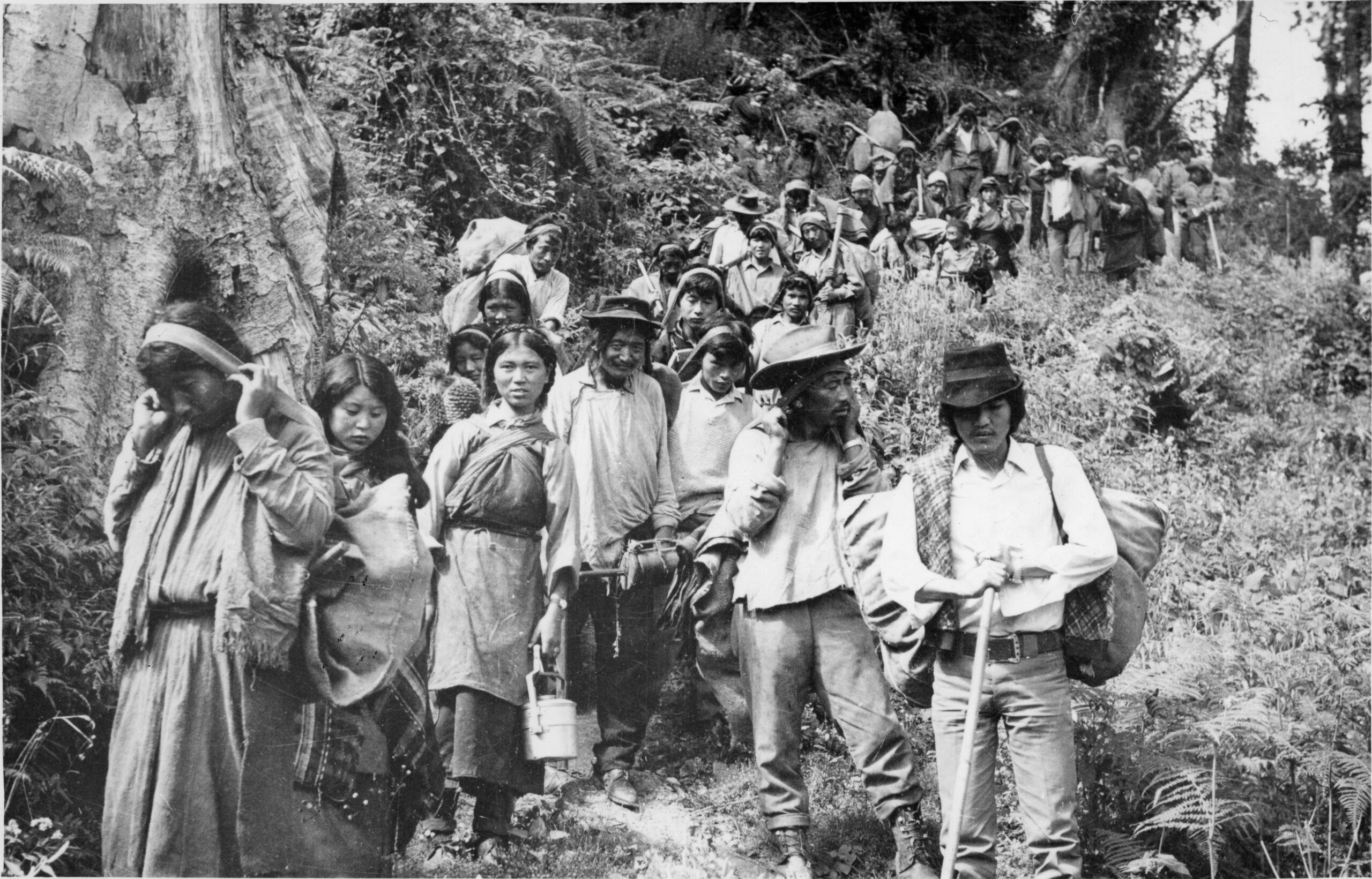
A group of resident refugees en route to the newly established Tenzingang Tibetan settlement in Arunachal Pradesh, guided by Namgyal Tsering, then Office Secretary of the settlement, 1970s.
His Holiness the Dalai Lama at the inauguration of the first residential school for Tibetan refugee children in Mussoorie, 3 March, 1960. The school opened with 50 students aged between 13 to 35. Photo courtesy: Tibet Documentation
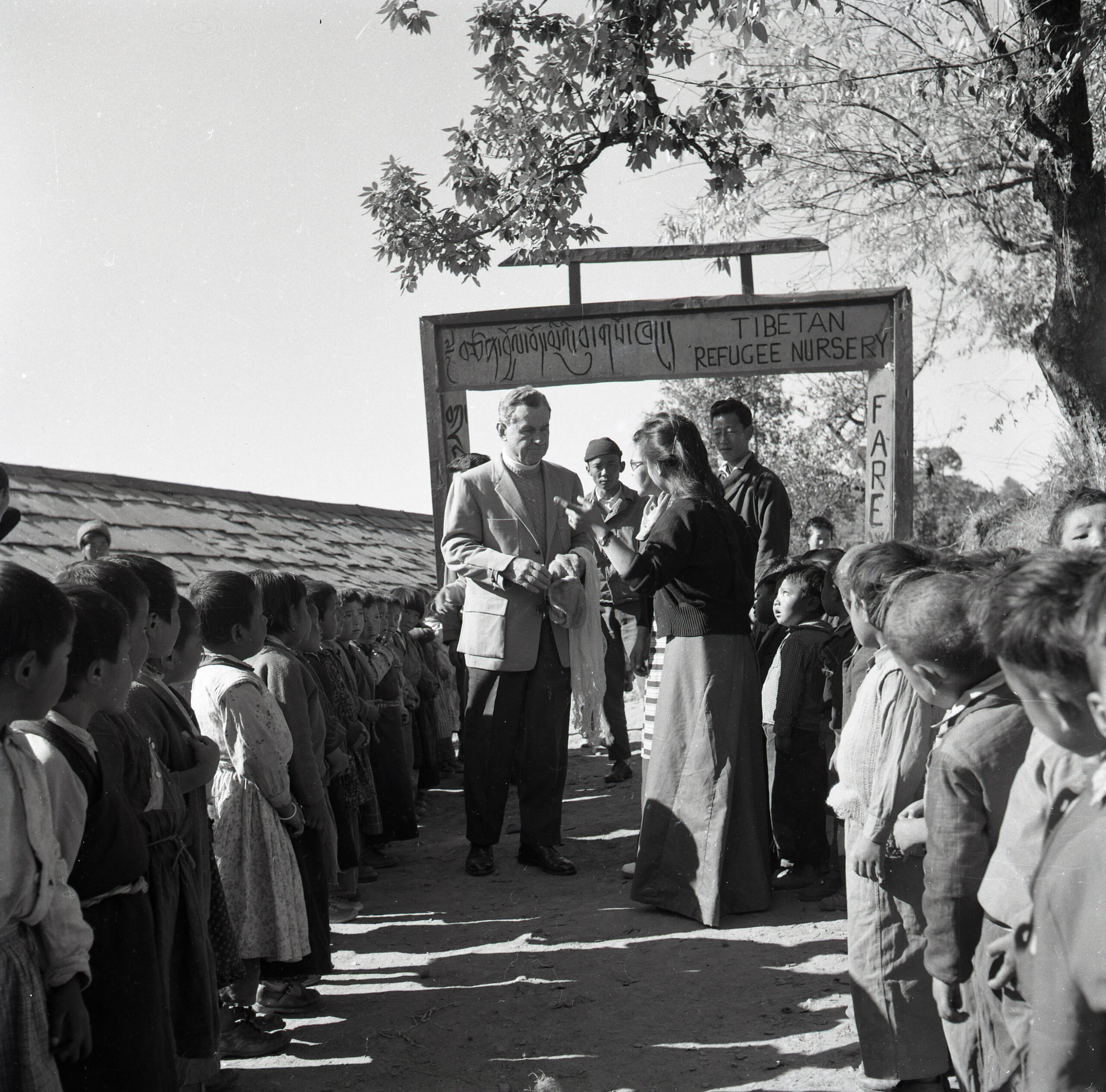
Tibetan Refugee Nursery, Dharamshala, 1960. Founded by the Dalai Lama’s elder sister Tsering Dolma, the nursery looks after the Tibetan refugee children. It later evolved into the Tibetan Children’s Village (TCV), led for decades by the Dalai Lama’s younger sister Jetsun Pema. Copyright: Lowell Thomass Collection, Marist College
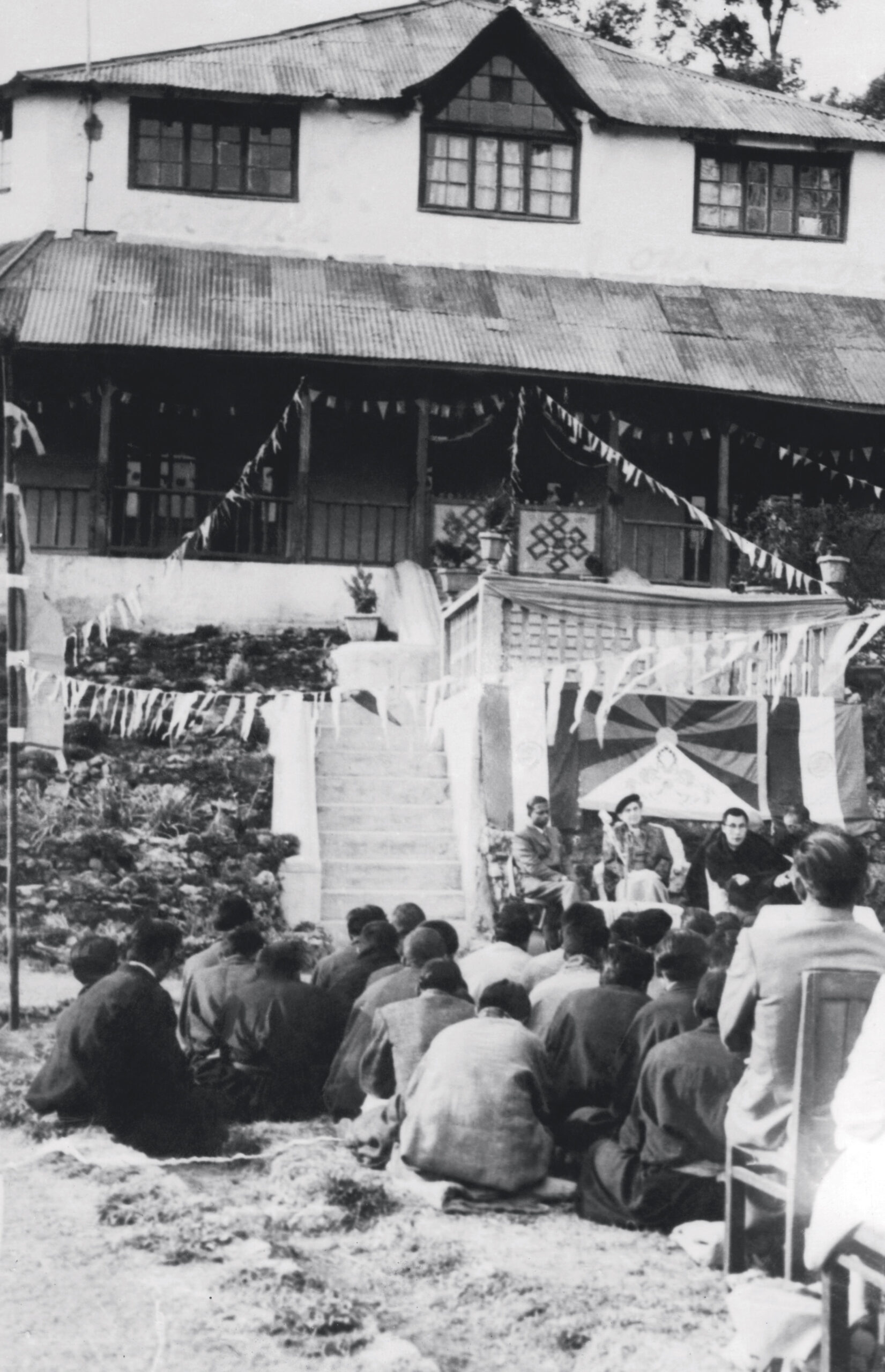
His Holiness the Dalai Lama with Tibetan children from road camps, Dharamshala, 1960. Over 50 children from Jammu Road construction camps received an audience with His Holiness at Swarg Ashram – his first residence in Dharamsala. Photo courtesy: Library of Tibetan Works and Archives
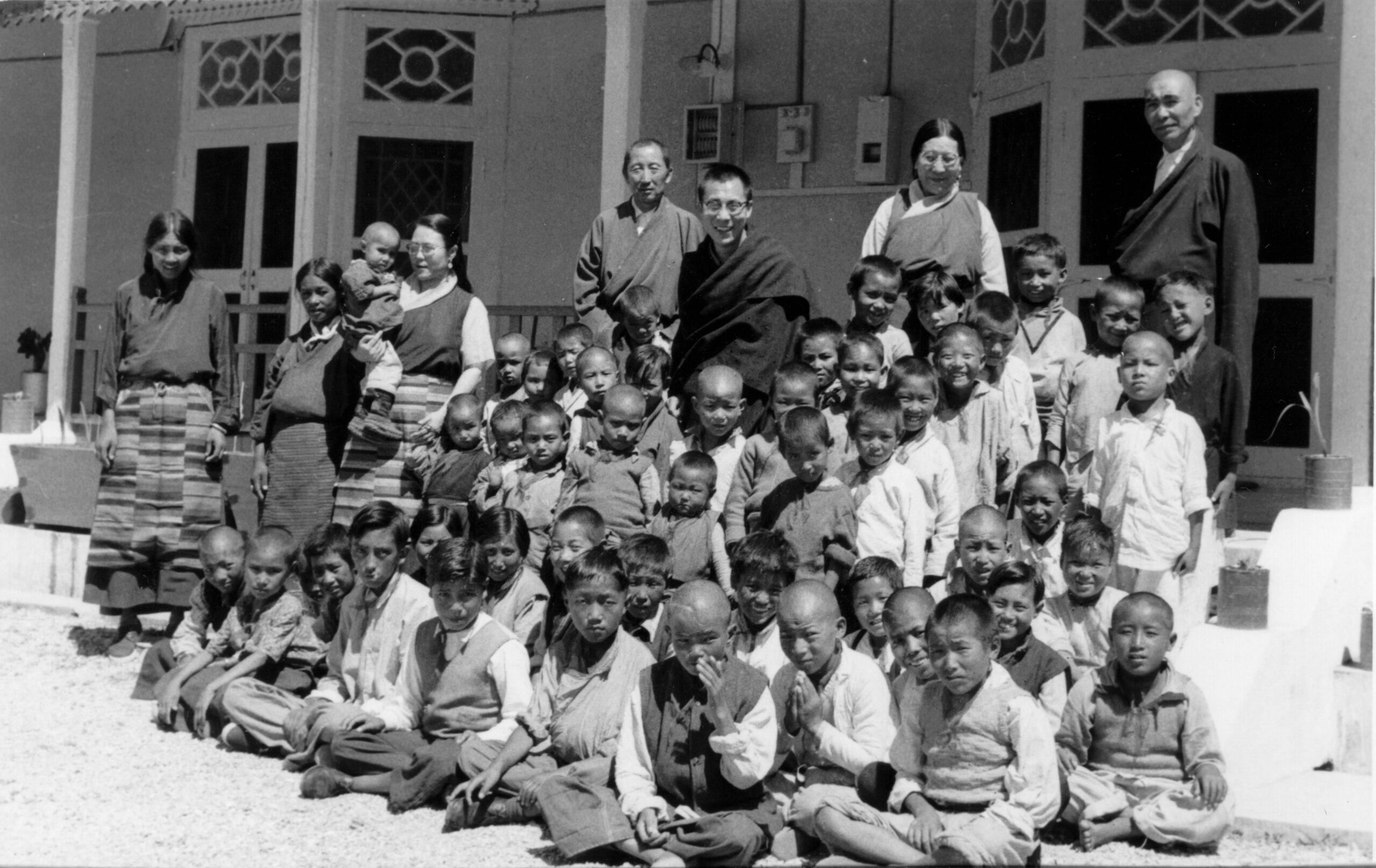
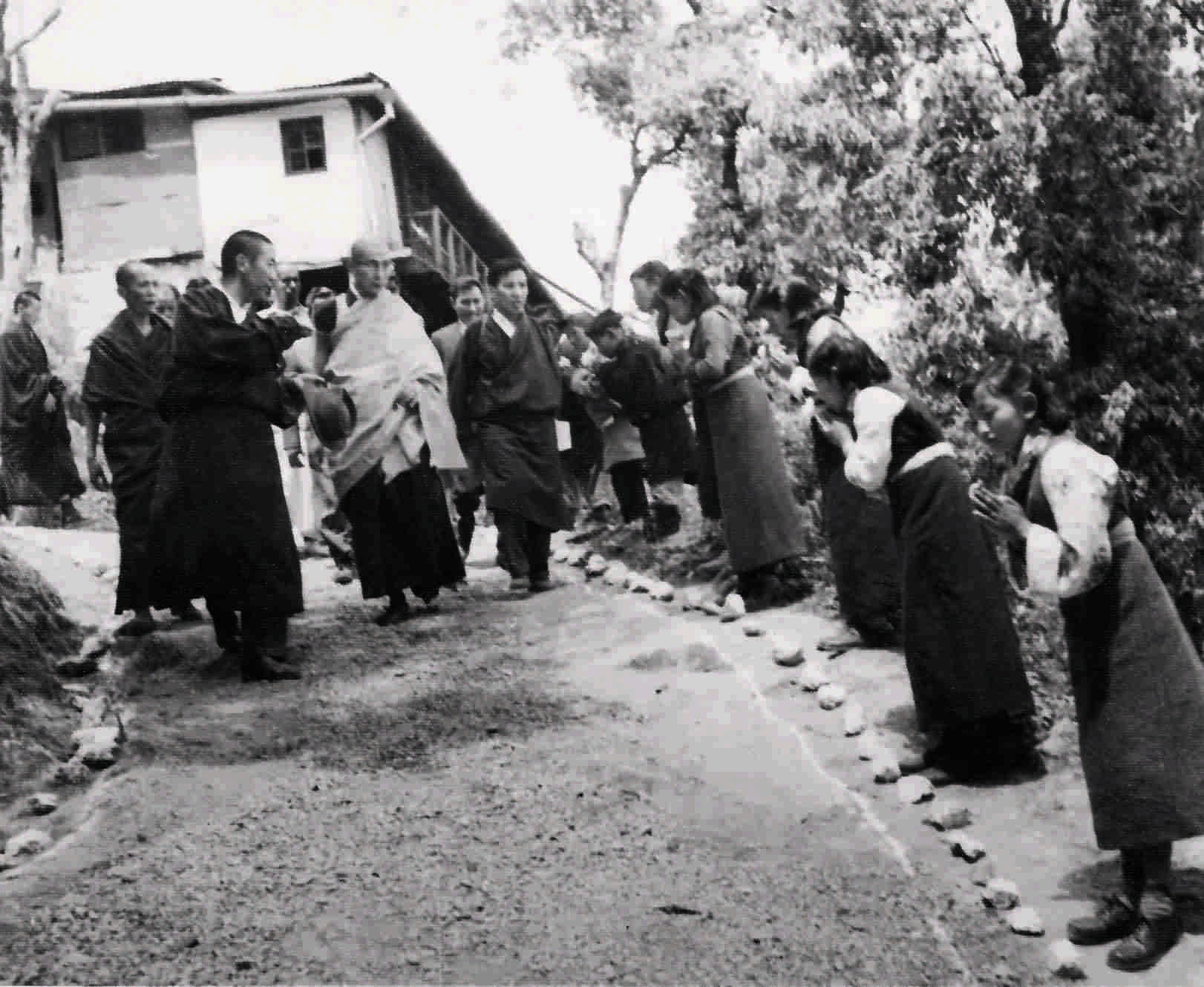
His Holiness the Dalai being welcomed by children and staff of the Tibetan Homes Foundation in Mussoorie. The Foundation was established to provide orphaned and destitute Tibetan children, a nurturing family environment. Inaugurated by His Holiness on April 23, 1963, the first three homes were personally funded by him. Photo courtesy: Tibet Documentation
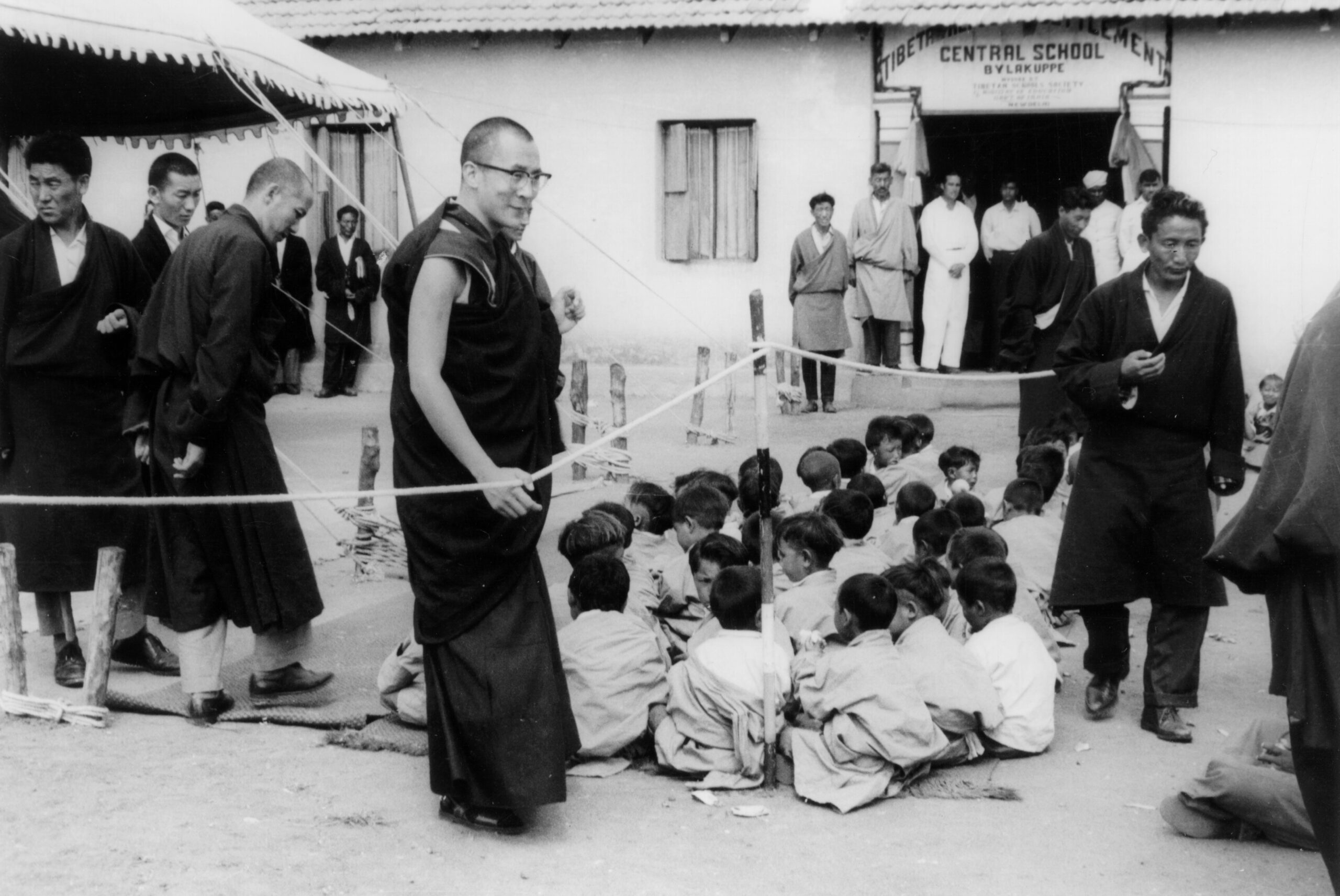
His Holiness the Dalai Lama during a visit to the Central School for Tibetans in Bylakuppee, Karnataka State, late 1960s. Photo courtesy: Library of Tibetan Works and Archives
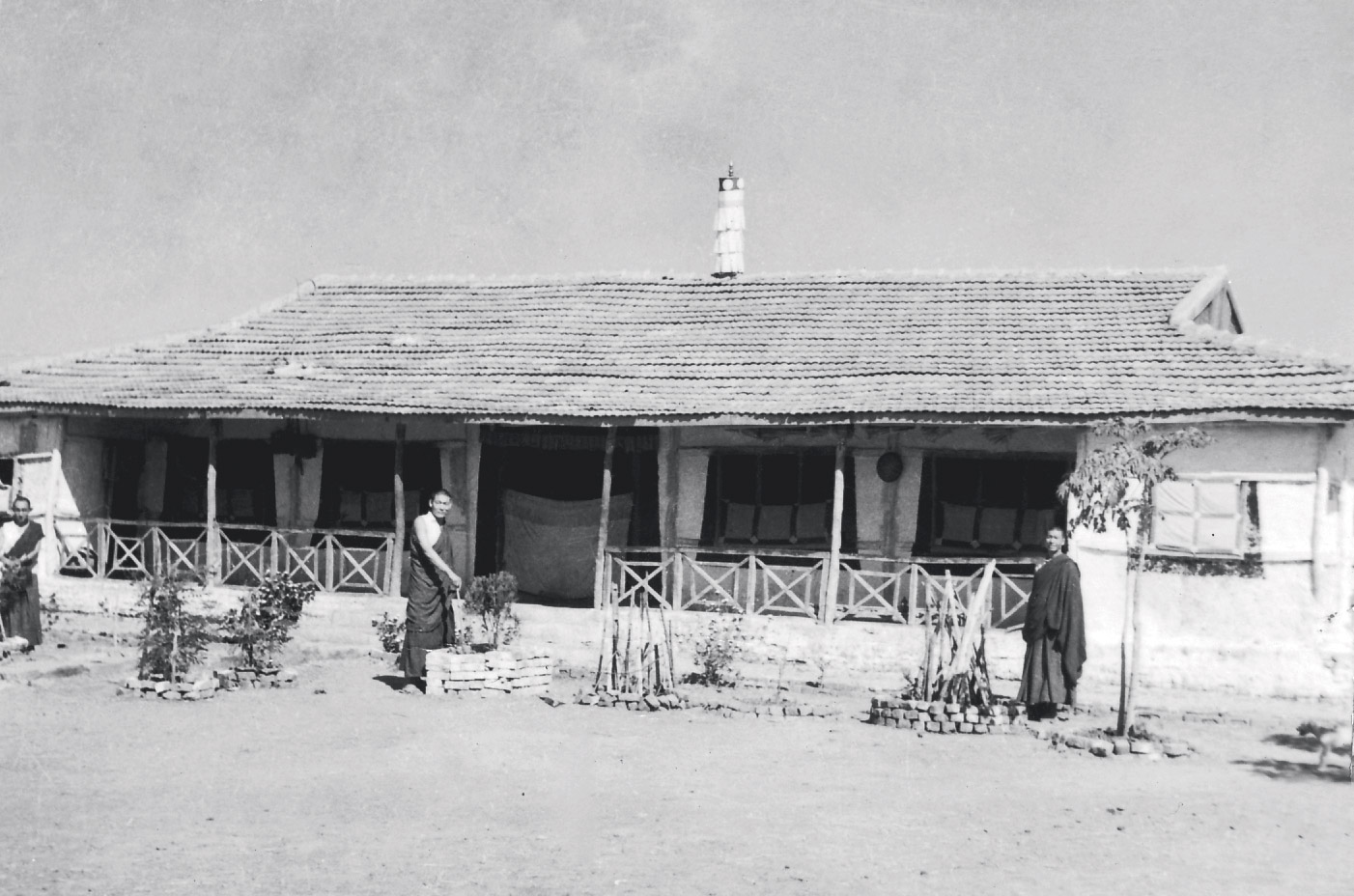
The first re-established Gelug monastery in exile, Gaden Shartse Norling, was founded in 1970 at Mundgod Tibetan Settlement. It continues the legacy of one of the three great monastic institutions of Tibet. Photo courtesy: Tibet Documentation
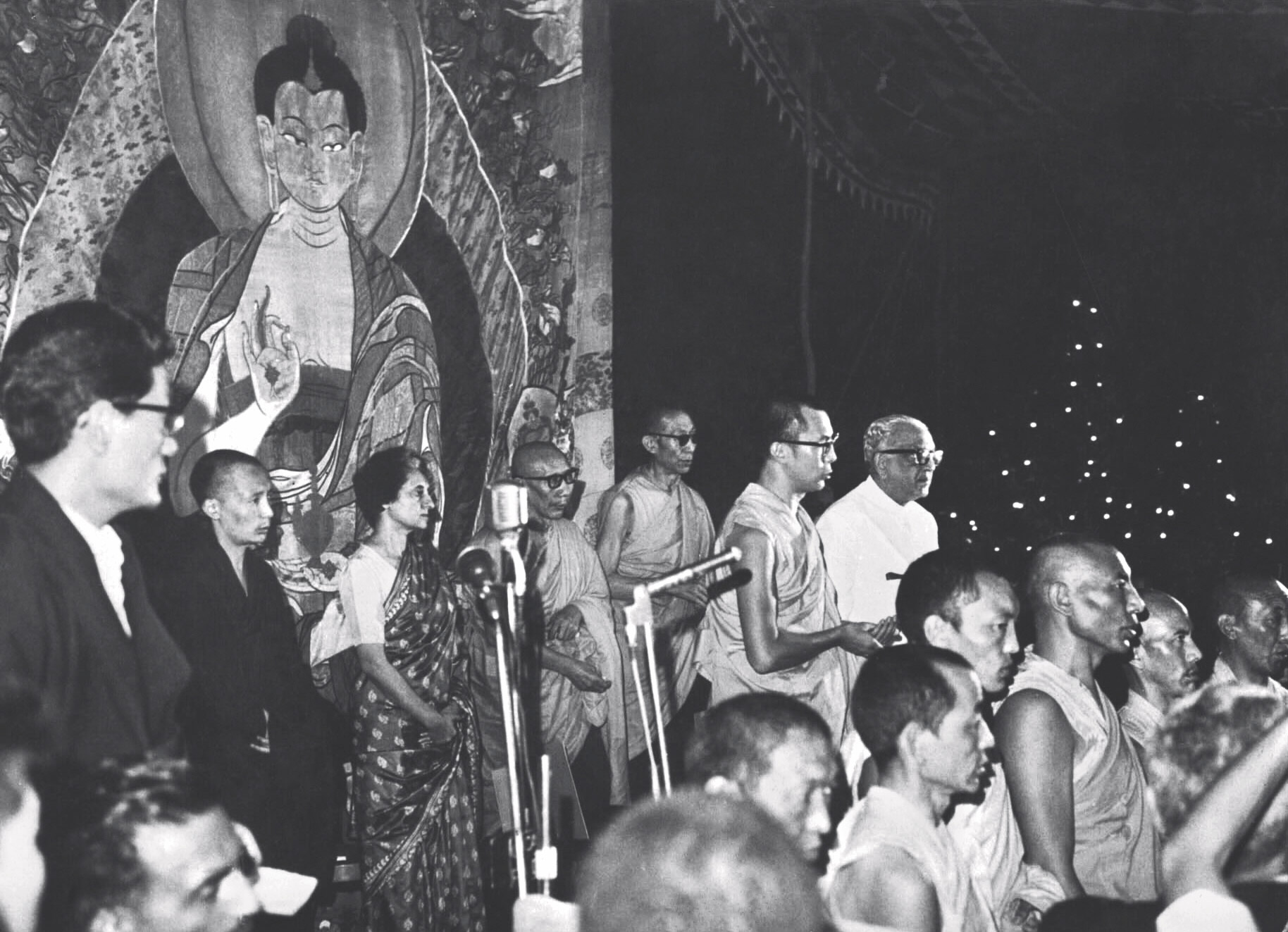
His Holiness the Dalai Lama with chief guest M.C. Chagla (Union Minister for Education) at the inauguration of Tibet House, Jor Bagh, New Delhi, October 26, 1965. Also seen are the Dalai Lama’s two tutors and Mrs. Indira Gandhi, with Domo Geshe Rinpoche, the first Director of Tibet House. Photo courtesy: Tibet Documentation
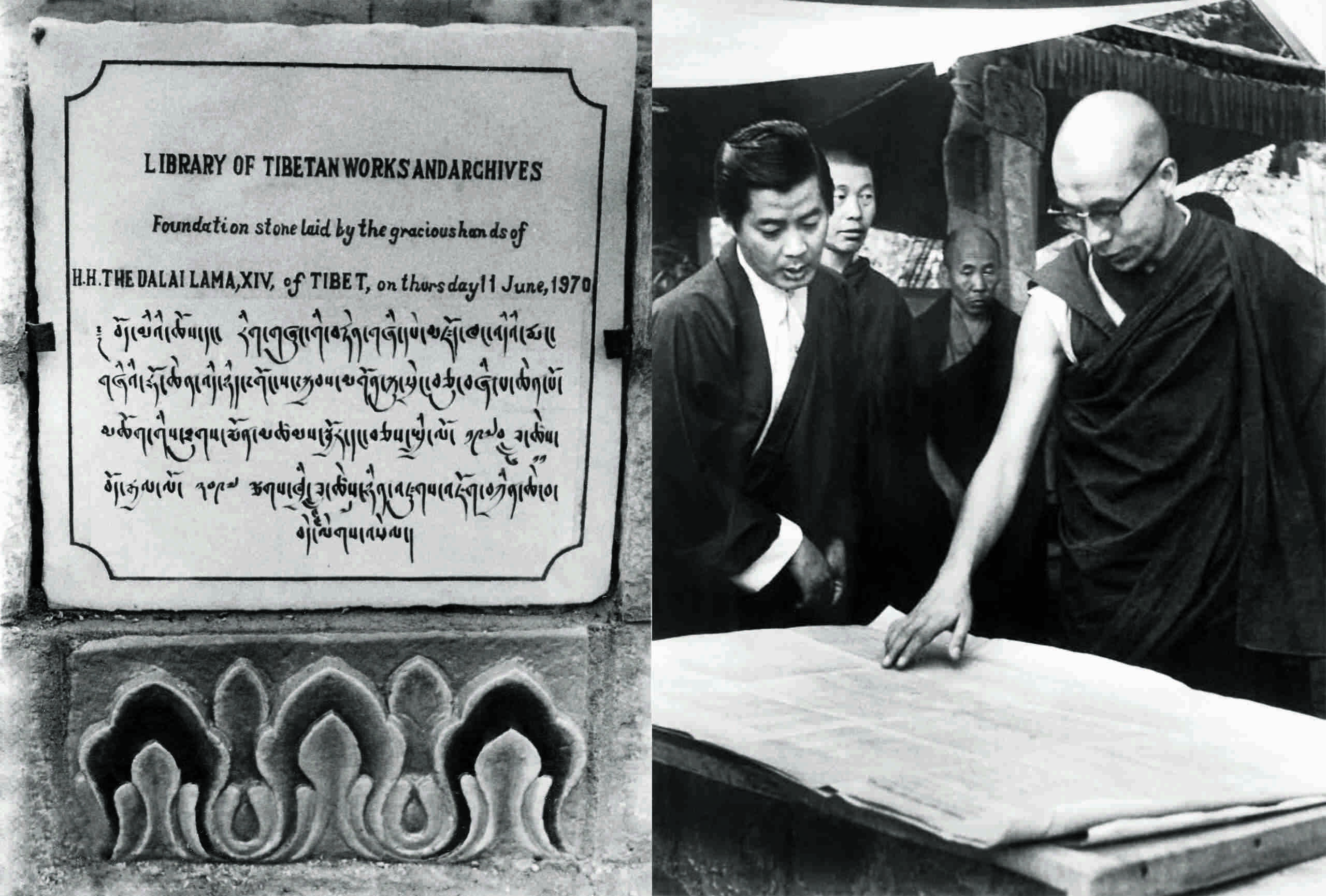
His Holiness the Dalai Lama reviewing the blueprint of the construction of the Library of Tibetan Works and Archives (LTWA) with Gyatsho Tshering, the first acting Director. The foundation stone was laid by the Dalai Lama on June 11, 1970, in Dharamshala, establishing a vital institution for preservation and research. Photo courtesy: Tibet Documentation