Reimagining Governance: Democratization in Exile

After coming into exile in India, the Tibetan community faced the immense challenge of rebuilding a nation without territory. Recognizing the need for unity, legitimacy, and resilience, His Holiness the 14th Dalai Lama initiated a historic process of democratizing Tibetan governance in exile.

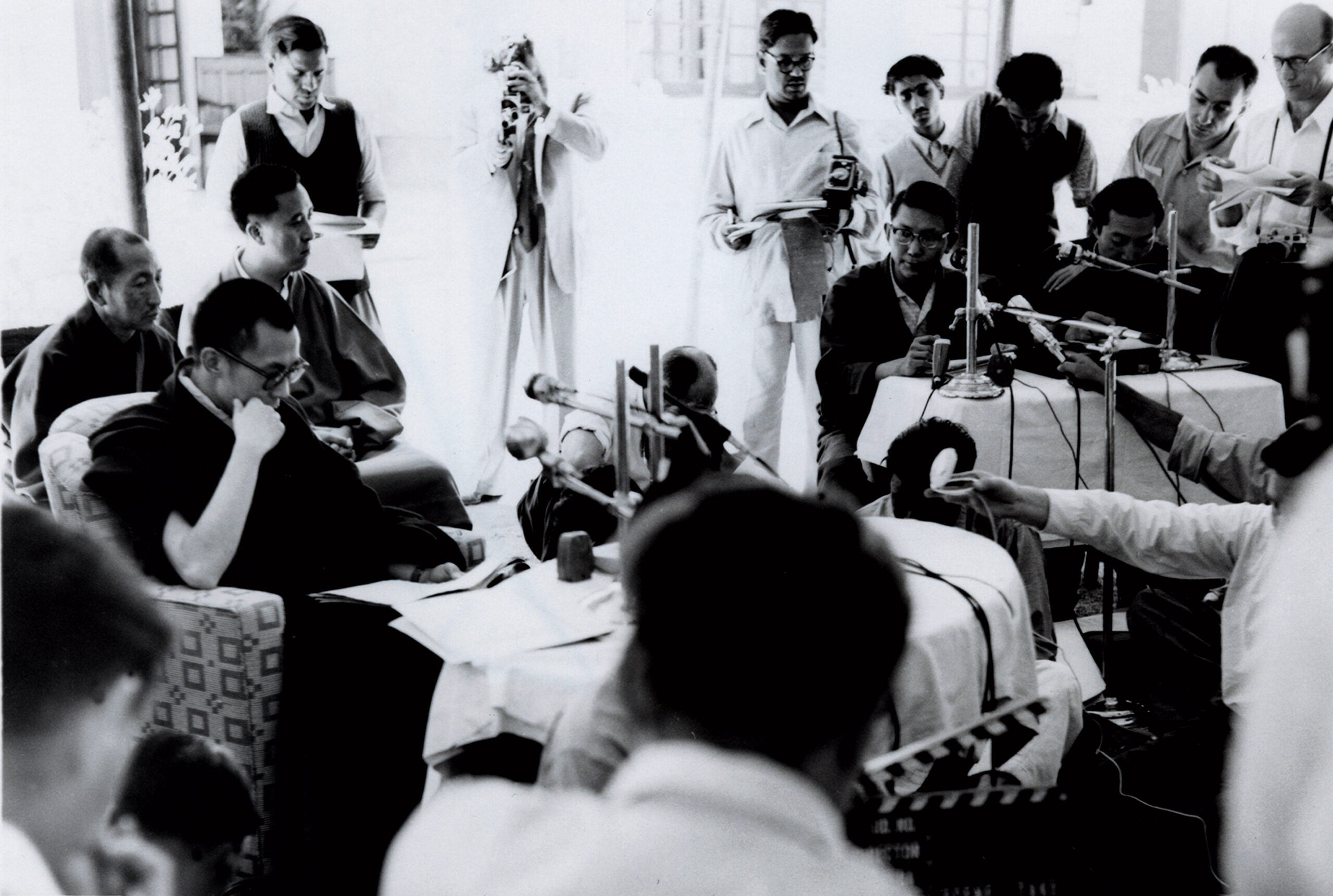
During his first formal press conference in Mussoorie on June 20, 1959, His Holiness declared:

“As far as Tibetans everywhere are concerned, where the Dalai Lama’s cabinet and his people are present, there will exist the legitimate government of Tibet.”

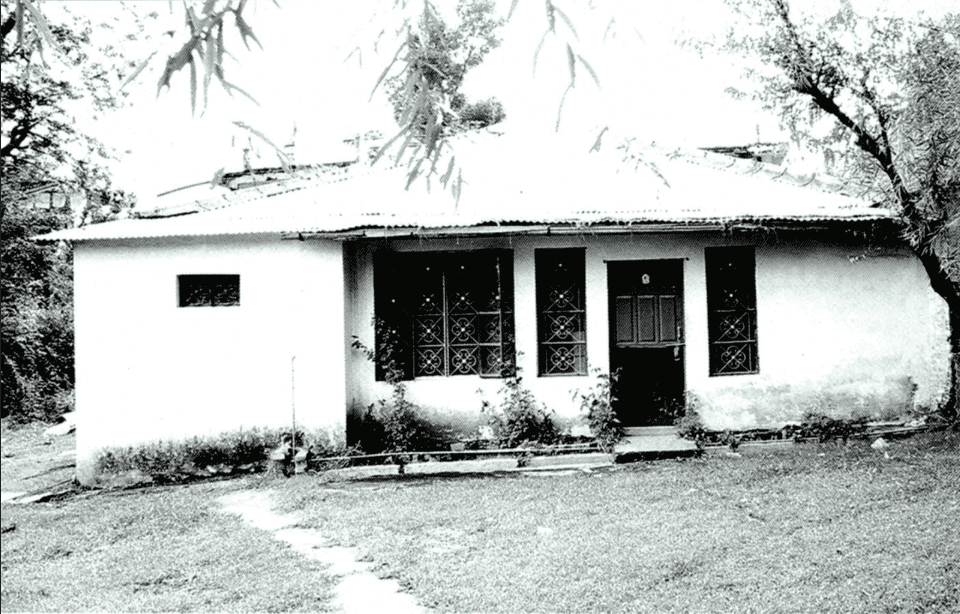
In April 1959, he established the Central Tibetan Administration (CTA) in Mussoorie as the continuation of Tibet’s legitimate government. At a gathering in Bodhgaya in early 1960, representatives from Tibet’s three traditional provinces pledged the “Great Oath of Unity” (Na-gan-Thunmoche), vowing to work collectively under the Dalai Lama’s leadership for the welfare of all Tibetans. This marked the beginning of a new vision of governance rooted in unity, representation, and democratic ideals.

After relocating the CTA to Dharamshala on April 30, 1960, His Holiness initiated a series of political and administrative reforms. On September 2, 1960, the first elected body—the Commission of Tibetan People’s Deputies (now the Tibetan Parliament-in-Exile)—was formally established. This date is now observed annually as Tibetan Democracy Day.

Subsequent milestones included the presentation of a Draft Constitution for a future Tibet (1963) and the adoption of the Charter of Tibetans-in-Exile (1991), which enshrined the separation of powers among the legislative, executive, and judiciary. Key democratic institutions were also created, including the Tibetan Supreme Justice Commission, the Election Commission, the Public Service Commission, and the Office of the Auditor General.

In 2001, Tibetans in exile directly elected their Kalon Tripa (Prime Minister) for the first time, with Prof. Samdhong Rinpoche assuming office. A decade later, in 2011, His Holiness devolved all political authority to the elected leadership. Dr. Lobsang Sangay became the second directly elected head of the CTA, ushering in a new era of democratic self-governance.

Today, the Tibetan democratic system in exile stands as a testament to His Holiness’s vision—harmonizing spiritual values with modern political ideals. With a functioning parliament, judiciary, and executive leadership, the CTA continues to represent Tibetans worldwide and foster democratic participation, unity, and resilience—even in exile.

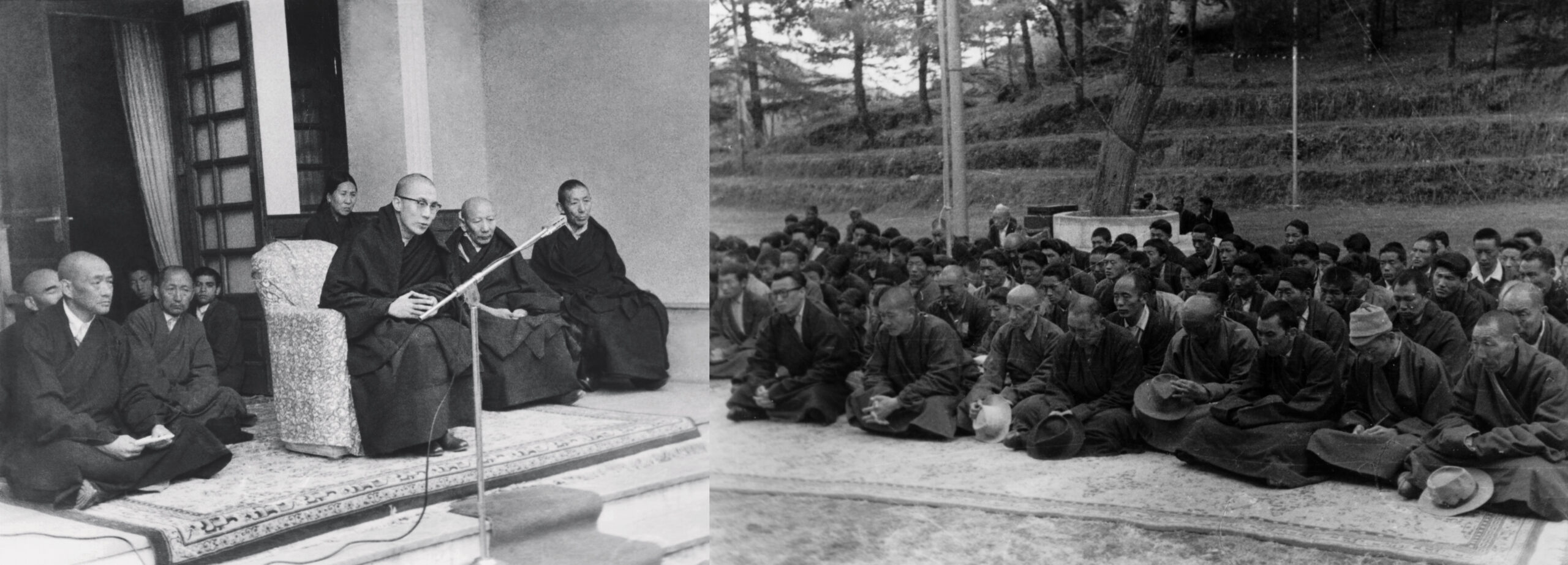
His Holiness the Dalai Lama addressing a group of Tibetan government officials at Birla House, Mussoorie. On April 29, 1959, His Holiness formally established the Tibetan Government-in-Exile, as the continuation of the Gaden Phodrang government of independent Tibet. Photo courtesy: Tibet Documentation
His Holiness the Dalai Lama during his first formal press conference at Birla House, Mussoorie, June 29, 1959. He publicly denounced the “17-Point Agreement” imposed by China and declared that his government-in-exile (Central Tibetan Administration) as a legitimate government of Tibet. Photo courtesy: Tibet Documentation

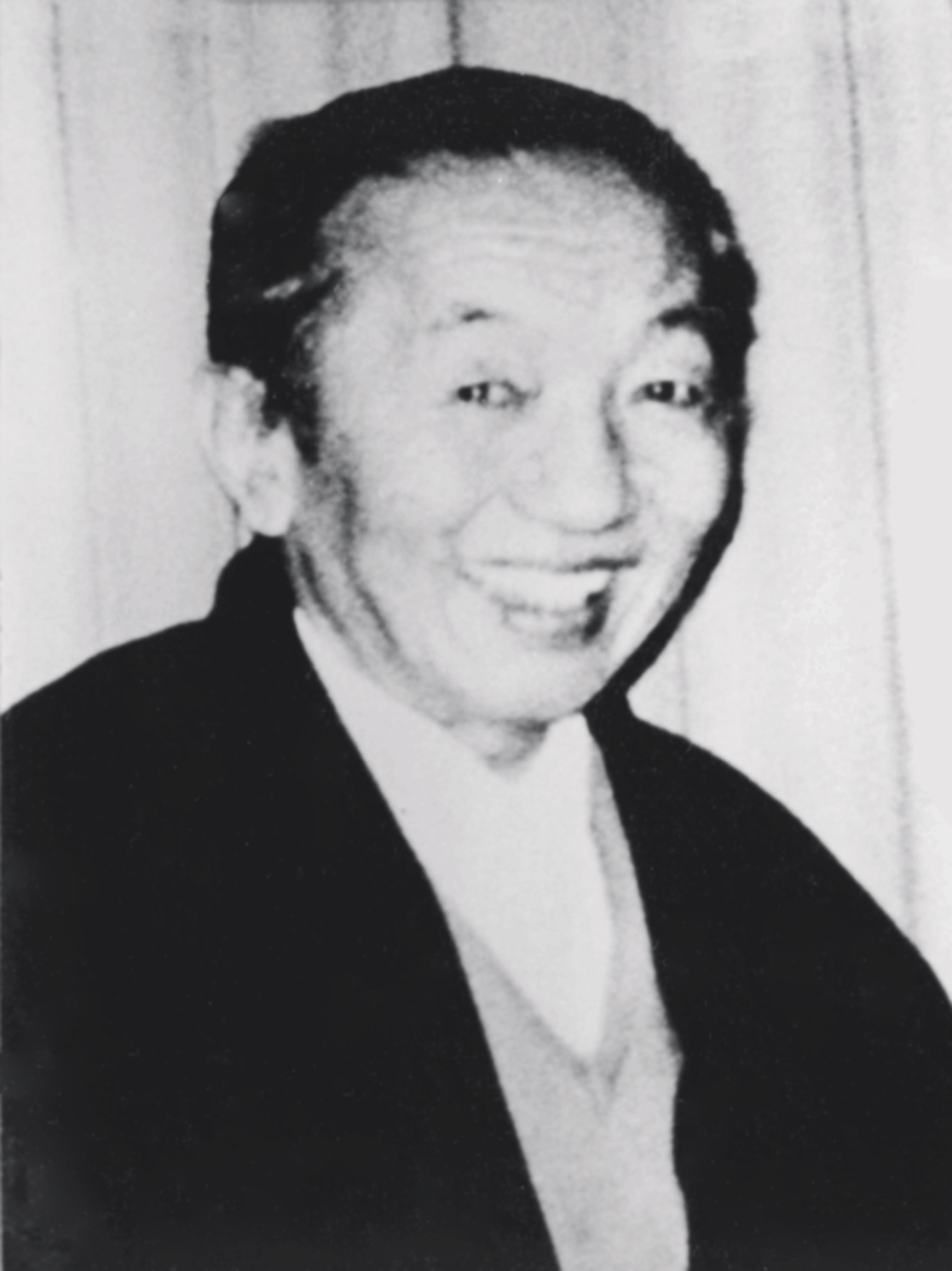
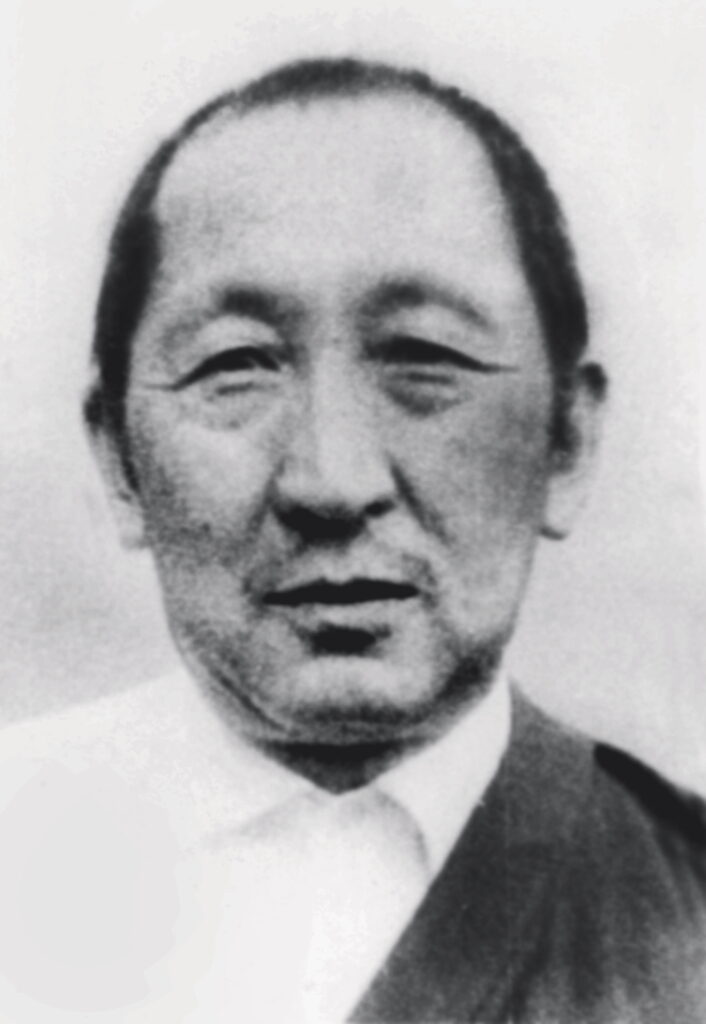
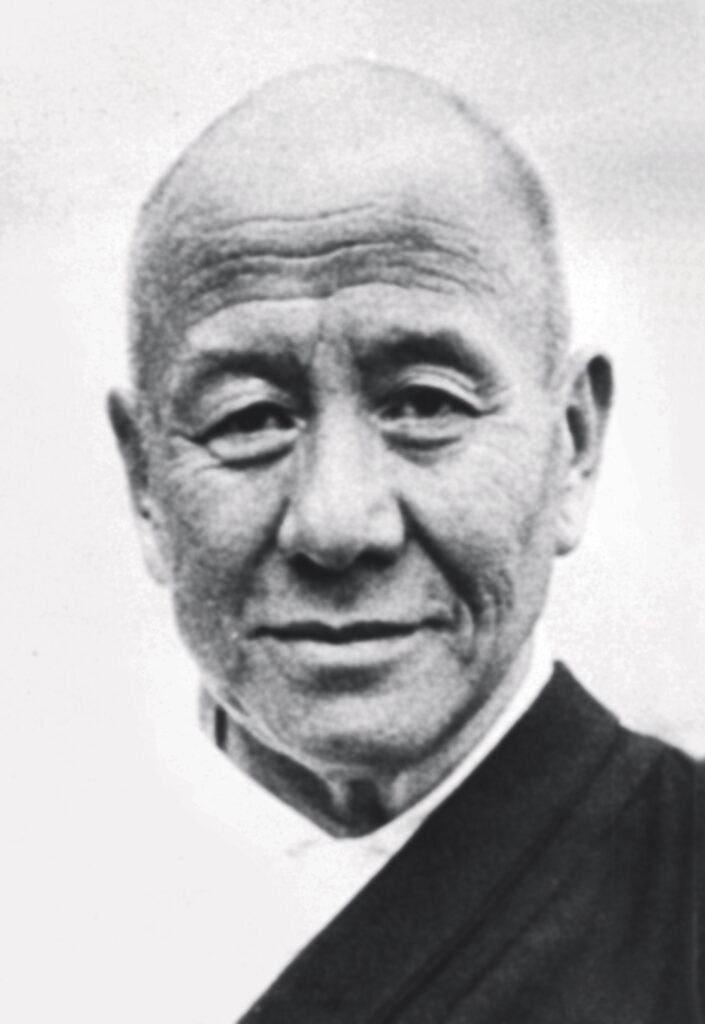
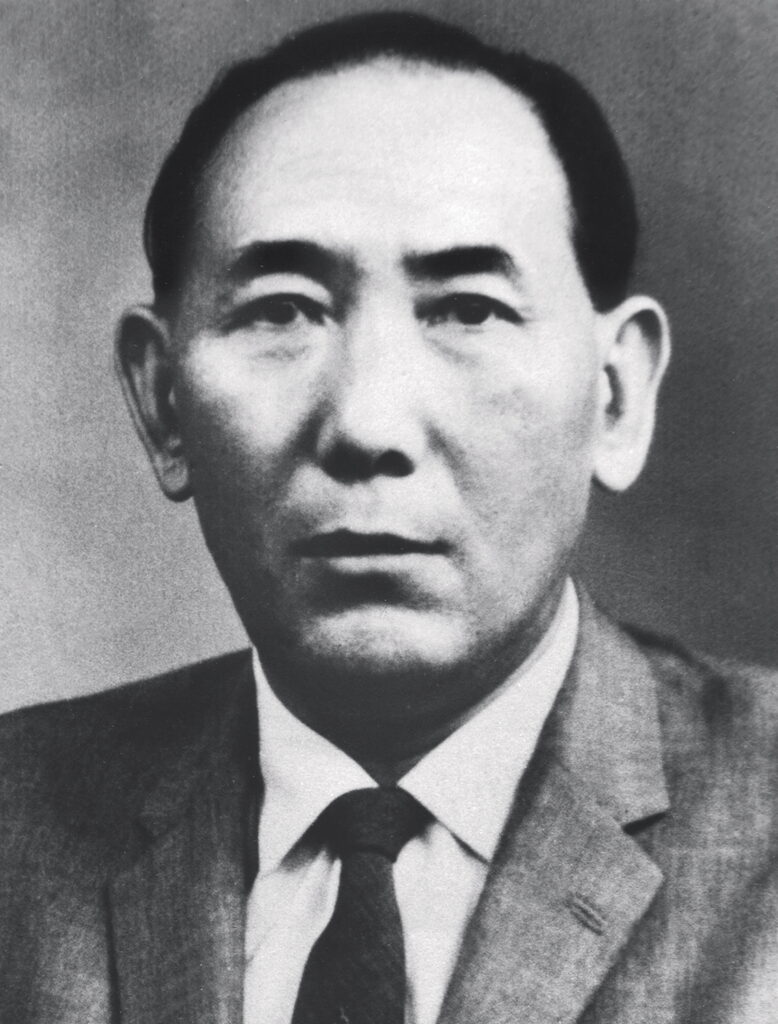
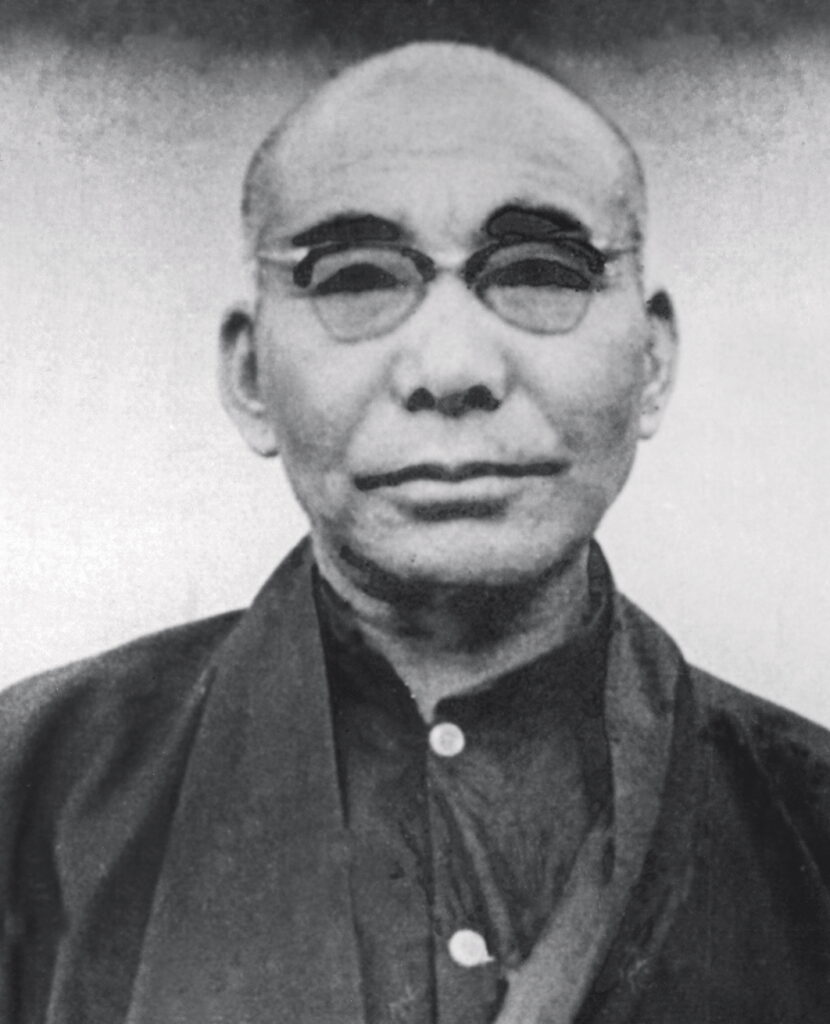
Members of the first Kashag (Cabinet) of the Tibetan Government-in-Exile:

Surkhang Wangchen Gelek

Chairman of the Kashag

Liushar Thupten Tharpa

Minister of Foreign

Shenkha Gyurmey Topgyal

Minister of Religion

Yuthok Tashi Dhondup

Minister of Finance

Gadrang Lobsang Rigzin

Minister of Finance

All members of the first Kashag had served as senior officials inside Tibet and had escaped into exile with His Holiness, except Yuthok Tashi Dhondup who was already stationed in Kalimpong at the time. Photo courtesy: Tibet Documentation

An excerpt from Na-gan Thunmoche (The Great Oath of Unity), pledged at the sacred site of Bodhgaya in the early 1960s by representatives of all monastic and lay communities of the three Tibetan provinces. The oath reaffirmed a collective commitment to unity under the leadership of His Holiness the Dalai Lama:

“… All Tibetans will strongly atone for their past misdeeds, and in the future shoulder our responsibility in accordance with the visions of His Holiness the Dalai Lama. Furthermore, we will eschew pursuance of personal name and fame driven by mutual jealousies and narrow-mindedness and remain united like an iron ball.
    There is no better way to achieve the short- and long-term collective happiness for all Tibetans other than for each of us to carry out his responsibilities per each person’s ability, in accordance with His Holiness the Dalai Lama’s deep vision and guidance. This being the unanimous observation of all of us, we have voluntarily and with our minds filled with happiness resolutely passed this resolution and pledge never to violate it.”

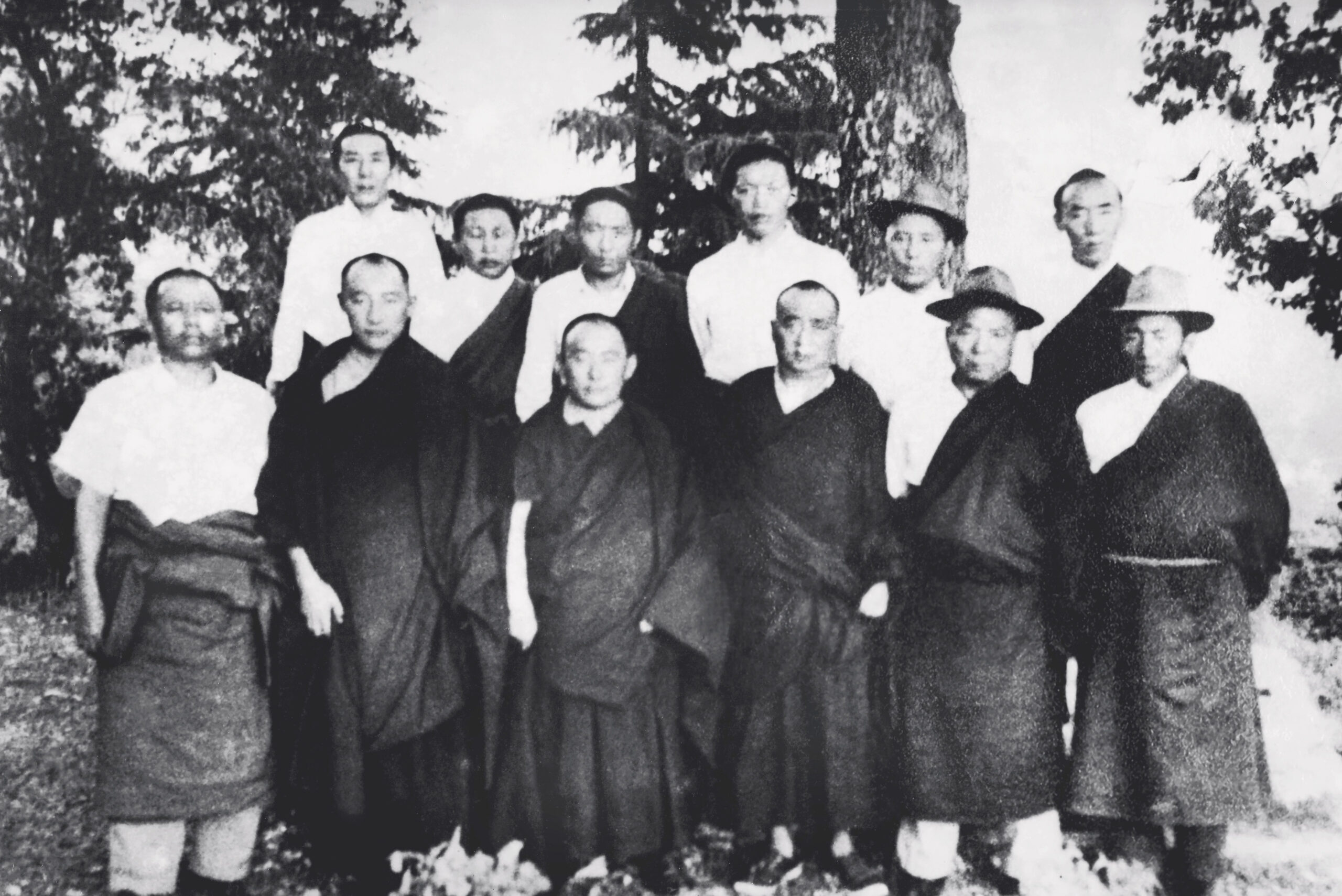
Members of the First Commission of Tibetan People’s Deputies (now Tibetan Parliament-in-Exile) from September 2, 1960 to February 19, 1964. The 13 elected members represented the three provinces of Tibet and four schools of Tibetan Buddhism. Photo courtesy: Tibet Documentation
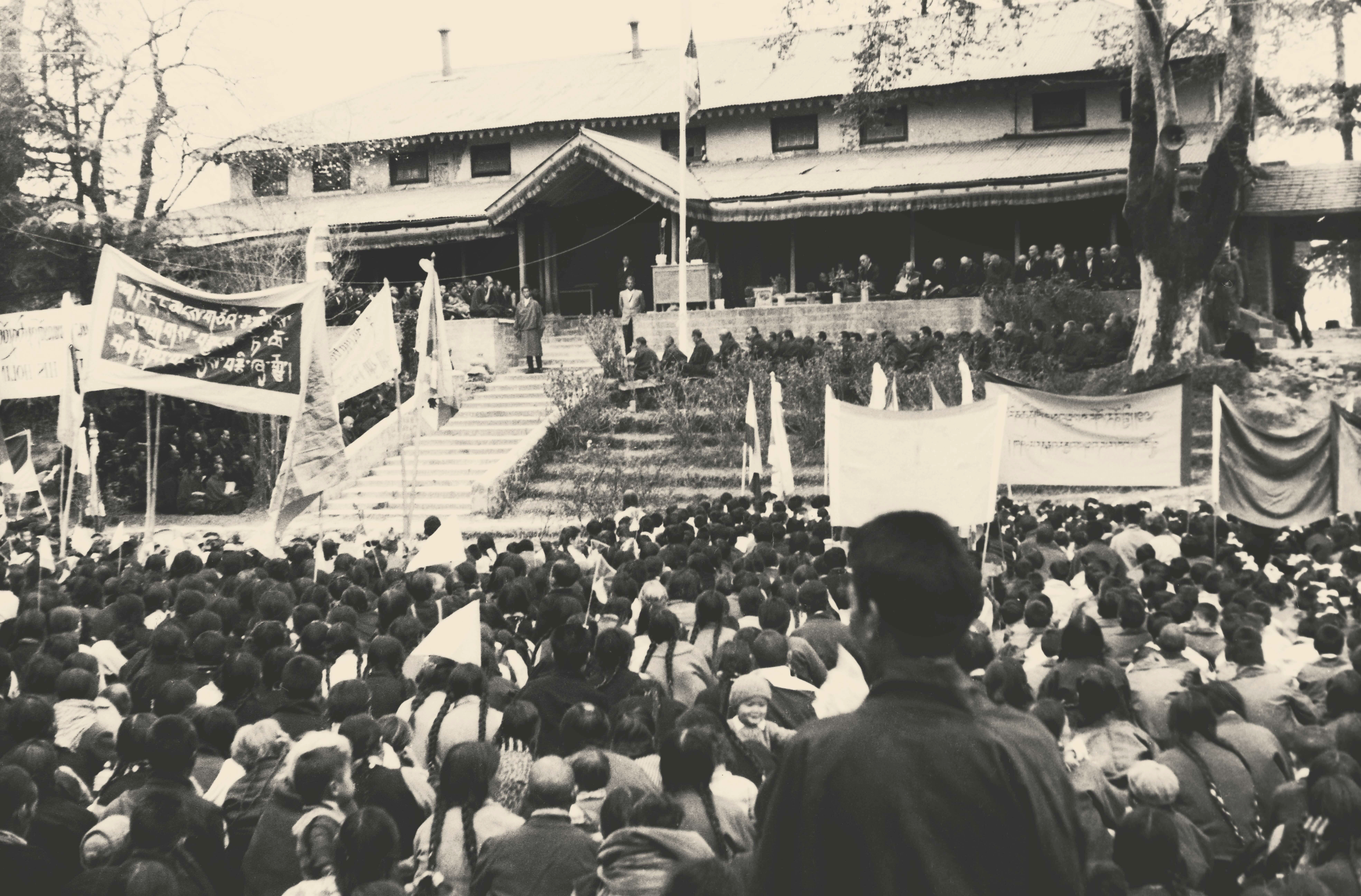
His Holiness the Dalai Lama addressing Tibetans gathered at the grounds of Mortimer House, Dharamshala, during the 4th anniversary of the promulgation of the draft constitution for future Tibet, Dharamshala, March 10, 1967. Photo courtesy: Tibet Documentation
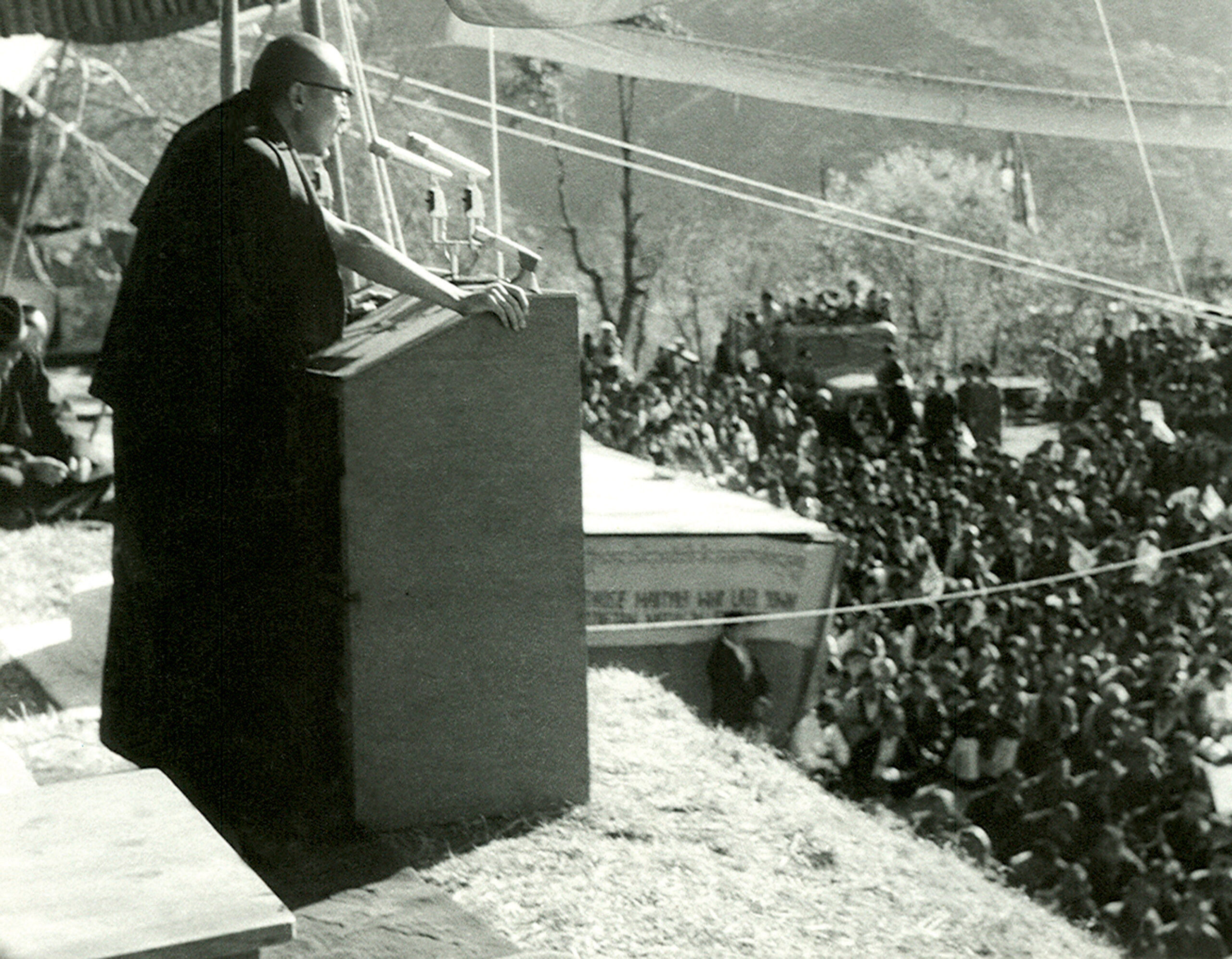
His Holiness the Dalai Lama addressing the public on Tibetan Democracy Day, Dharamshala, September 2, 1970. Photo courtesy: Tibet Documentation
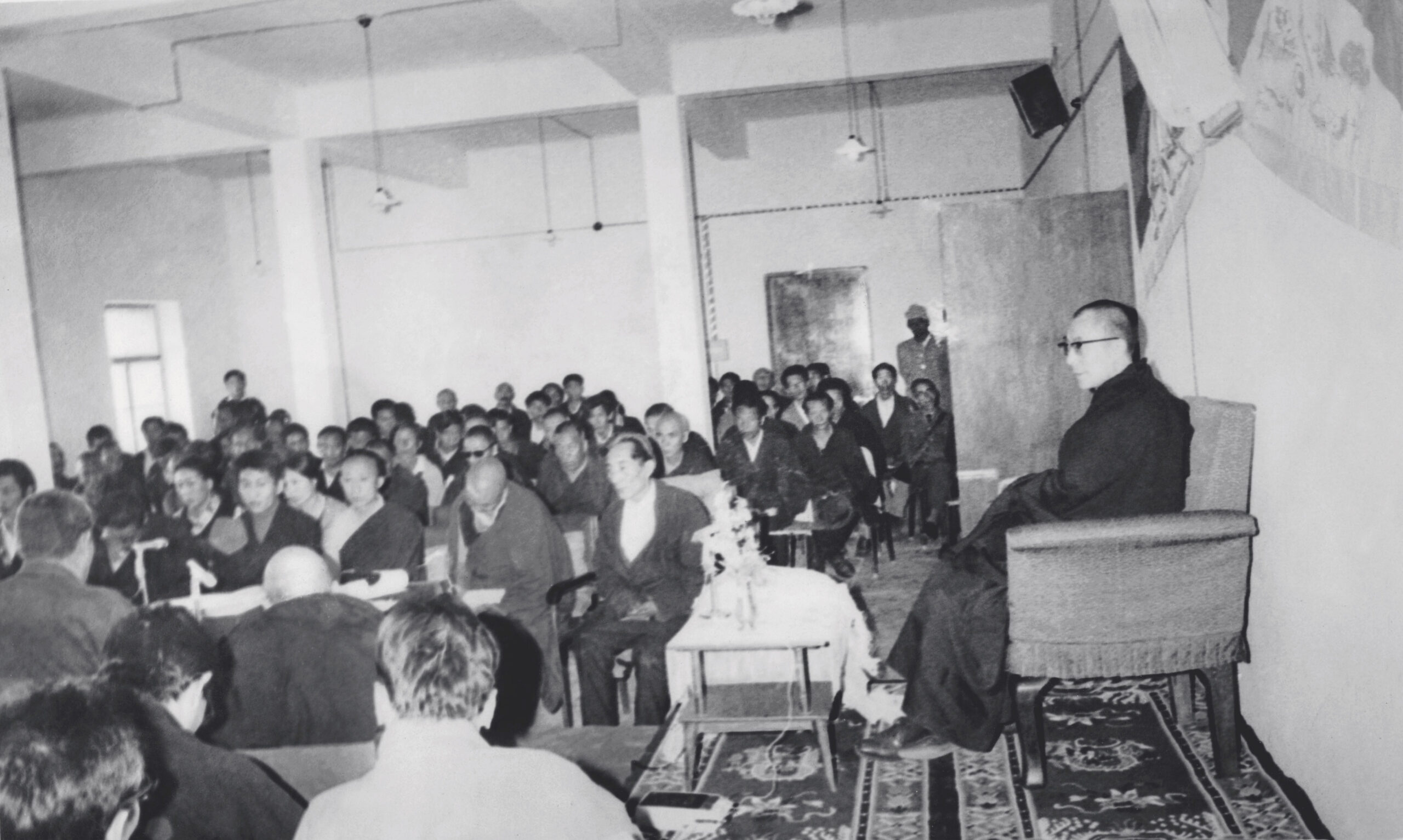
His Holiness the Dalai Lama presiding over the Annual General Meeting in Dharamshala, 1972. Attendees included members of the Commission of Tibetan People's Deputies (CTPD), ministers, departmental heads, and representatives from all Tibetan settlements, who gathered to discuss issues concerning the exile Tibetan community. Photo courtesy: Tibet Documentation
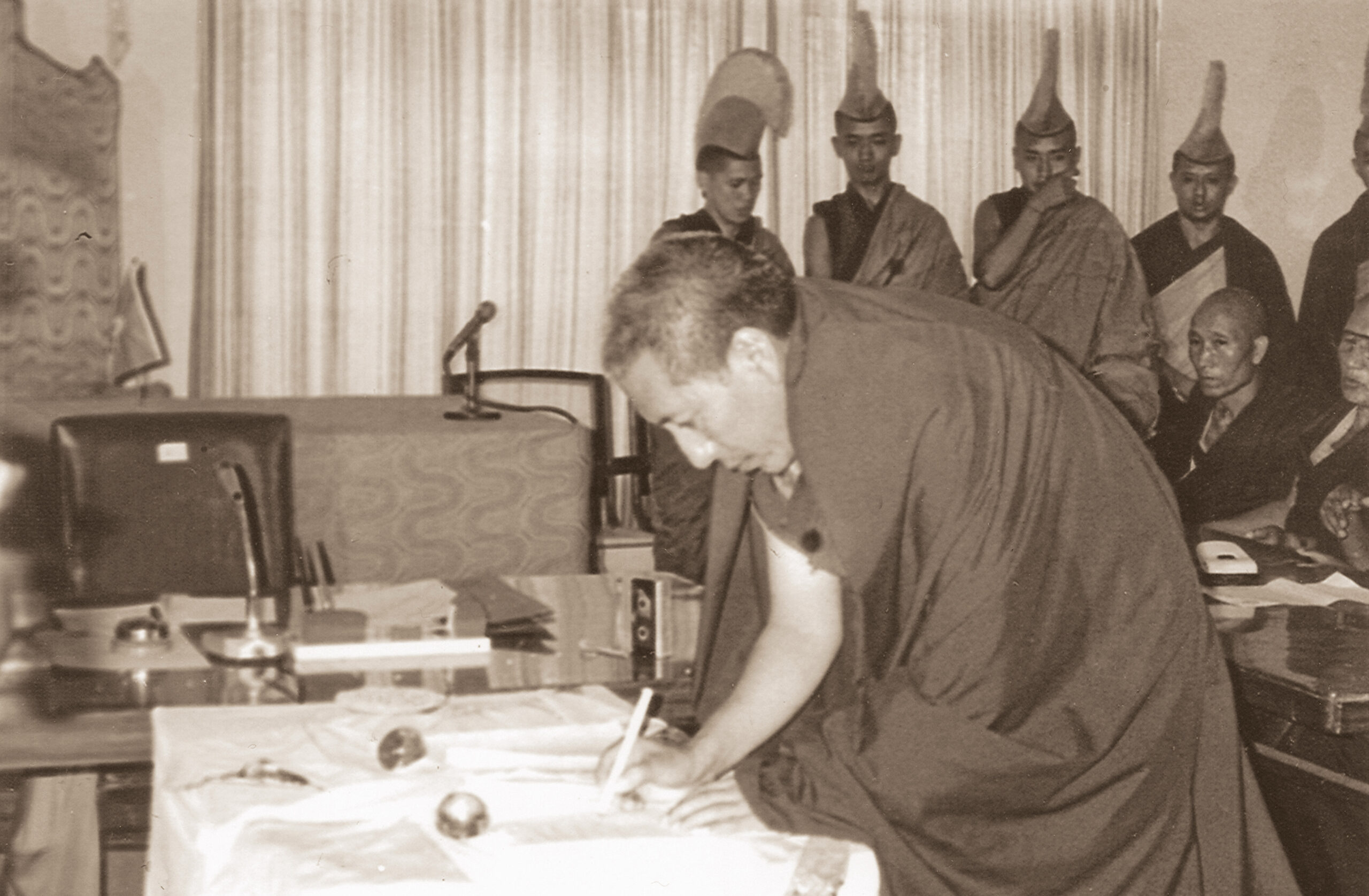
Prof. Samdhong Rinpoche, then Speaker of the Tibetan Parliament-in-Exile, signing the Charter of Tibetans-in-Exile on June 14, 1991. The Charter institutionalized the separation of powers among the legislature, executive, and judiciary.
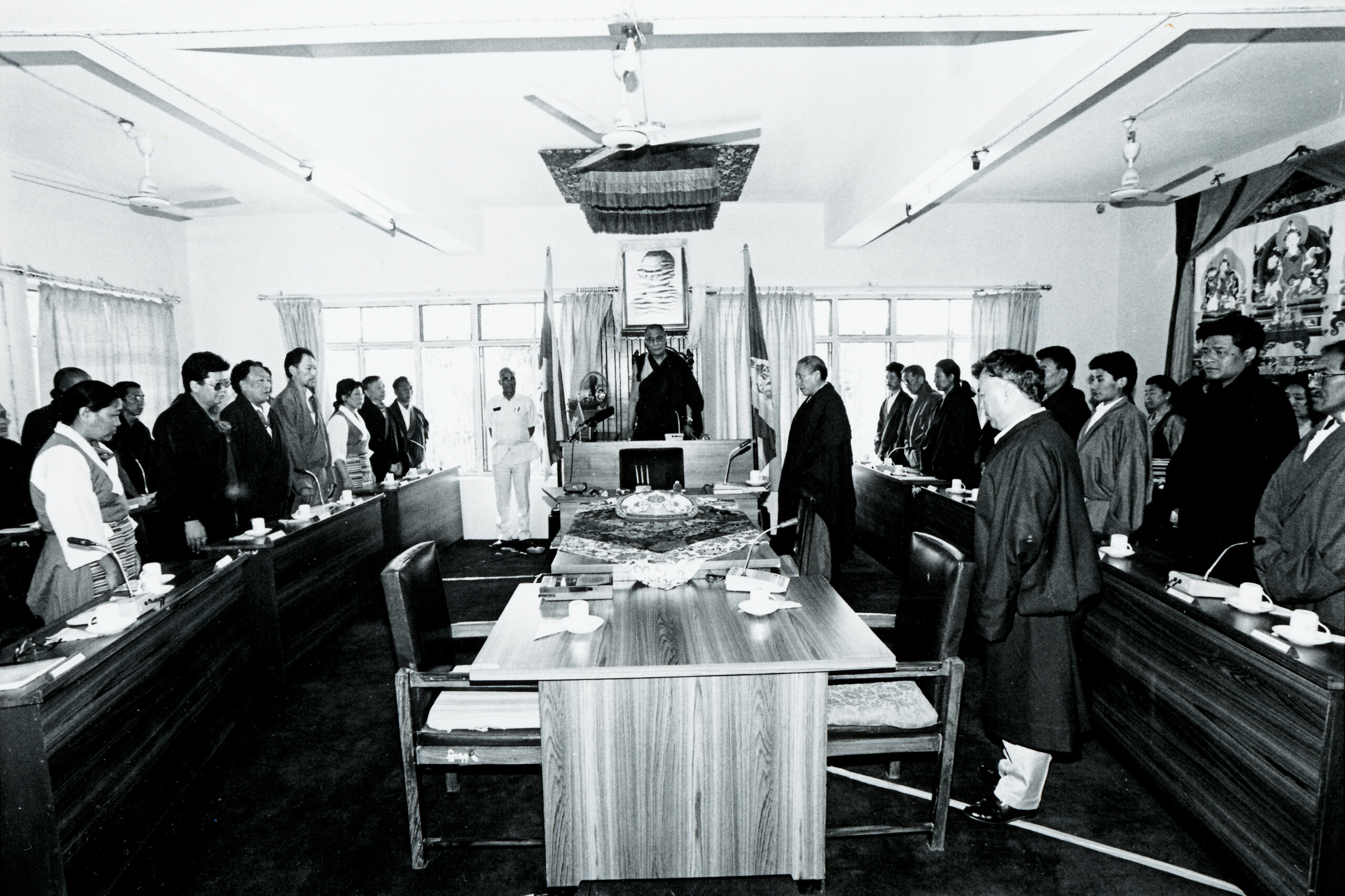
His Holiness the Dalai Lama addressing the 11th Tibetan Parliament-in-Exile, in Dharamshala, 1994. Photo courtesy: The Tibet Museum
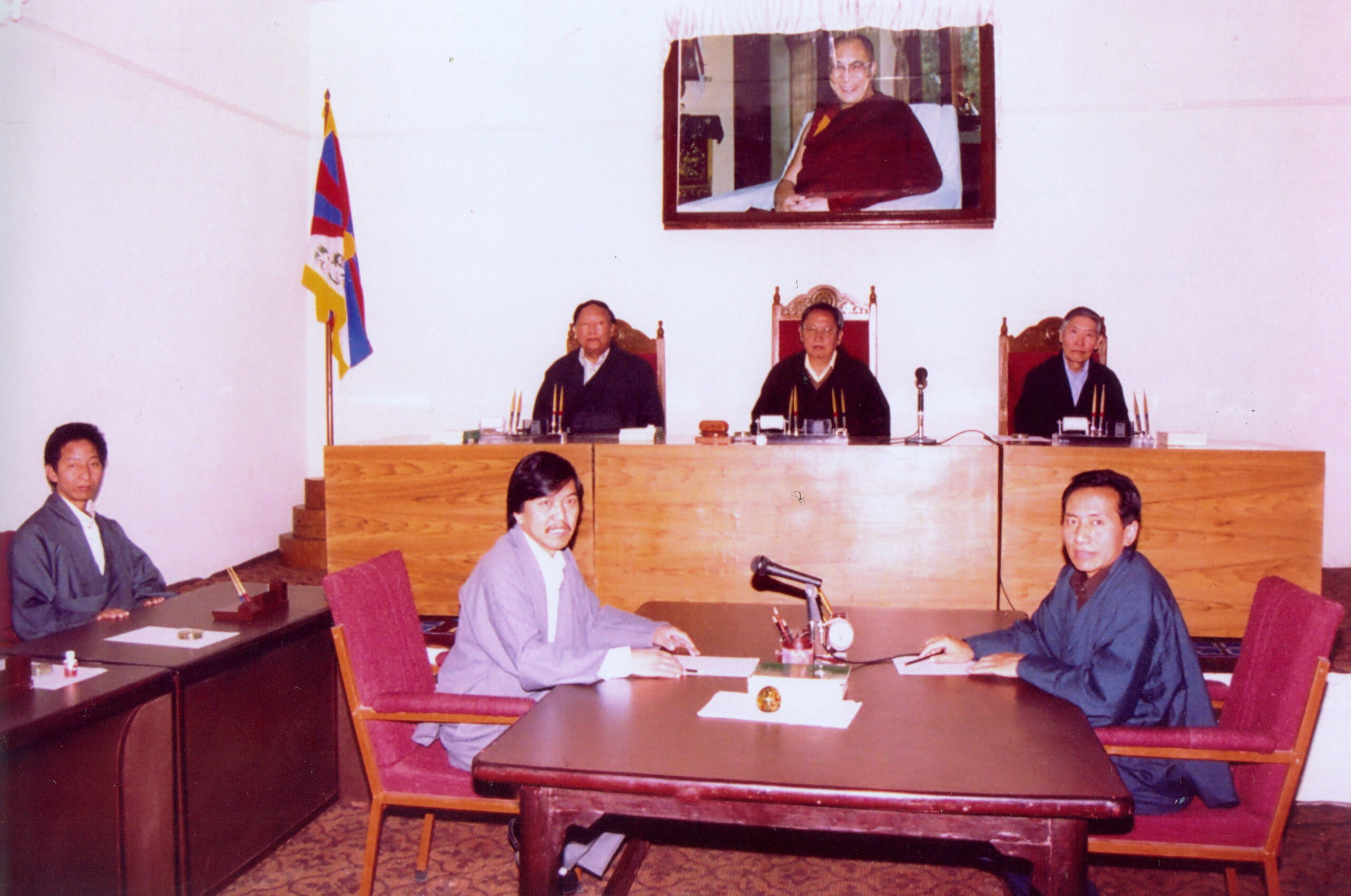
A court hearing at the Tibetan Supreme Justice Commission, Dharamshala, 1999—reflecting the evolution of the Tibetan exile judiciary.
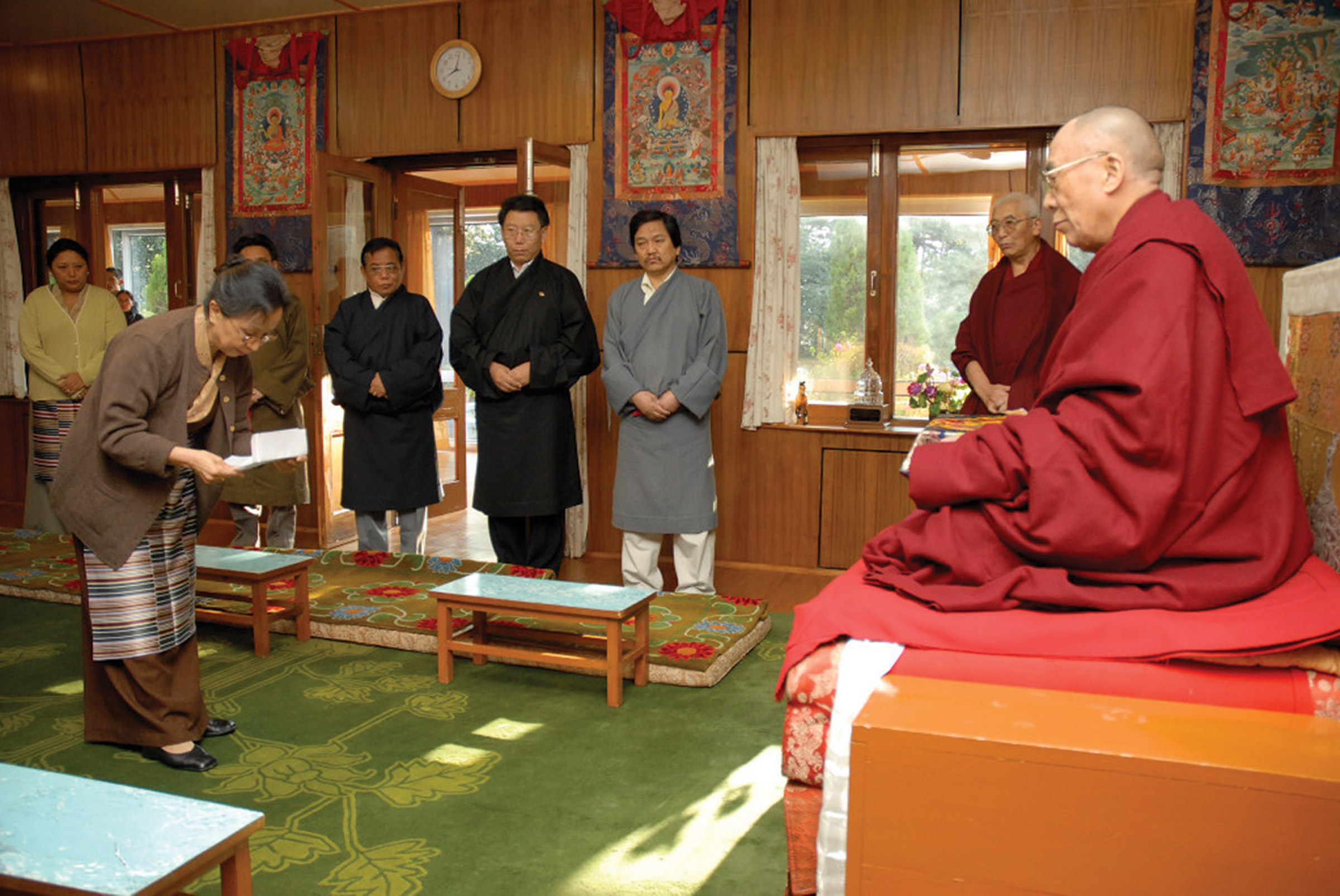
Kesang Yankyi Takla taking the oath of office as Kalon (Minister) for the Department of Health from His Holiness the Dalai Lama at his residence in Dharamshala, October 24, 2006. She later served as Kalon for the Department of Information and International Relations from November 2007.
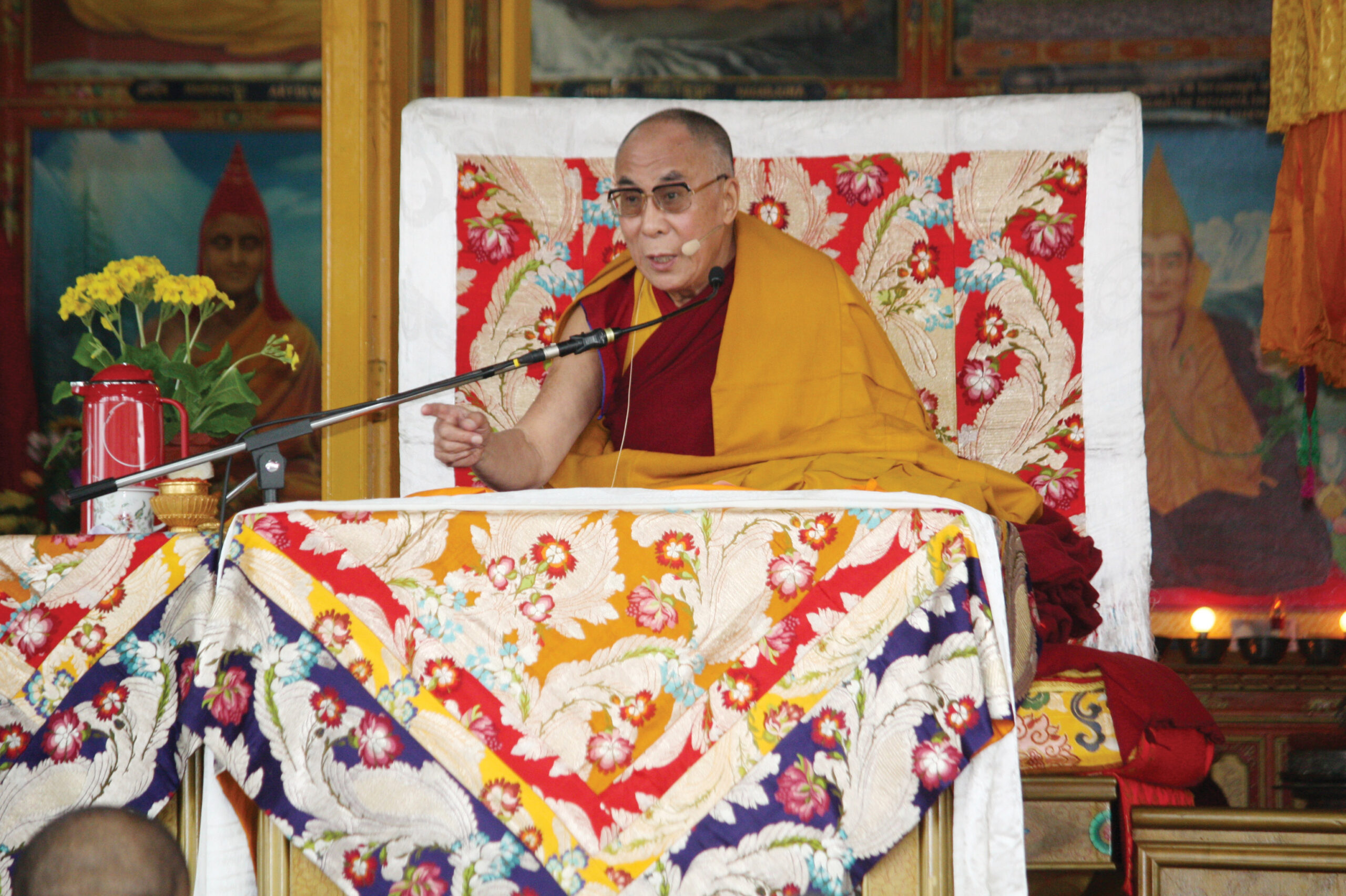
His Holiness the Dalai Lama formally announces his retirement from political responsibilities during a public teaching at the main temple (Tsuglagkhang), Dharamshala, March 19, 2011. Photo courtesy: The Tibet Museum
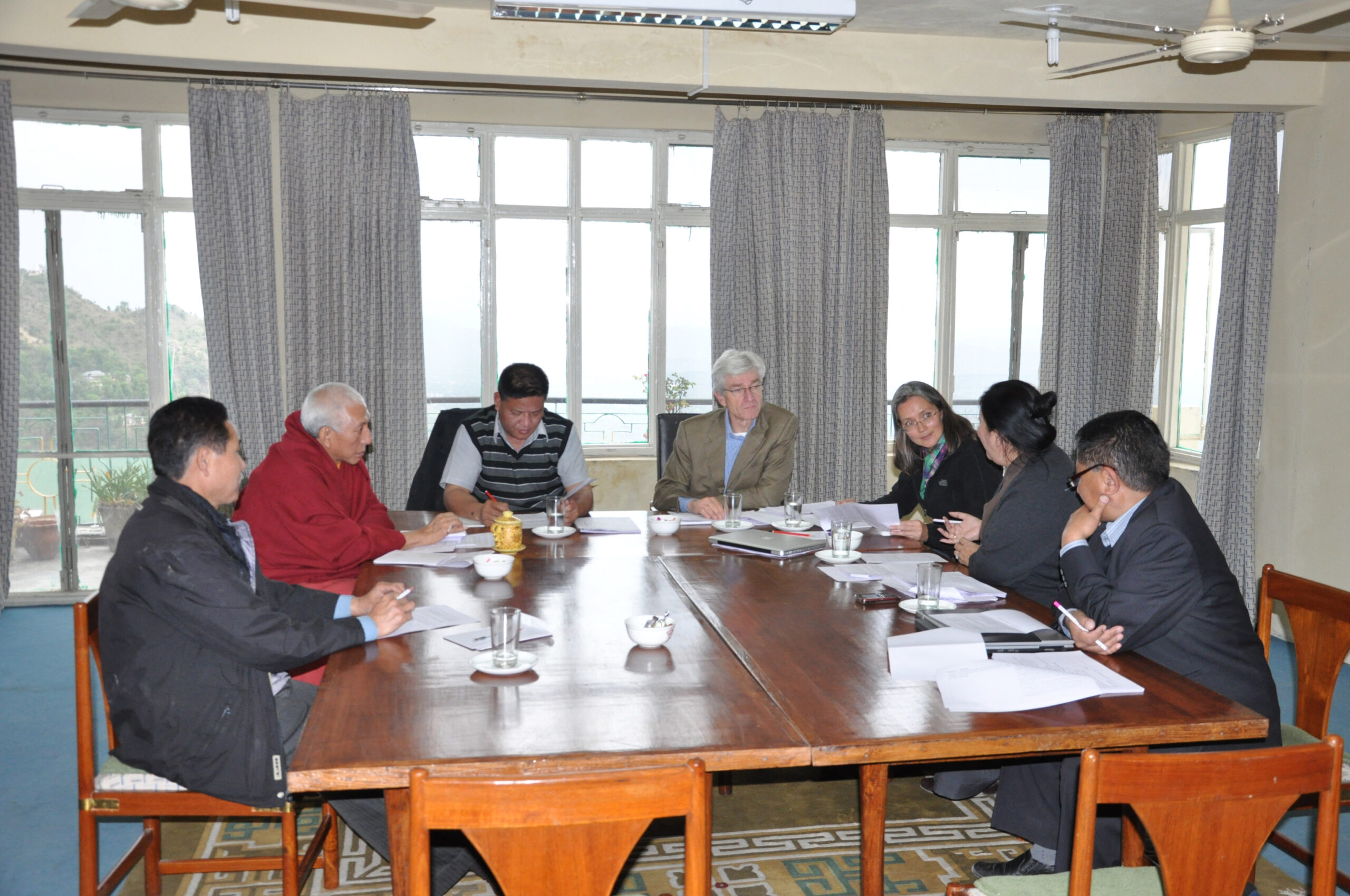
The Charter Amendment Drafting Commission in session, May 2011. On May 29, 2011, His Holiness the Dalai Lama ratified the amended Charter, devolving all political authority to the democratically elected Tibetan leadership. Photo courtesy: The Tibet Museum
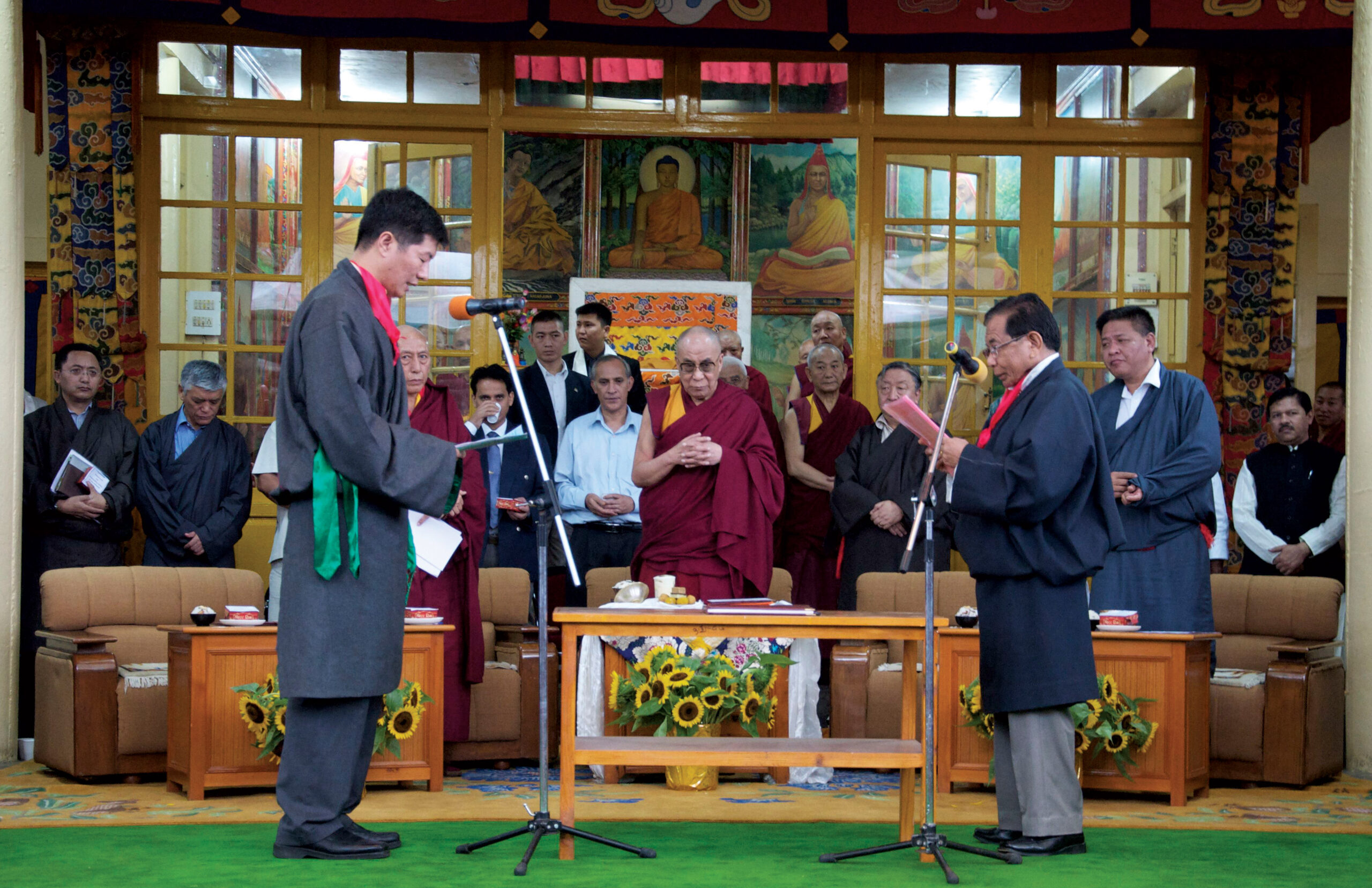
Dr. Lobsang Sangay, newly elected Kalon Tripa takes the oath of office from Tibetan Supreme Justice Commissioner Ngawang Phelgyal Genchen, in the presence of His Holiness the Dalai Lama at Main Temple, Dharamshala, 8 August 2011. Photo by Tenzin Choejor, OHHDL
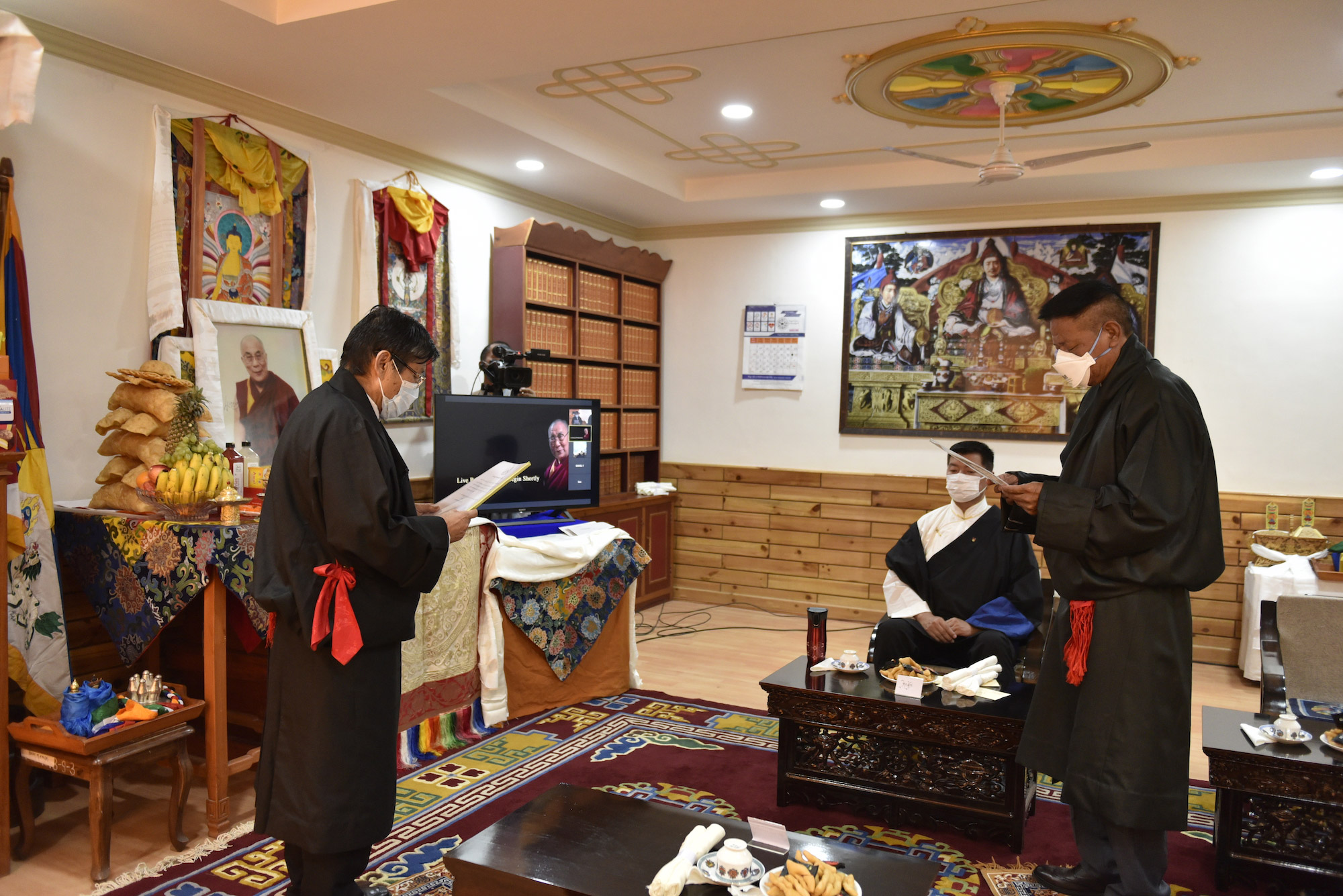
Penpa Tsering (R), the fifth directly elected Sikyong, takes the oath of office and secrecy before Chief Justice Commissioner Sonam Norbu Dagpo, (L) at the Tibetan Supreme Justice Commission, Dharamsala, May 27, 2021. Photo courtesy: tibet.net