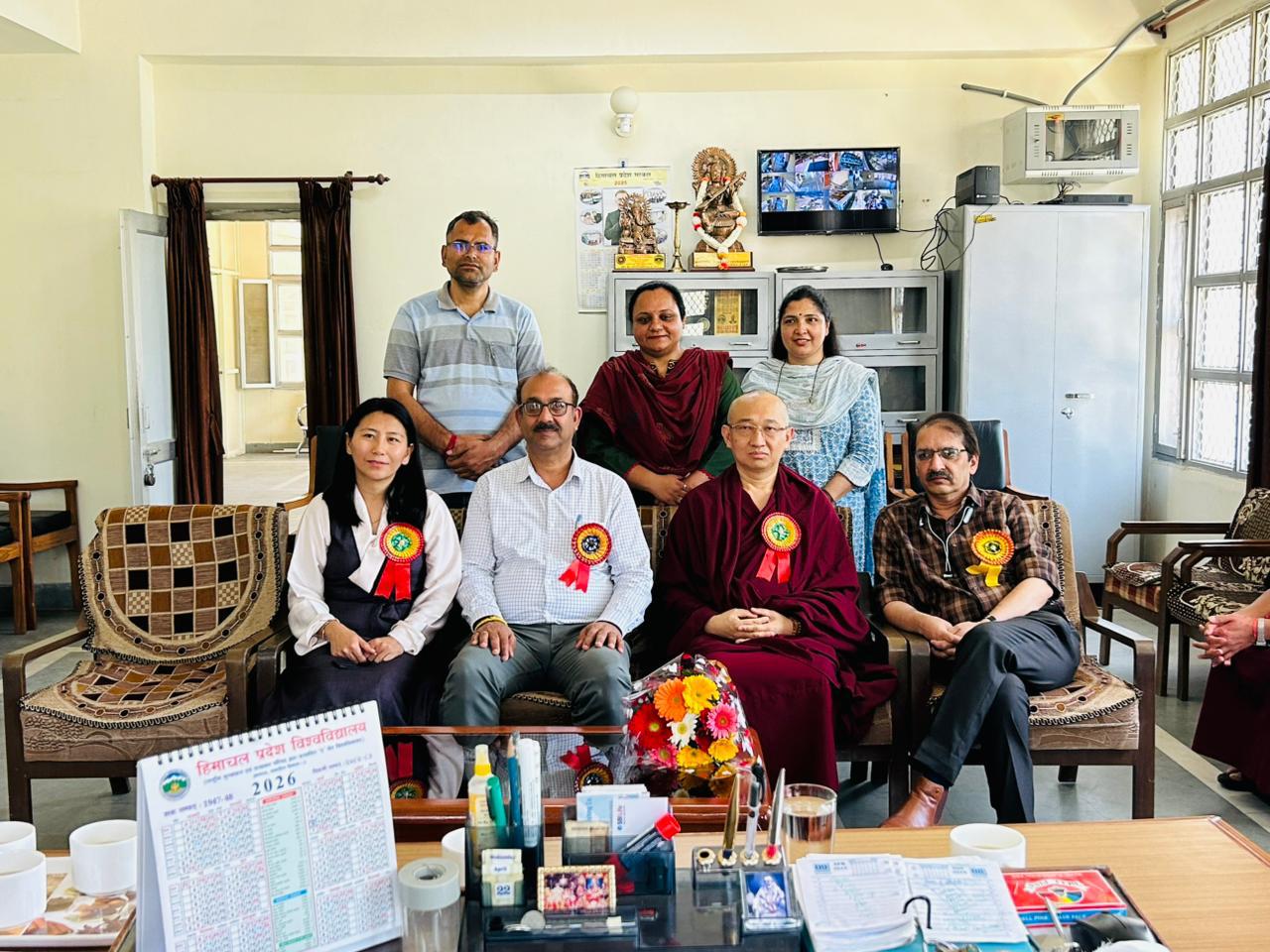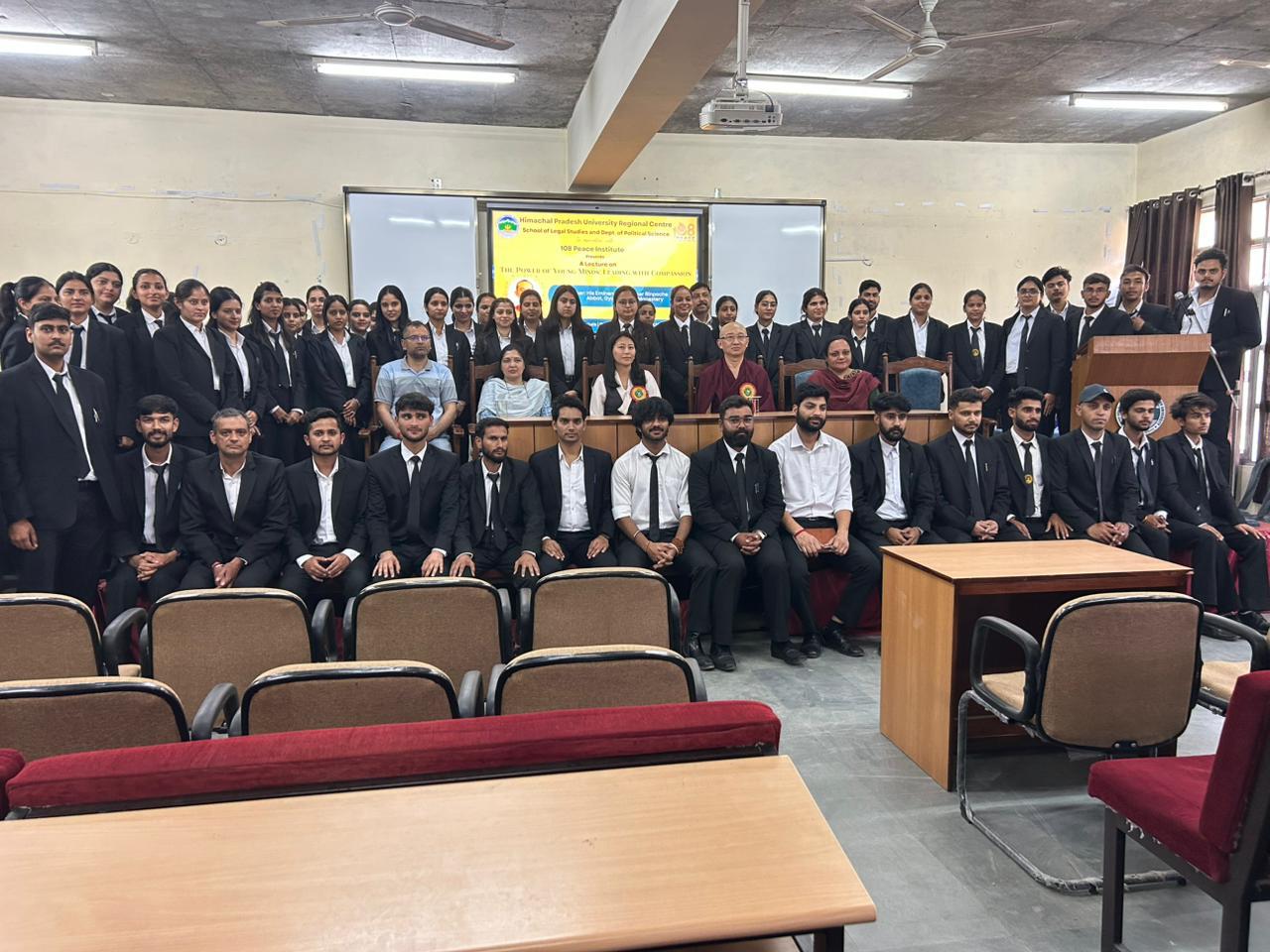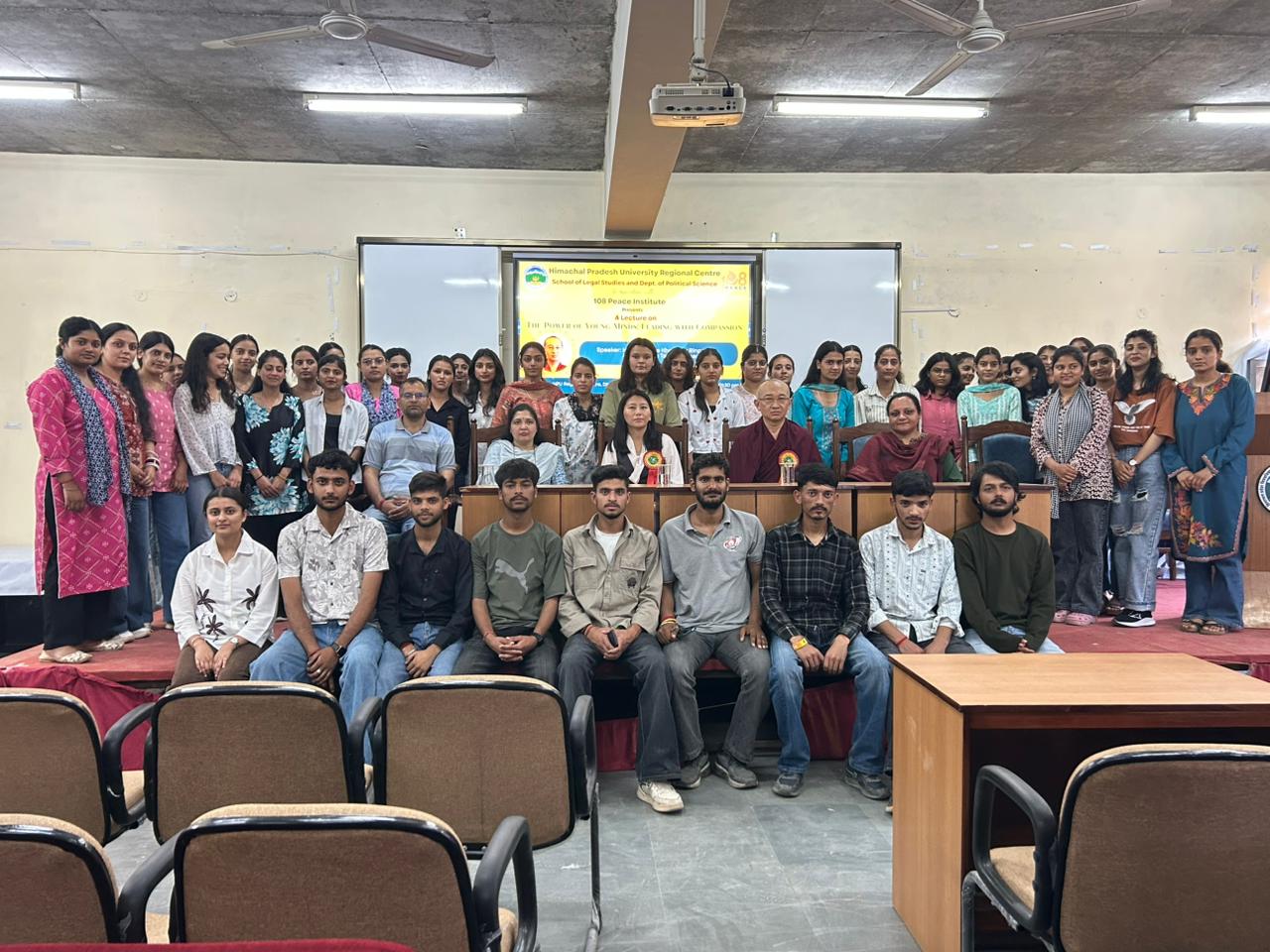
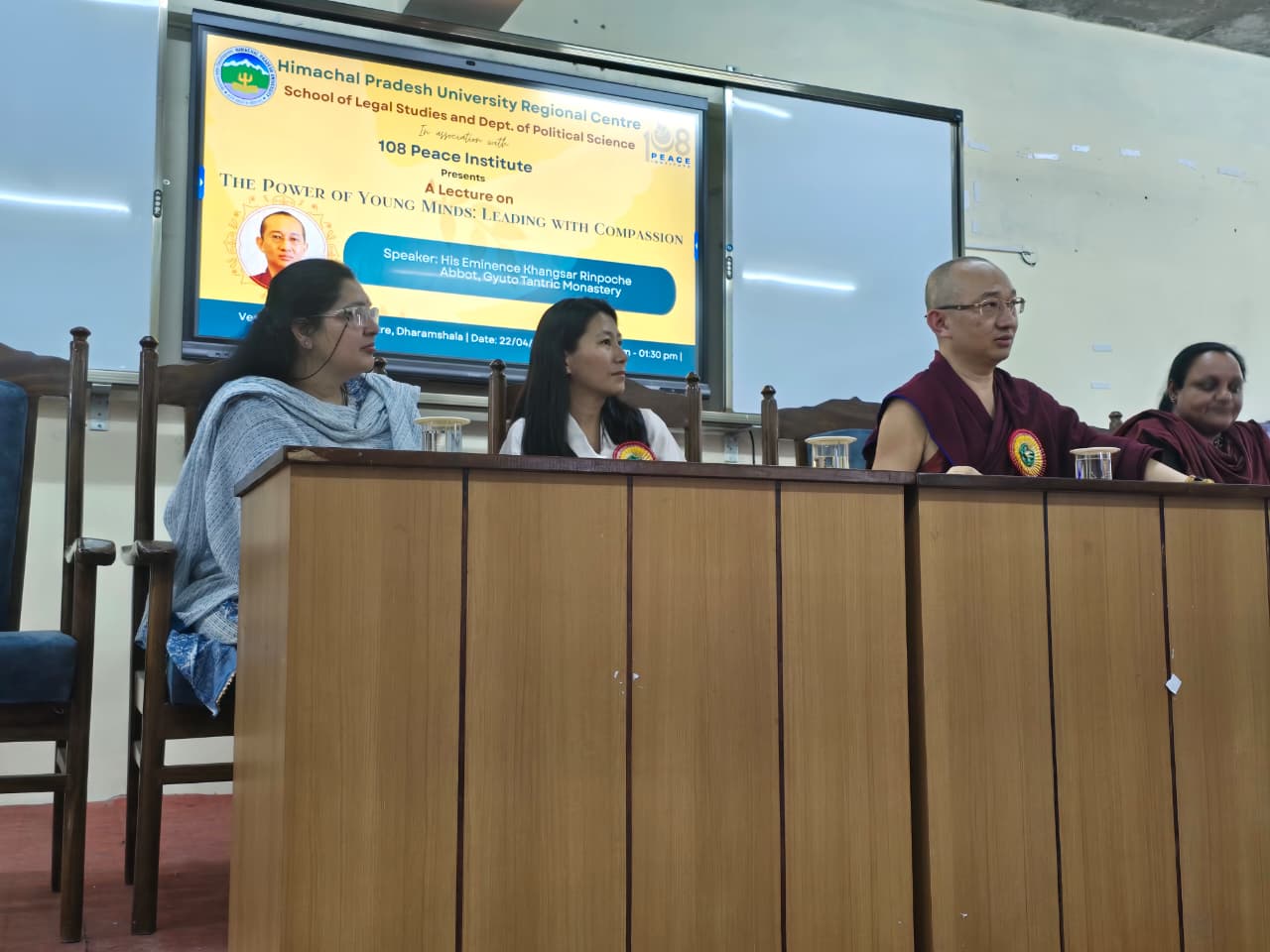
April 22, 2026: The 108 Peace Institute, in collaboration with the School of Legal Studies and the Department of Political Science, Himachal Pradesh University, Regional Centre, Dharamshala, organized an insightful lecture session titled “The Power of Young Minds: Leading with Compassion.”
The session featured His Eminence Khangsar Rinpoche, Abbot of Gyuto Tantric Monastery, as the keynote speaker. The program commenced with a warm welcome and introduction of the speaker by Prof. Dr. Bhawana Sharma, followed by a vote of thanks delivered by Prof. Dr. Het Ram Thakur.
In his address, Khangsar Rinpoche reflected on the complex nature of the human mind. He illustrated this by noting that while a person may feel happy for a day or two after winning a lottery of ₹1 crore, the sadness from losing the same amount often lingers much longer. This, he explained, highlights the need for training the mind. Rinpoche also shared his engagement with scientific research, noting that he has received approval from the Institutional Review Board (IRB) of the Chang Gung Medical Foundation in Taiwan to study the effects of his meditation techniques.
He emphasized that in today’s age of rapid technological advancement, individuals often struggle with focus and attention, which in severe cases can manifest as ADHD. He remarked, “If you are sad, you are living in the past; if you are anxious, you are living in the future; and if you are at peace, you are living in the present.” He encouraged students to concentrate on the present and avoid overthinking, which can negatively impact mental health.
Addressing questions on compassion, he clarified that compassion does not imply inaction against wrongdoing. Rather, it involves responding appropriately to ensure that harmful behavior is not repeated, thereby benefiting both the individual and society. He stressed the importance of law and order in maintaining peace, explaining that punishment, when applied justly, serves as a positive force in society. He illustrated this with the example of a pilot whose disregard for rules could endanger many lives.
Rinpoche reiterated that peace of mind can be achieved through consistent mental training. He encouraged students to cultivate gratitude by writing down three things they are grateful for and three things that make them happy each day for 21 days, noting that research suggests it typically takes 21 days to form a habit.
He further urged students to develop an altruistic mindset, emphasizing that education should not solely be pursued for personal success, but also to serve family, society, the nation, and ultimately the global community. With the right intentions, he noted, individuals can become respected and responsible members of society regardless of their chosen path.
The session concluded with an engaging Q&A segment, with active participation from attendees. Approximately 120 students and faculty members attended the lecture.