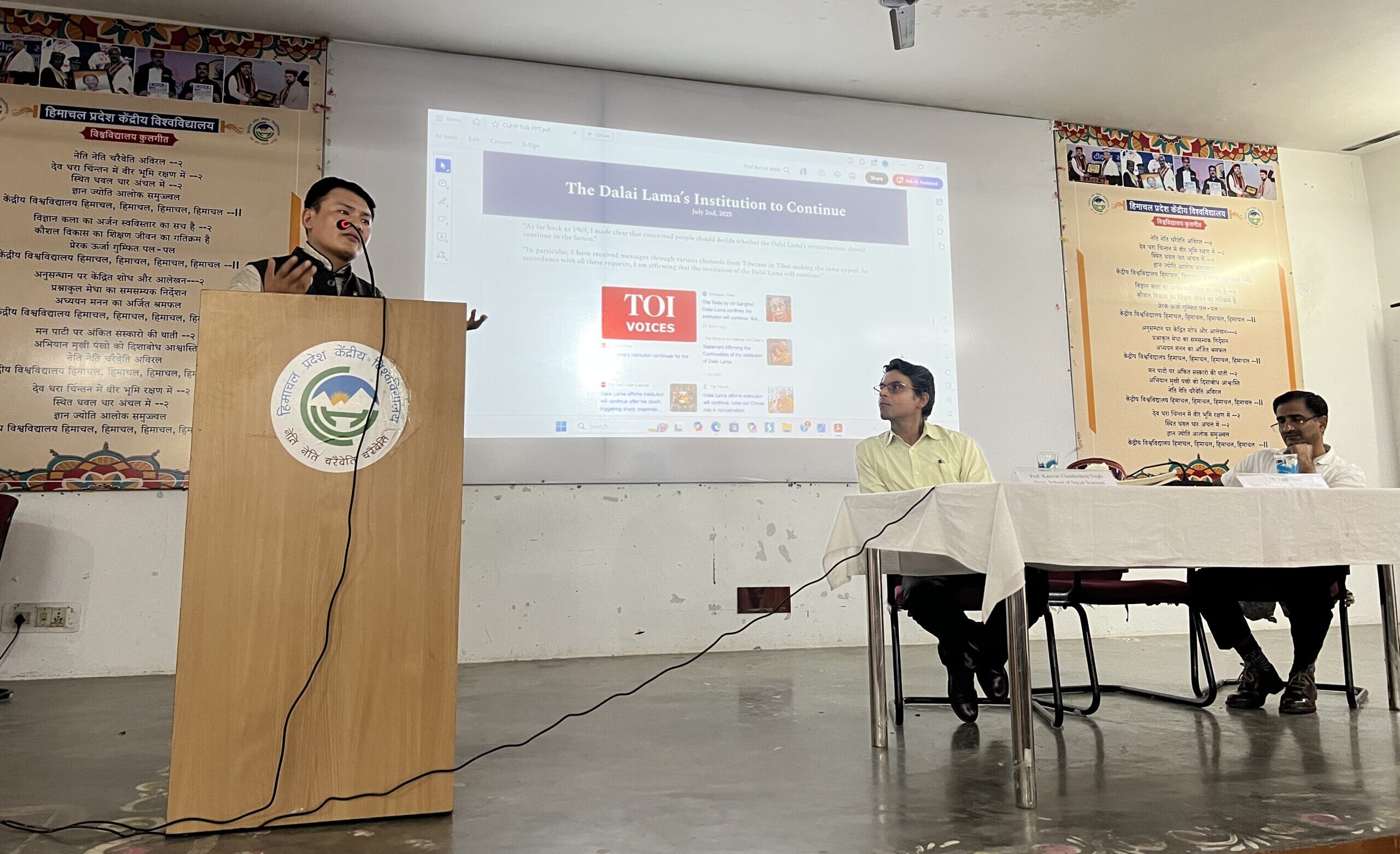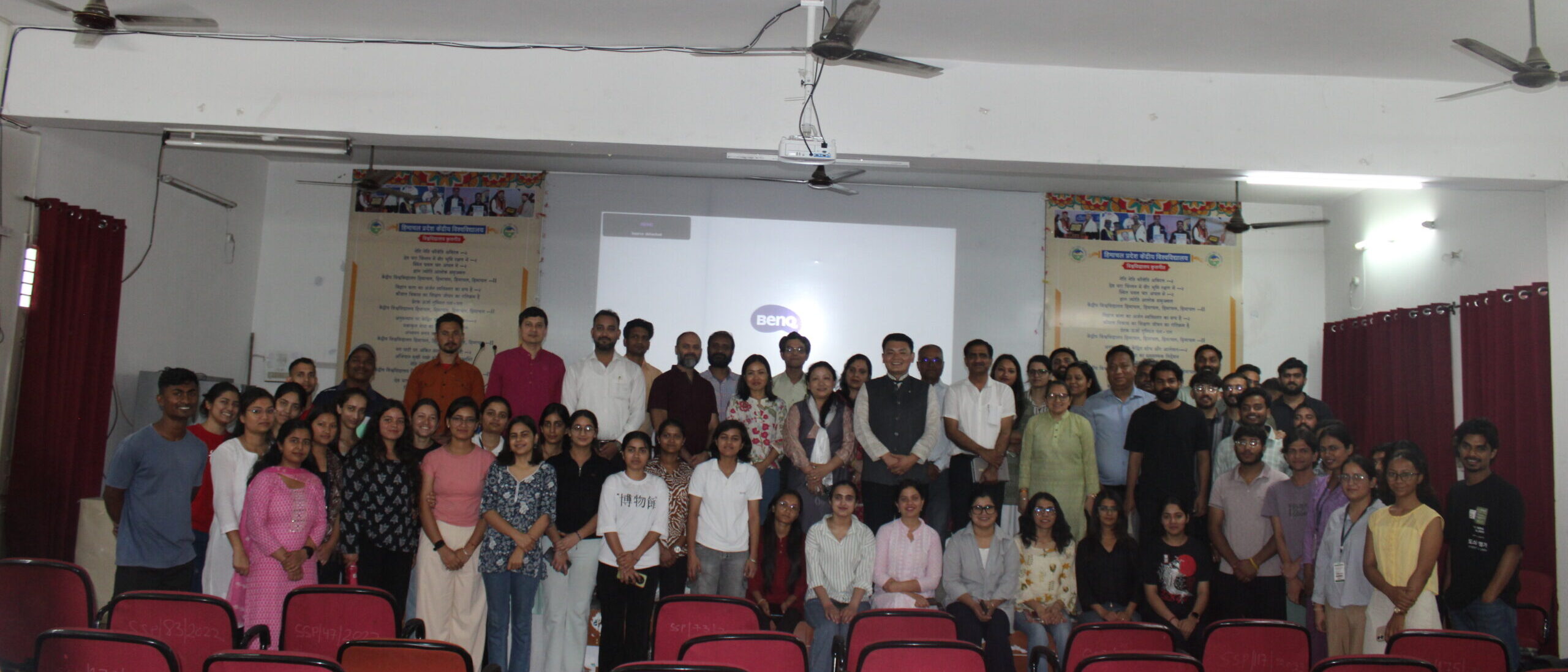
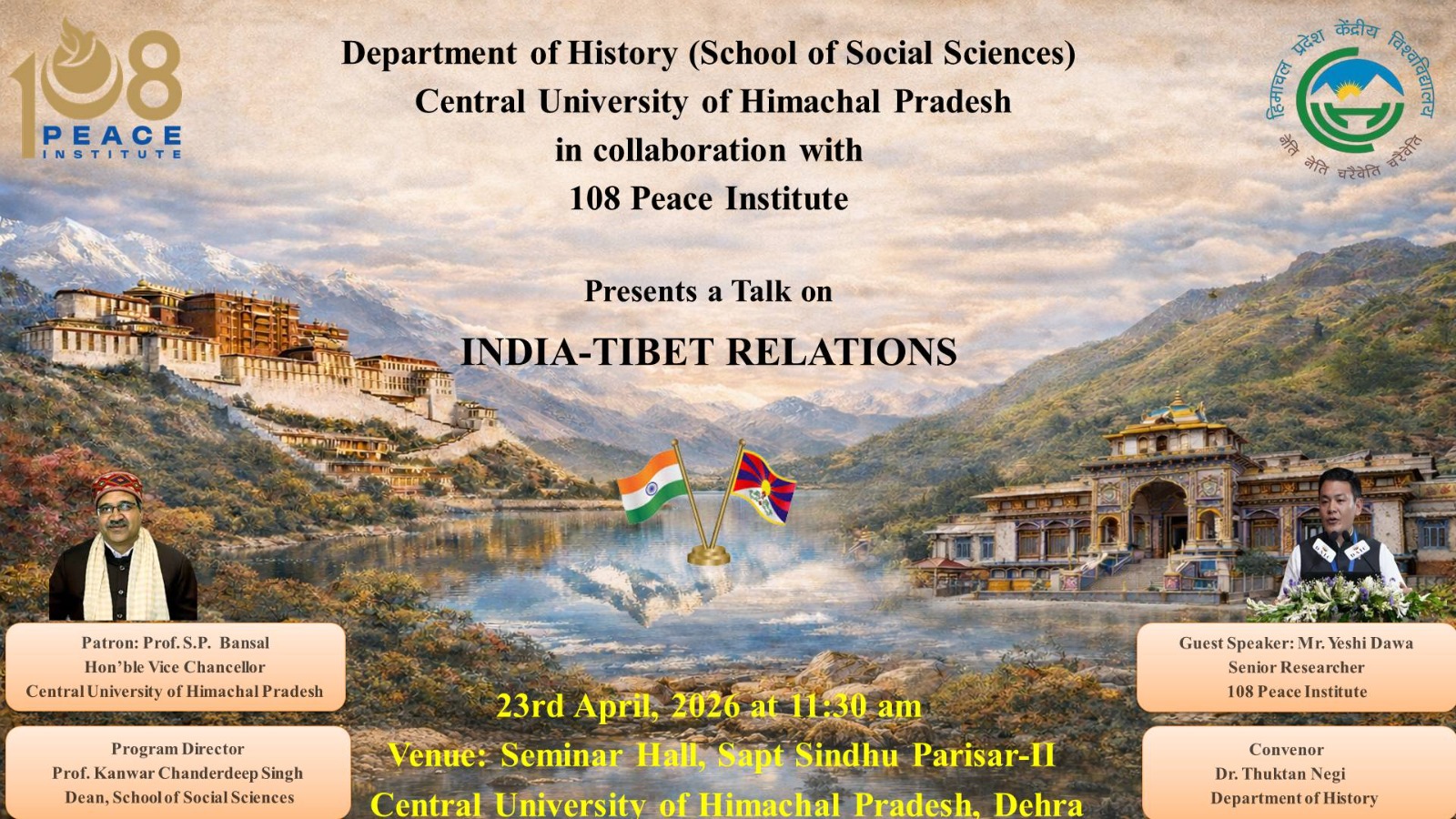
On 23 April 2026, the 108 Peace Institute, in collaboration with the Department of History, School of Social Sciences, Central University of Himachal Pradesh, Dehra, organized a lecture on India–Tibet Relations. The session was delivered by Senior Researcher Yeshi Dawa, who examined the historical, cultural, and contemporary dimensions of India–Tibet relations through the life and legacy of His Holiness the 14th Dalai Lama.
The lecture traced the foundations of India–Tibet relations to the 7th century, when Buddhism was transmitted from India to Tibet during the reign of King Songtsen Gampo. This exchange led to the translation of Buddhist scriptures from Sanskrit into Tibetan and fostered deep cultural, linguistic, and spiritual ties between the two civilizations. Mr. Dawa highlighted Tibet’s significant role in preserving India’s ancient Buddhist heritage and ensuring the continuity of its philosophical traditions.
He also discussed important historical interactions between India and Tibet, including Mahatma Gandhi’s correspondence with the 13th Dalai Lama, which reflected mutual respect and shared values rooted in nonviolence. The lecture further explored the 14th Dalai Lama’s 1956 visit to India during the 2500th Buddha Jayanti celebrations and his subsequent recognition by Banaras Hindu University in 1957. Following his escape from Tibet in 1959, the Dalai Lama was granted asylum by India, marking the beginning of a new chapter in India–Tibet relations.
Mr. Dawa emphasized that, during his exile in India, His Holiness continued to promote human values, religious harmony, and the revival of India’s ancient wisdom traditions on the global stage. He also highlighted the Dalai Lama’s contributions to the preservation of Tibetan culture, identity, and environmental awareness.
A significant portion of the lecture focused on the institution of the Dalai Lama and the issue of reincarnation. Mr. Dawa discussed the importance of His Holiness’s statement of 2 July 2025, which reaffirmed the continuation of the Dalai Lama institution and clarified that the authority to identify his future reincarnation rests solely with the Gaden Phodrang Trust. He contrasted this position with China’s illegal claims over the selection of the next Dalai Lama and highlighted concerns regarding political interference in Tibetan religious affairs.
The lecture also examined China’s broader efforts to control Tibetan Buddhism. Mr. Dawa noted the 2007 Chinese regulations requiring state approval for the recognition of reincarnate lamas and discussed China’s appointment of the 11th Panchen Lama through the Golden Urn process. He argued that these measures form part of a larger strategy to reshape Tibetan religious institutions, consolidate political control over Tibet, and influence the future succession of the Dalai Lama.
Concluding the lecture, Mr. Dawa underscored the wider implications of these developments for religious freedom, regional geopolitics, and the preservation of Tibetan cultural identity. The event concluded with an engaging question-and-answer session attended by more than 80 students and faculty members, reflecting strong interest in India–Tibet relations and contemporary Tibetan issues.