His Holiness the 14th Dalai Lama as Environmentalist and Global Citizen

Shortly after going into exile, His Holiness the 14th Dalai Lama began to reflect deeply on humanity’s relationship with the natural world. Recognizing early on that environmental protection was not only a scientific concern but also a moral and existential imperative, he became one of the first global spiritual leaders to speak out on behalf of the planet.

For His Holiness, this beautiful blue planet is not merely a place we inhabit—it is our shared home, a collective responsibility, and the foundation of all life. He has consistently emphasized that addressing environmental challenges requires a fundamental shift in human consciousness—from self-interest to global responsibility, and from exploitation to reverence.

Grounded in the Buddhist principle of interdependence, His Holiness teaches that the health of the planet and the well-being of humanity are deeply interconnected. He urges individuals, communities, and governments to act with compassion, moderation, and long-term vision—to protect the environment not only for ourselves but for future generations and all sentient beings.

As a global citizen, the Dalai Lama has consistently called for unity and cooperation in the face of pressing environmental crises such as climate change, deforestation, pollution, and water scarcity. Whether engaging with scientists, world leaders, educators, or grassroots activists, he advocates for a new ethic—one rooted in ecological awareness, kindness, and a sense of universal responsibility.

“Each of us must learn to work not just for our own self, family, or nation, but for the benefit of all humanity. Universal responsibility is the real key to human survival.”

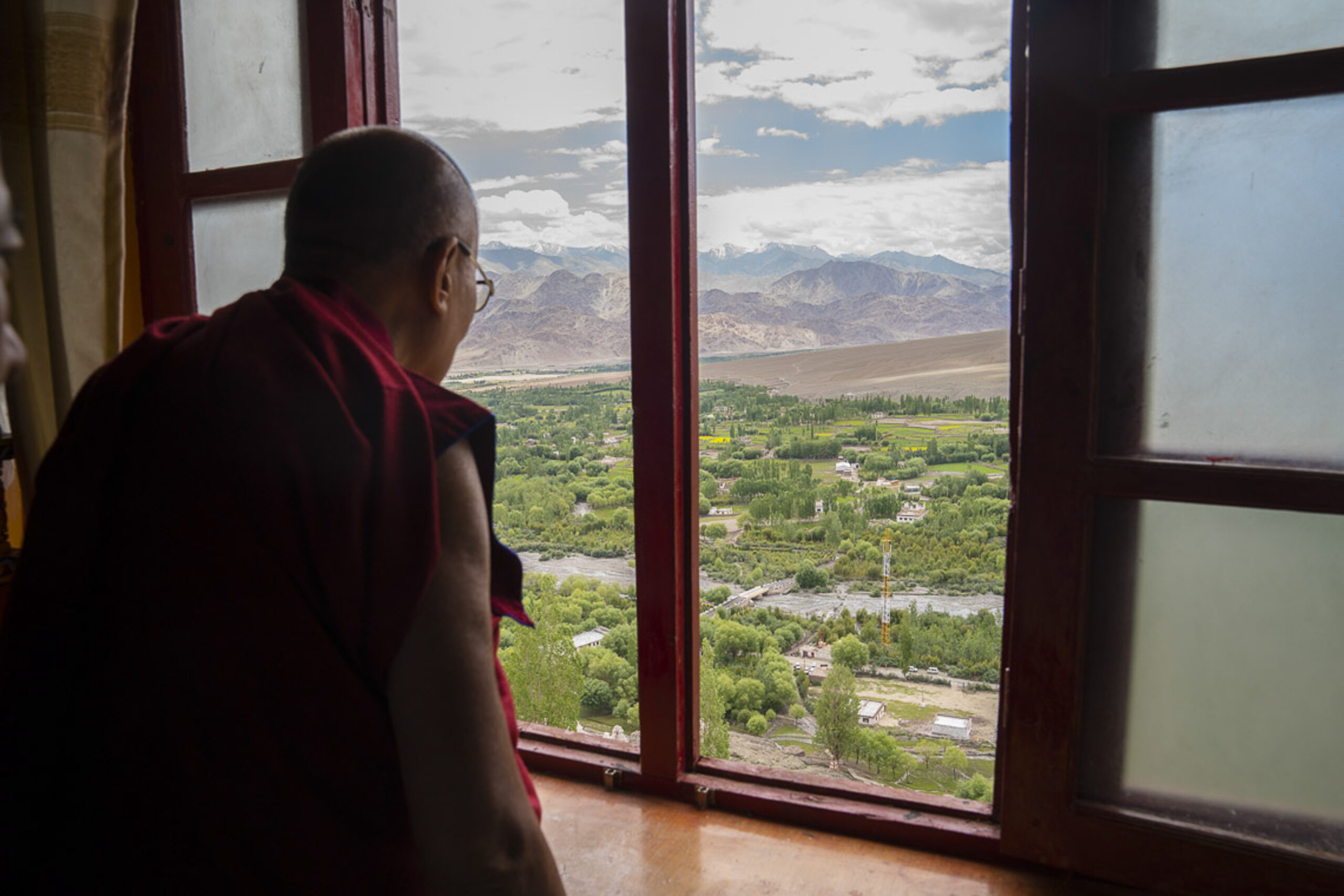
His Holiness the Dalai Lama looking out over the Nubra Valley, north of Leh, Ladakh, July 20, 2017. Photo by Tenzin Choejor, OHHDL
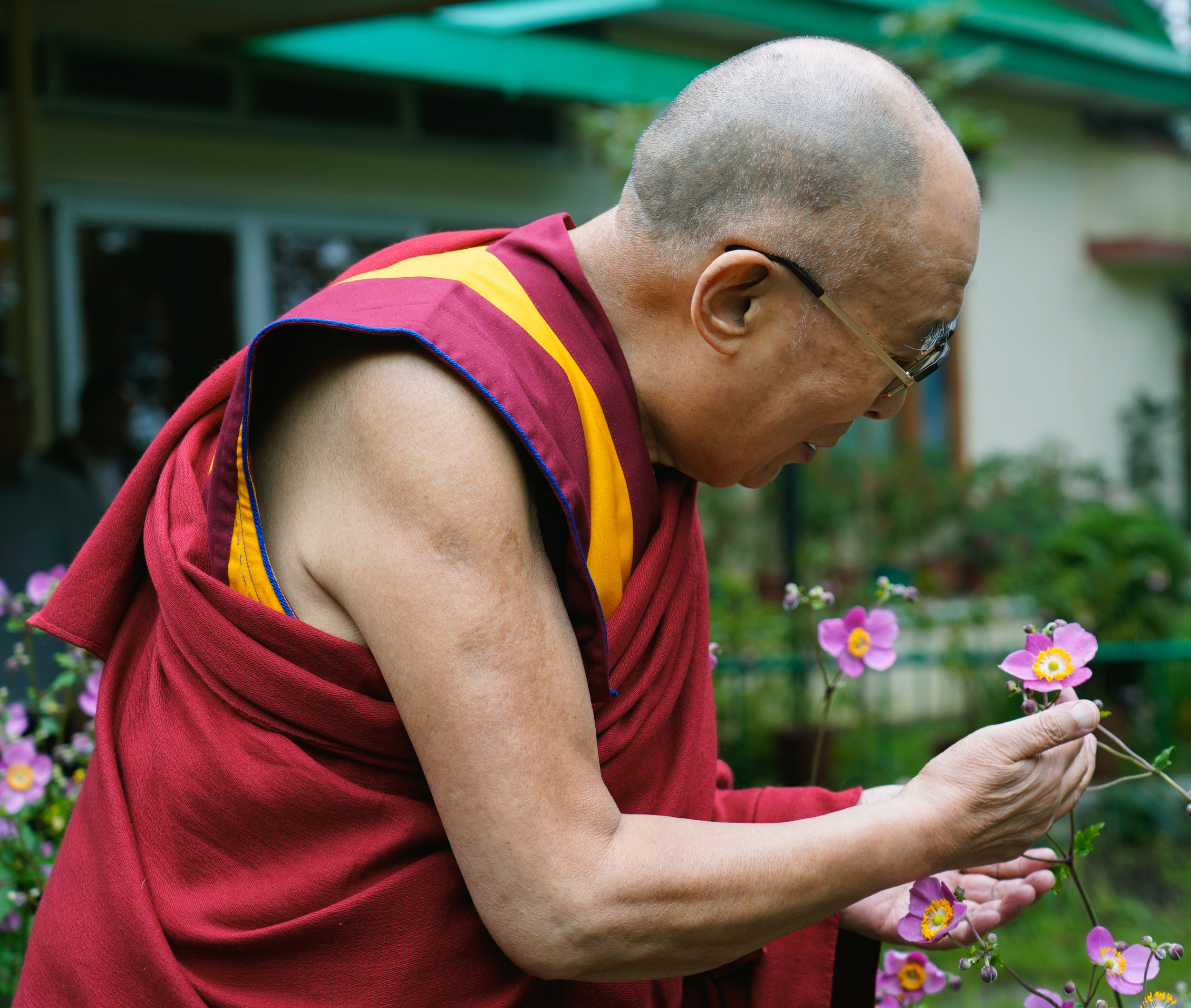
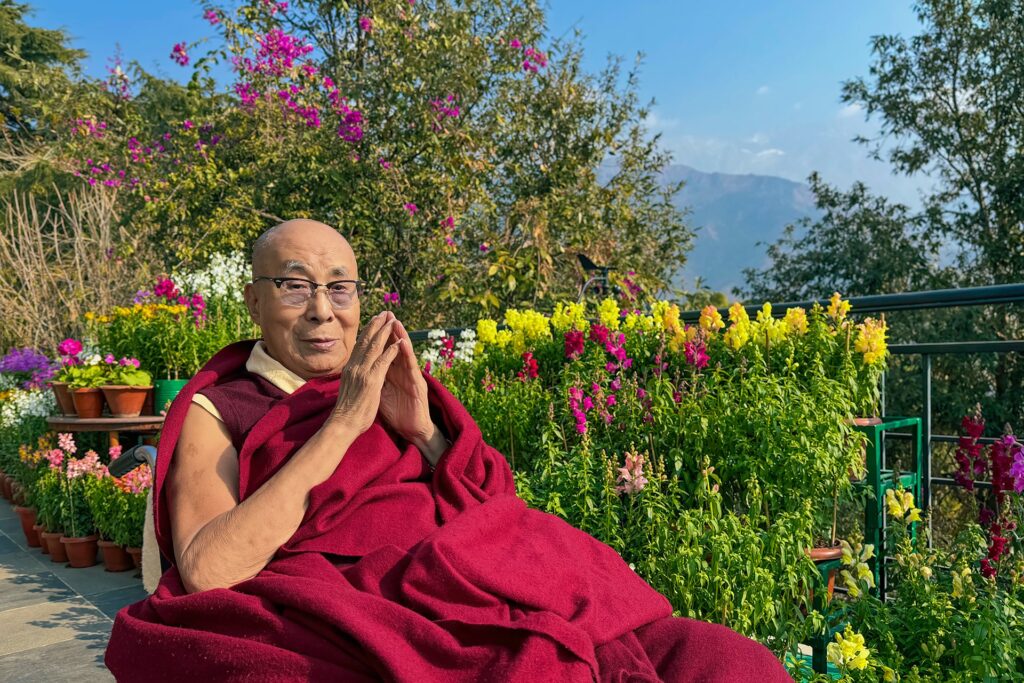
His Holiness the Dalai Lama at his residence in McLeod Ganj, Dharamshala, August 22, 2018. Photo by Ven-Jamphel, OHHDL
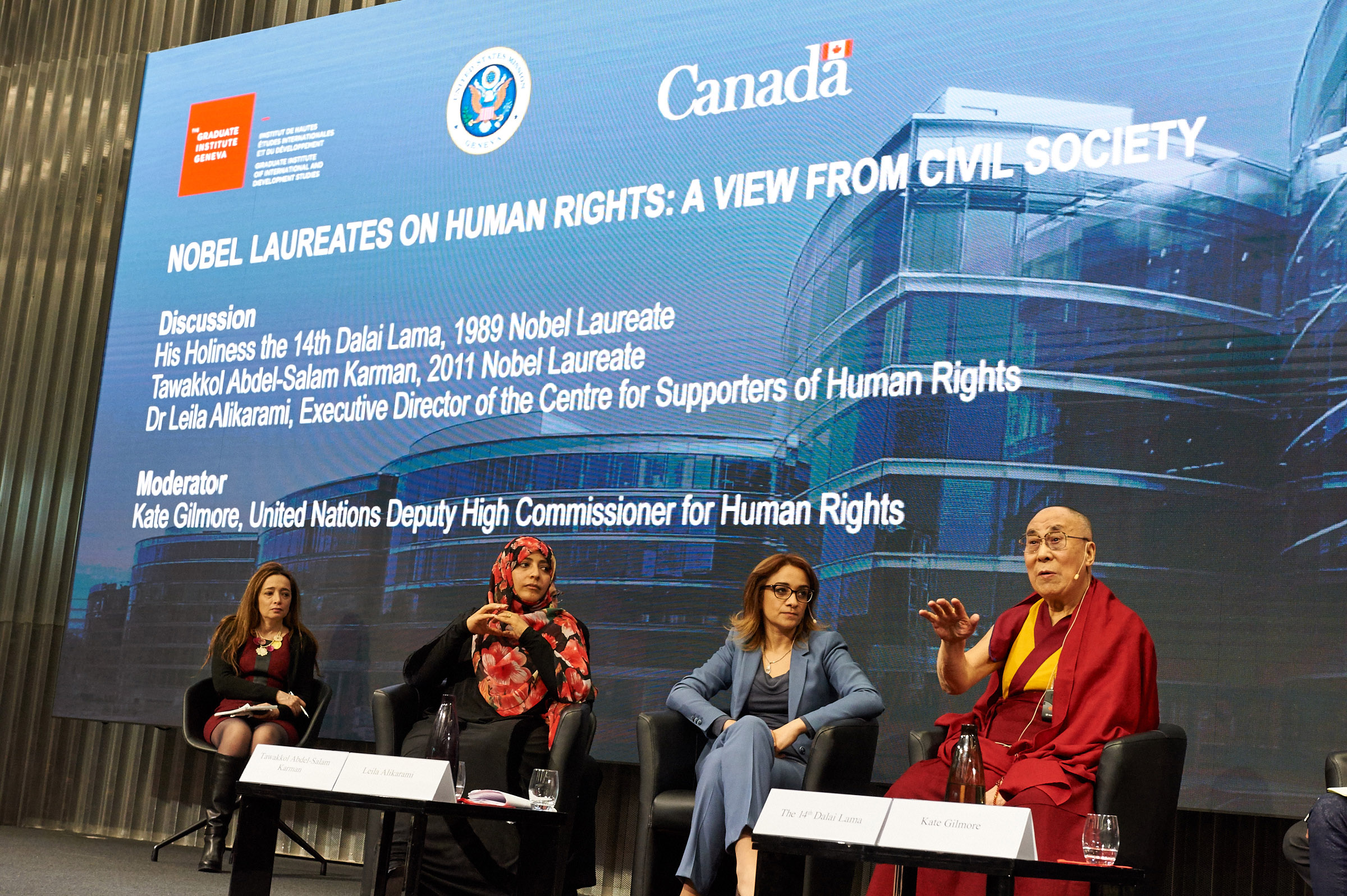
His Holiness the Dalai Lama speaking during a panel discussion, Nobel Laureates on Human Rights – A View from Civil Society in Geneva, Switzerland, on March 11, 2016. Photo by Olivier Adam
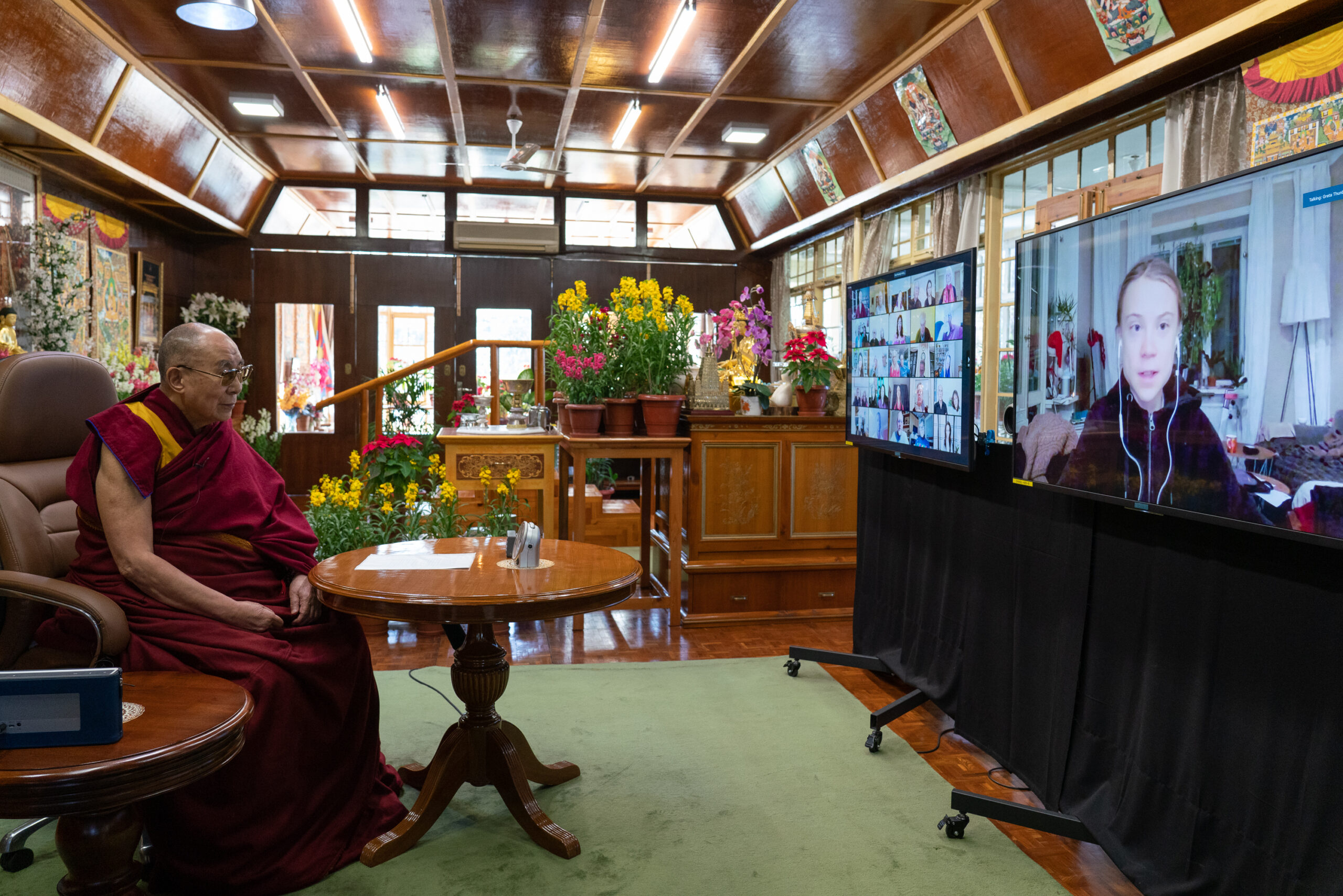
His Holiness the Dalai Lama with Greta Thunberg and leading scientists during a live online discussion, A Conversation on the Crisis of Climate Feedback Loops, Dharamshala, January 9, 2021. Photo by Tenzin Choejor, OHHDL
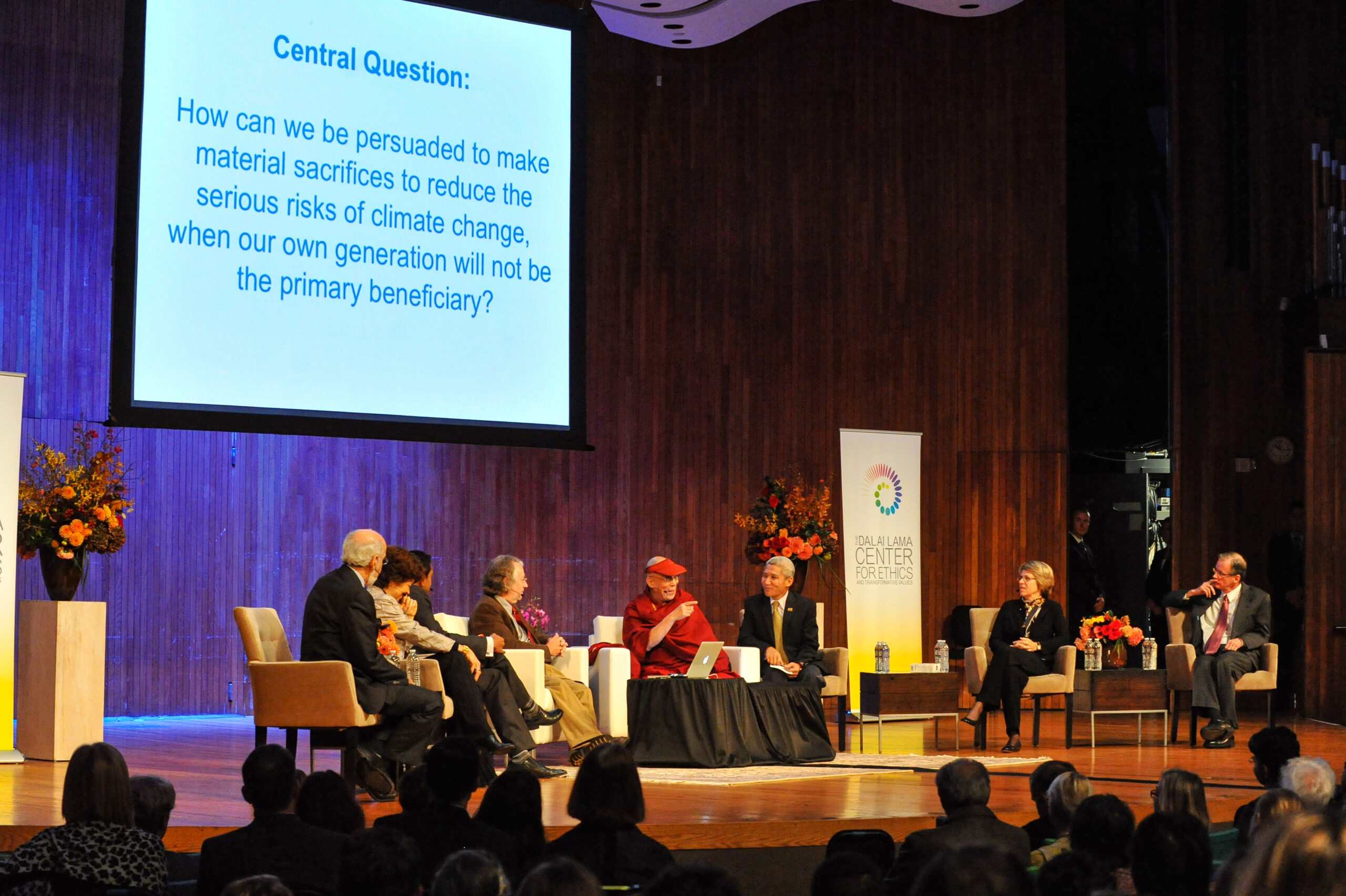
Scholars discussing environmental challenges with the Dalai Lama at Massachusetts Institute of Technology (MIT), The event was hosted by the Dalai Lama Center for Ethics and Transformative Values at MIT, in association with MIT’s Office of Religious Life, October 16, 2012. Photo by Sonam Zoksang
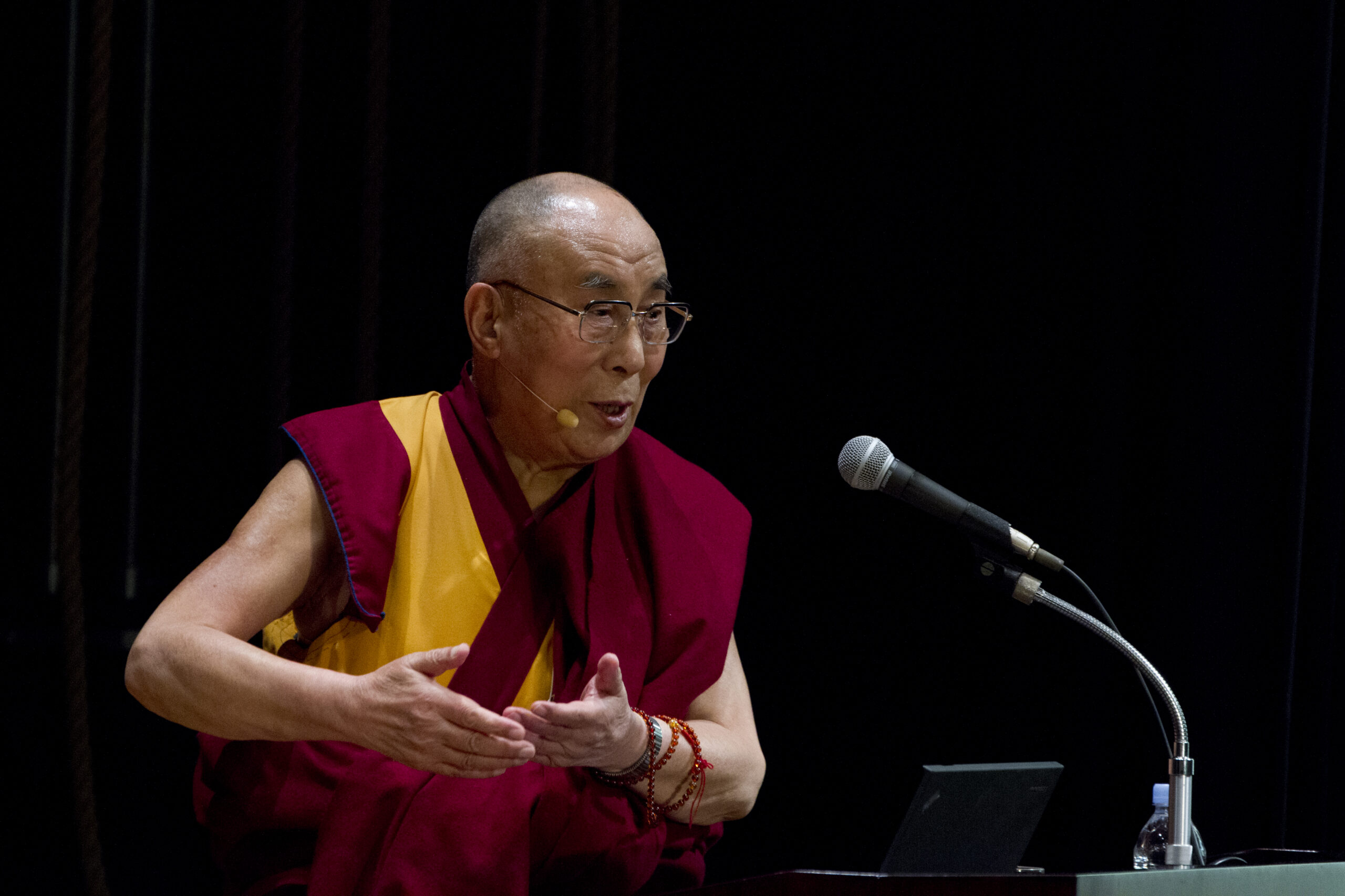
His Holiness speaking at the Global Environmental Forum for the Next Generation, Tokyo, Japan, April 6, 2015. Photo by Tenzin Choejor, OHDL

“Destruction of nature and natural resources results from ignorance, greed, and lack of respect for the earth’s living things…”

— Message on World Environment Day, June 5, 1986

Scholars discussing environmental challenges with the Dalai Lama at Massachusetts Institute of Technology (MIT), The event was hosted by the Dalai Lama Center for Ethics and Transformative Values at MIT, in association with MIT’s Office of Religious Life, October 16, 2012.
Photo by Sonam Zoksang
His Holiness speaking at the Global Environmental Forum for the Next Generation, Tokyo, Japan, April 6, 2015. Photo by Tenzin Choejor, OHDL
“Destruction of nature and natural resources results from ignorance, greed, and lack of respect for the earth’s living things…” Message on World Environment Day, June 5, 1986
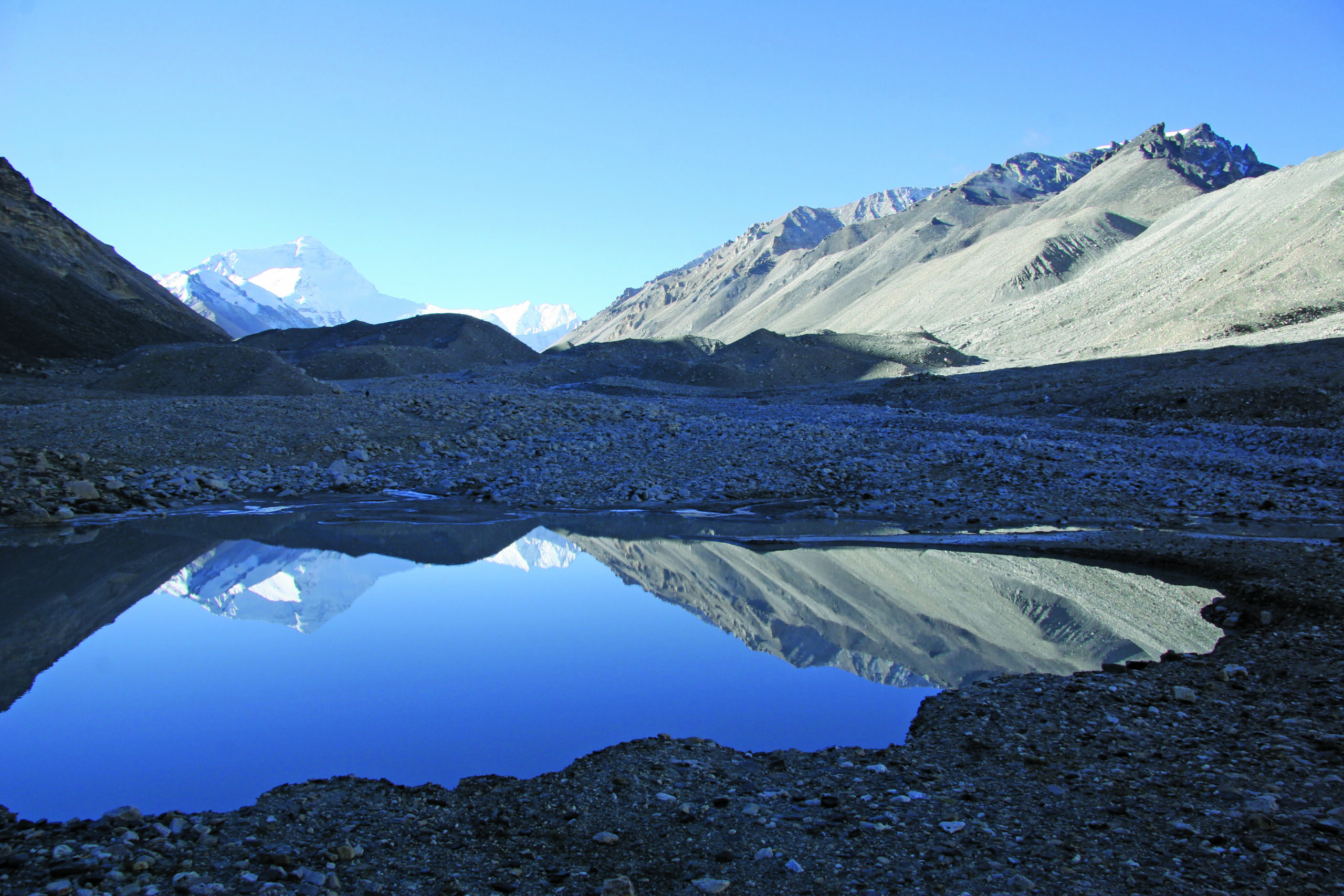
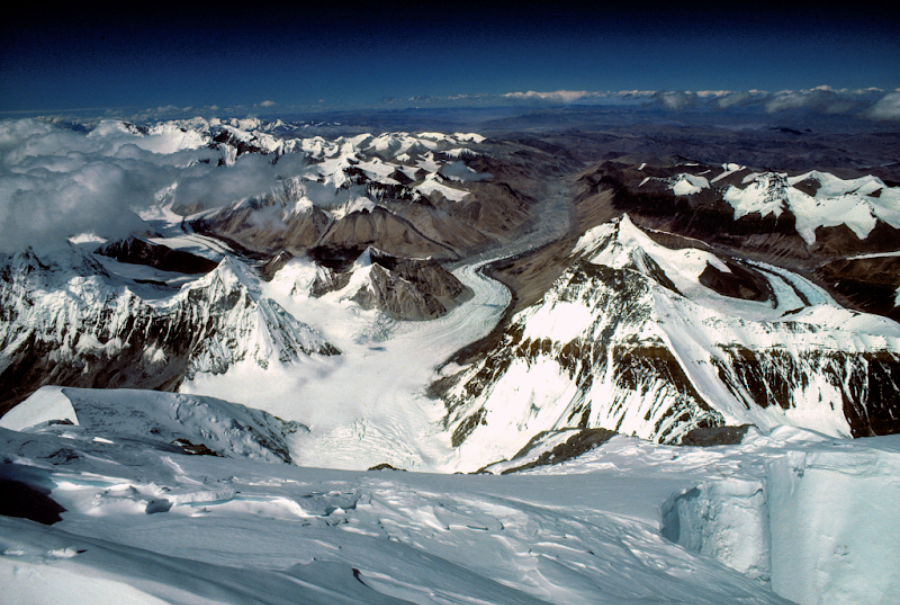
Mount Everest reflected in a melted glacial pool, near Rongbuk, Tibet. Photo by Michael Buckley

“This blue planet is our only home and Tibet is its roof. As vital as the Arctic and Antarctic, it is the Third Pole. The Tibetan Plateau needs to be protected, not just for Tibetans but for the environmental health and sustainability of the entire world.”

His Holiness the Dalai Lama, November 12, 2019. Photo by Tenzin Choejor, OHHDL

“The world belongs to its 7 billion inhabitants. In the past, communities could flourish in isolation, but now we can’t. This World Environment Day, let’s remember that we depend on each other and that to meet the challenge of climate change, we have to work together.”

— World Environment Day, June 5, 2018

The view from the summit of Everest on the Tibetan side. The Rongbuk Glacier (middle) feeds the Rongbuk Valley and the highlands of Tibet beyond. In the past 80 years, the Rongbuk has shrunk by more than 100 vertical meters across the entire glacier—approximately the height of the Statue of Liberty. Photo courtesy: Pat Morrow/patmorrow.com

“Look at those big ices in North and South Pole, the amount of melting is also very serious. And snow mountains and glaciers in Tibet are also rapidly melting. Basically, I am not an expert, but I have serious concern about that.”

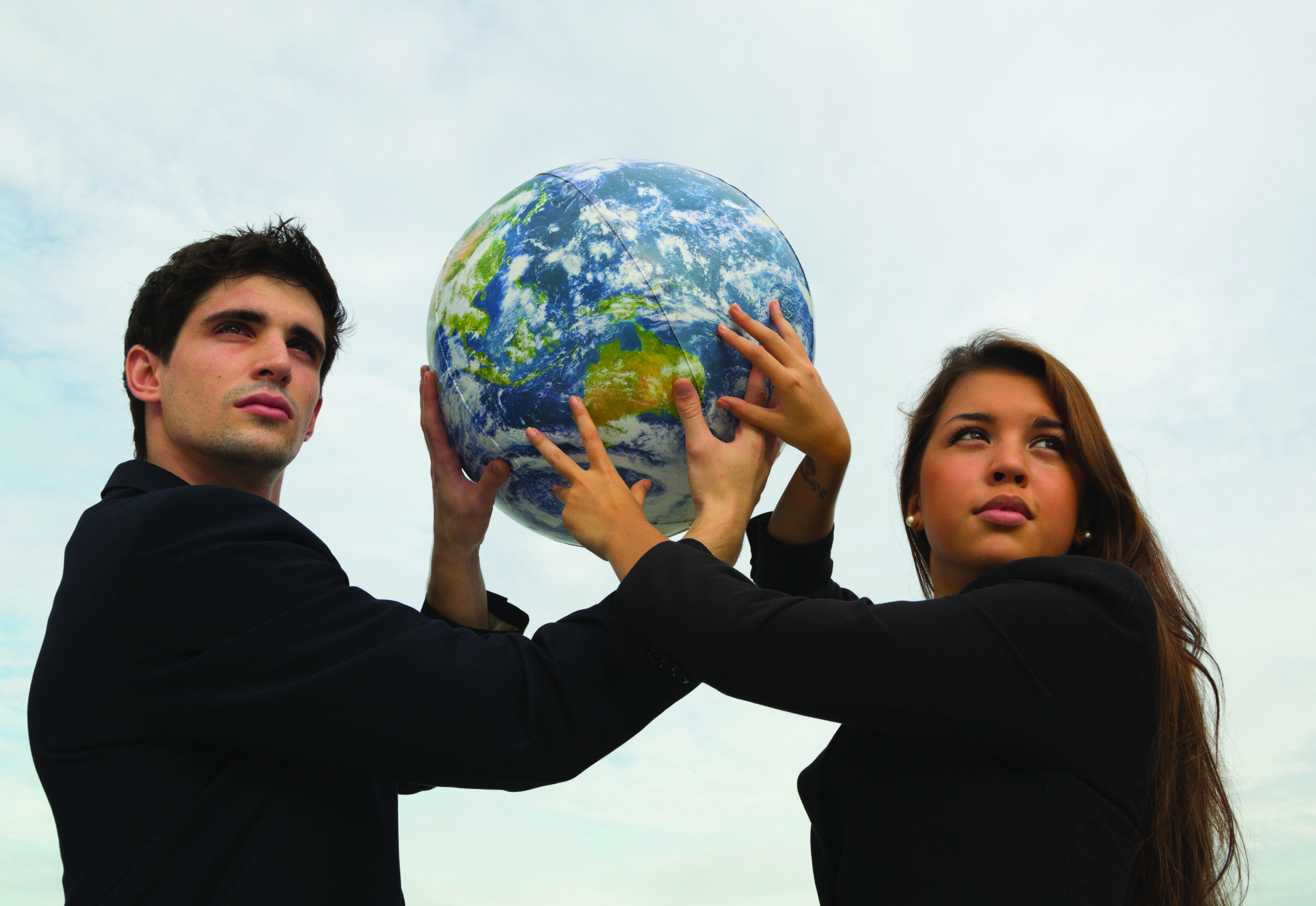
Banner shot of Earth, by Nasa. Photo courtesy: Michael Buckley

“When we see photographs of the Earth from space, we see no boundaries between us, just this one blue planet. This is no longer a time to think only of ‘my nation’ or ‘our continent’ alone. There is a real need for a greater sense of global responsibility based on a sense of the oneness of humanity.”

— Message to delegates of COP24 UN Climate Conference, November 20, 2018.

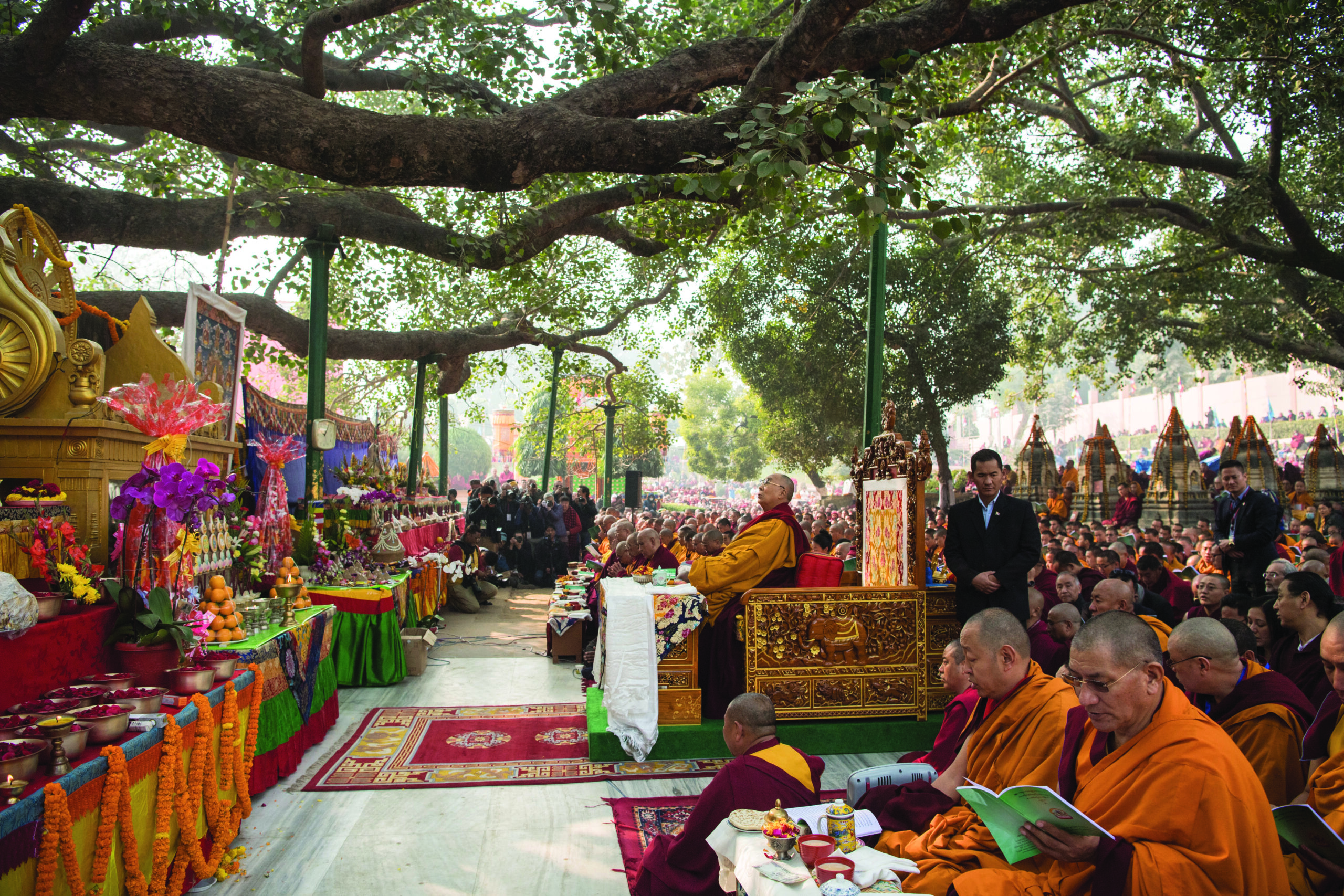
His Holiness under the sacred Bodhi Tree, Bodhgaya, India, where the Buddha is said to have attained enlightenment. Photo by Manuel Bauer

“Under a tree was the great Sage Buddha born.
Under a tree, he overcame passion and attained enlightenment.
Under two trees did he pass in Nirvana.
Verily, the Buddha held the tree in great esteem.”

— From The Sheltering Tree of Interdependence, composed by His Holiness the Dalai Lama, 1993

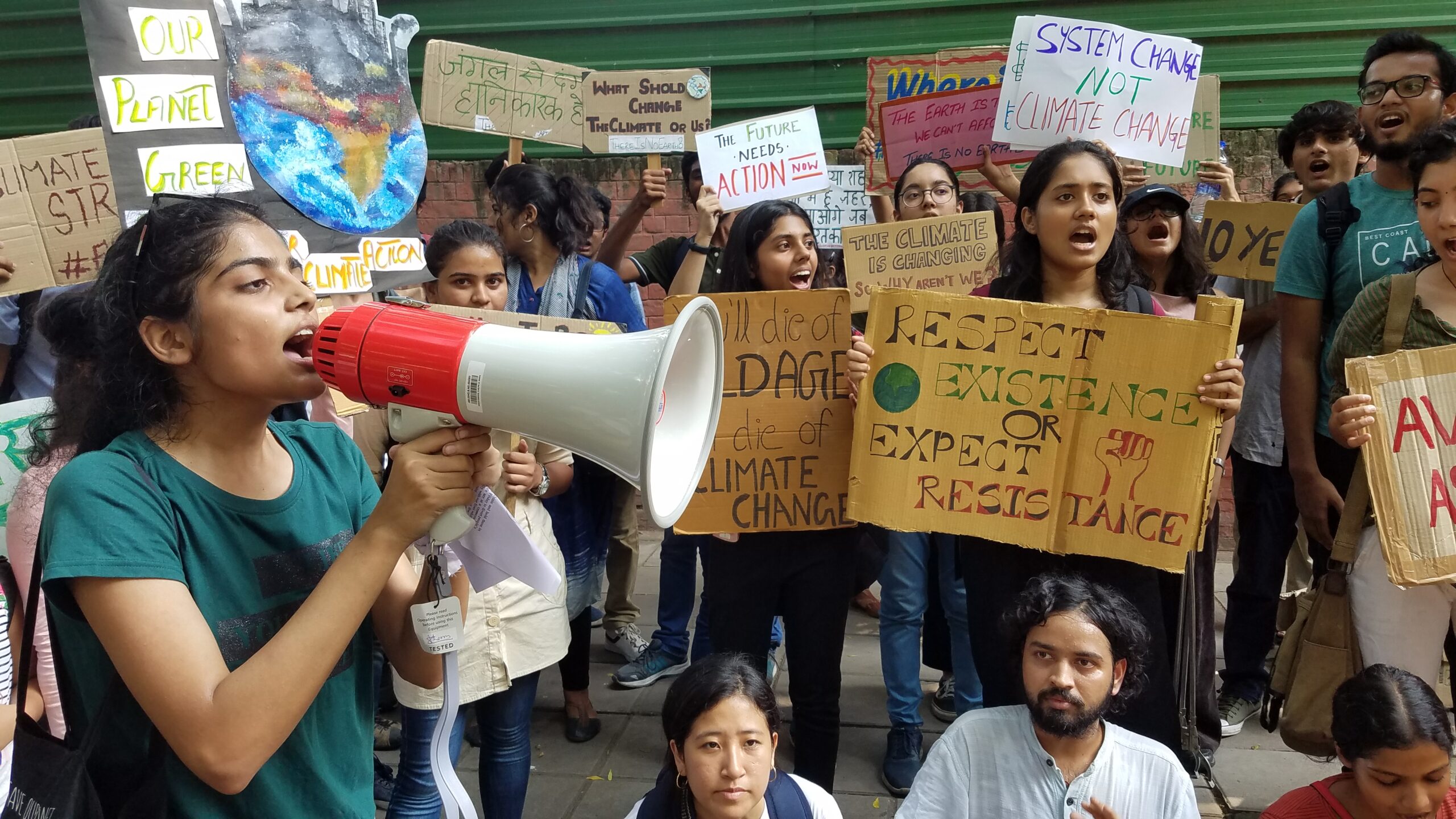
Indian students in Delhi, joining millions of students from across 160 countries in the Global Climate Strike inspired by Swedish climate activist Greta Thunberg. Photo by Michael Buckley

“Change only takes place through action. Frankly speaking, not through prayer or meditation but through action.”

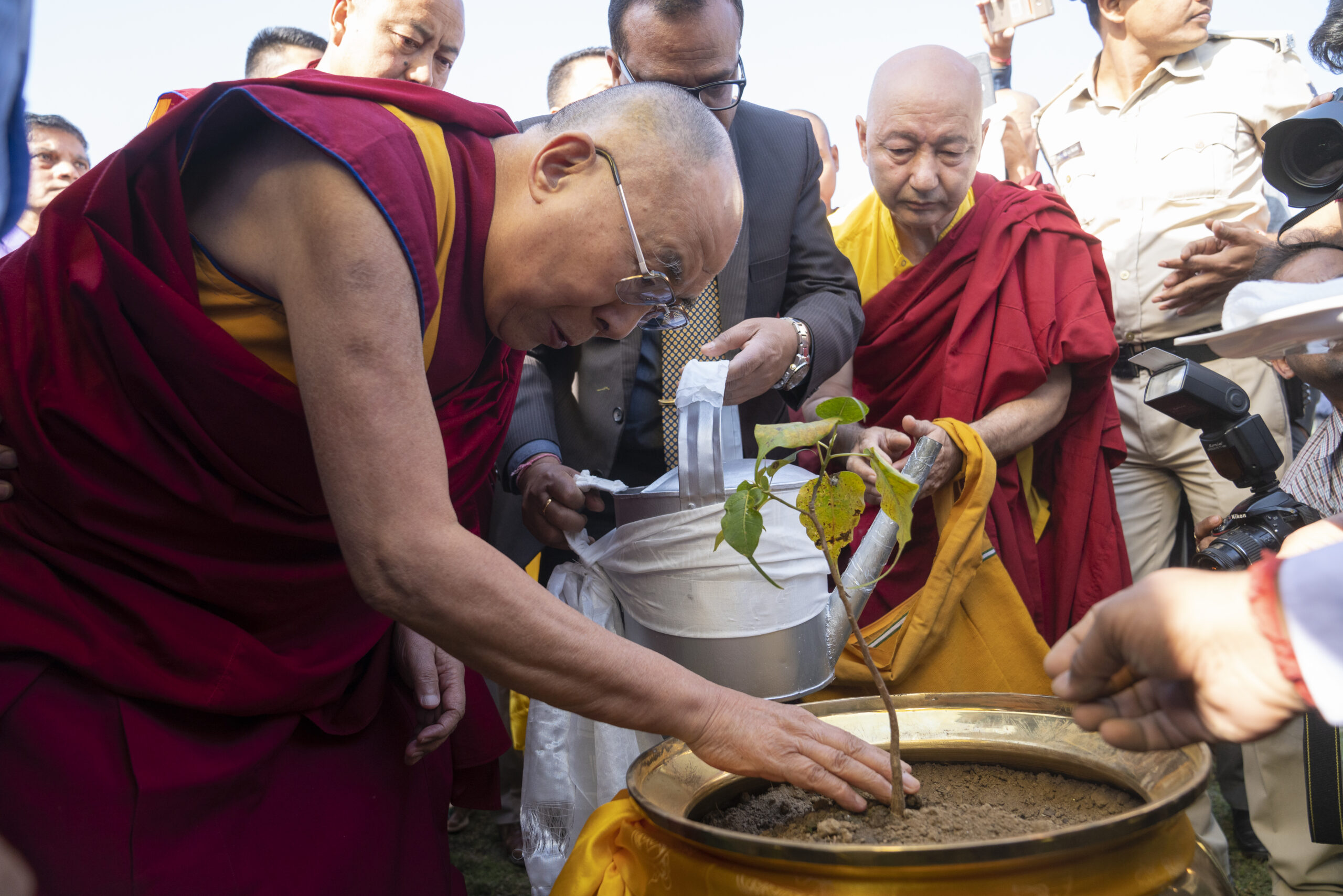
His Holiness planting a tree at Rajgiri, Bihar, India. Photo by Tenzin Choejor, OHHDL

“Since I too have a responsibility in this matter (i.e., to work for the protection of the environment and to see that the present and future generations of mankind can make use of refreshing shade and fruits of trees), I bought these seeds of fruit-bearing trees with part of my Nobel Peace Prize money to be distributed now, to people representing different regions (all the continents of the world are represented here) during this Kalachakra gathering. These seeds have been kept near the Kalachakra mandala for purification and blessings. Since these include seeds of apricot, walnut, papaya, guava, etc., suitable for planting under varying geographical conditions, experts in respective places should be consulted on their planting and care and, thus, you all should see my sincere aspiration is fulfilled.”

An excerpt from His Holiness the Dalai Lama’s speech at the Kalachakra Initiation, Sarnath, India, December 29, 1990.

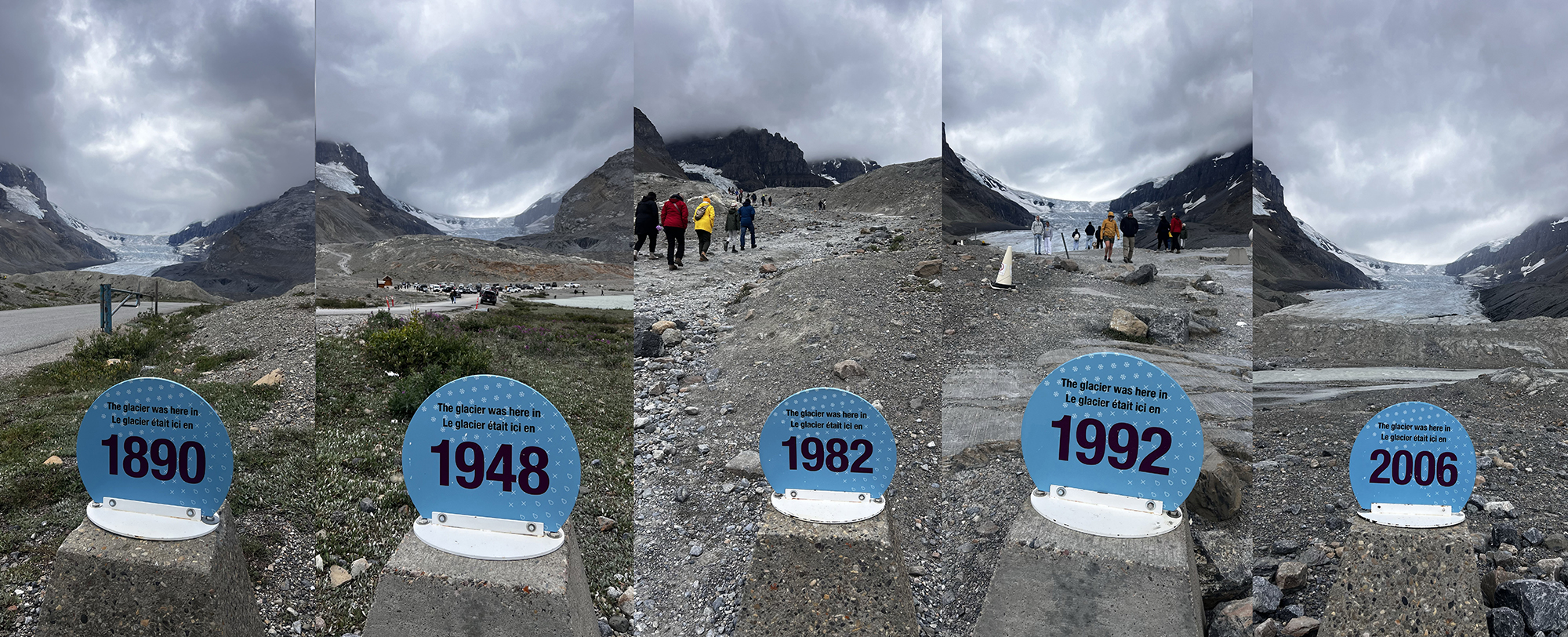
Status marker of the Athabasca Glacier (1890 to 2006), Columbia Icefield, Jasper National Park. Alberta, Canada, August 6, 2025. Photo by Tashi Phuntsok

 “Climate change is not the concern of just one or two nations. It is an issue that affects the whole of humanity and every living being on this earth. This beautiful planet is our only home. If, due to global warming and other environmental problems, the earth cannot sustain itself, there is no other planet to which we can move. We have to take serious action now to protect our environment and find constructive solutions to global warming.”

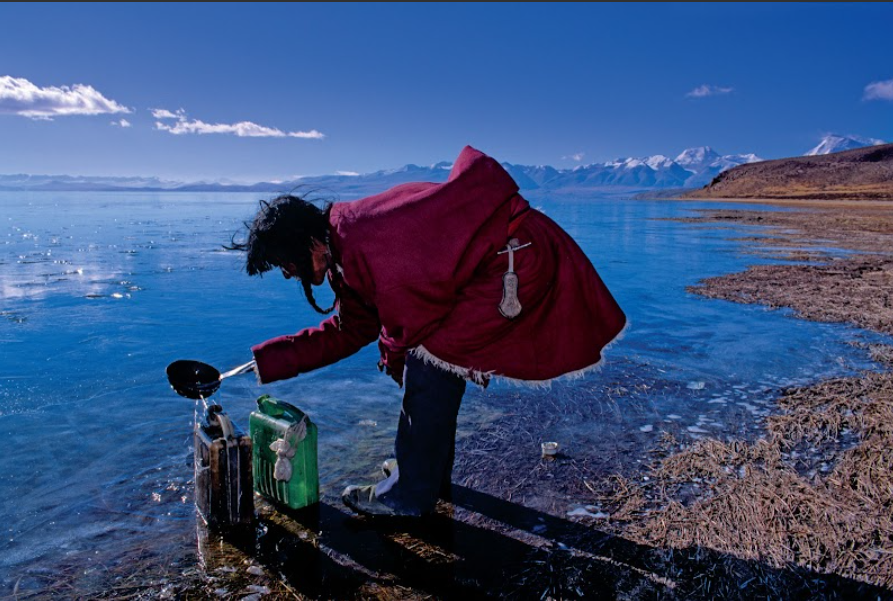
A Tibetan nomad collecting holy water from Lake Manasarovar (Tib: Mapham Youtso). Tibet’s water was once a source of great pride among Tibetans due to its purity. Now these waters are polluted due to mining ventures nearby rivers and lakes. Photo courtesy: JM/ThunderHorseMedia

 “ … many of the rivers which flow through large areas of Asia, through Pakistan, India, China, Vietnam, Laos and Cambodia, rivers such as the Yellow River, Brahmaputra, Yangtse, Salween and Mekong, all originate in Tibet. It is at the places of origin of these rivers that large-scale deforestation and mining are taking place. The pollution of these rivers has a drastic effect on the downstream countries.”

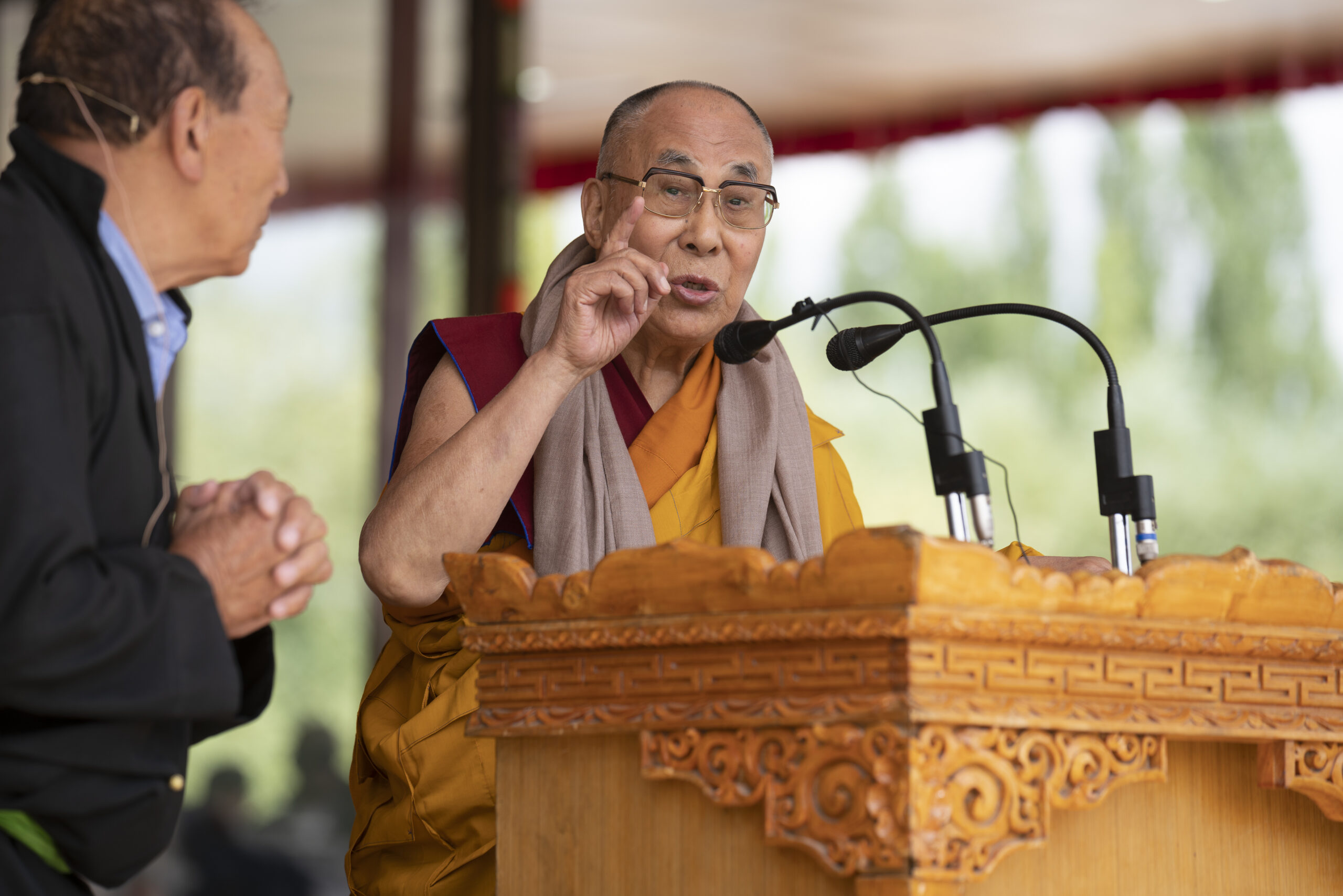
His Holiness the Dalai Lama addressing the crowd at the conclusion of his teaching in Leh, Ladakh, July 30, 2017. Photo by Tenzin Choejor, OHHDL

“In this time of great fear, it is important that we think of the long-term challenges— and possibilities — of the entire globe. Photographs of the world from space clearly show that there are no real boundaries on our blue planet. Therefore, all of us must take care of it and work to prevent climate change and other destructive forces. This pandemic serves as a warning that only by coming together with a coordinated global response will we meet the unprecedented challenges we face.” 

TIME Magazine, April 14, 2020

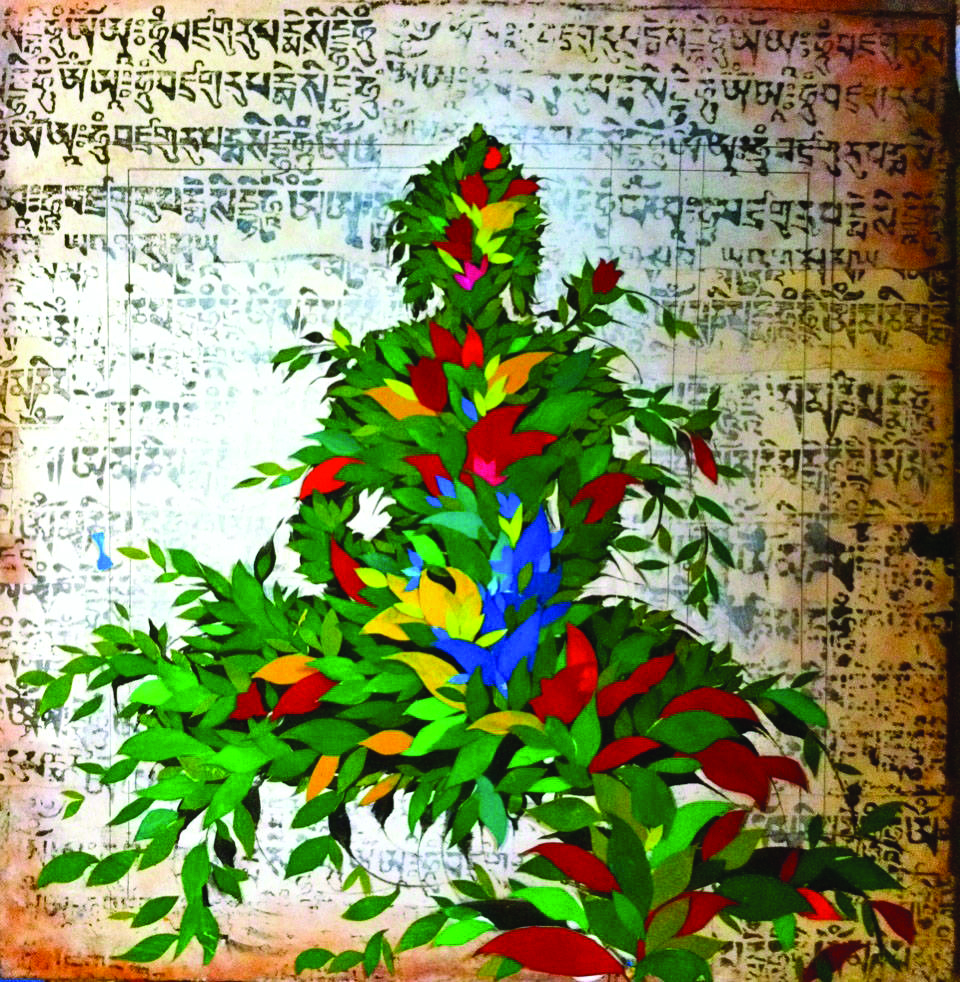
Leafy Buddha painting by Tashi Norbu.

“[If Buddha returned to this world]
Buddha would be green …
[If I joined a political party now,]
I would like to join the Green Party.
I think their idea is good.”

His Holiness the Dalai Lama talks about Tibet Third Pole and Why Tibet Matters. Courtesy: Michael Buckley