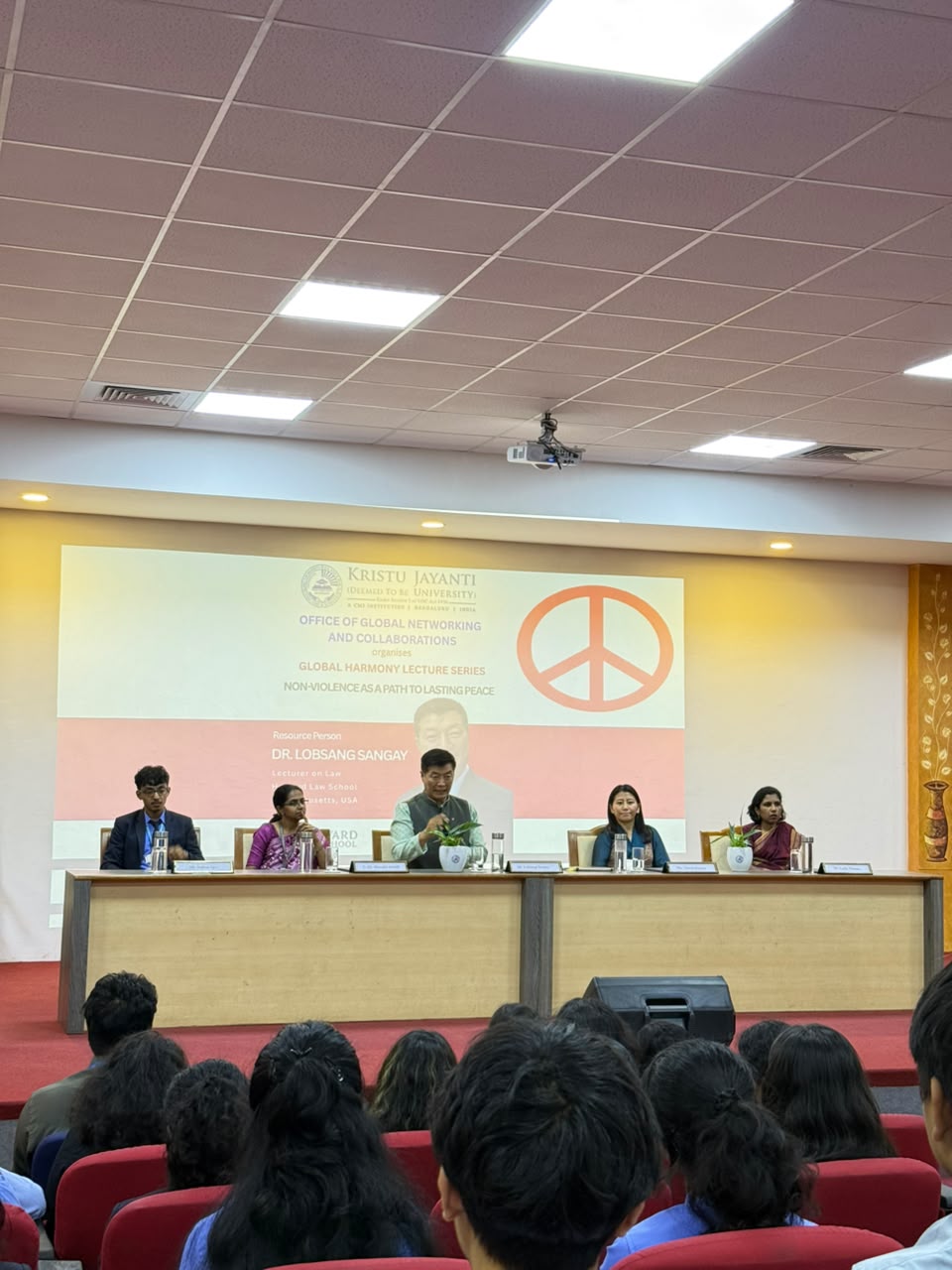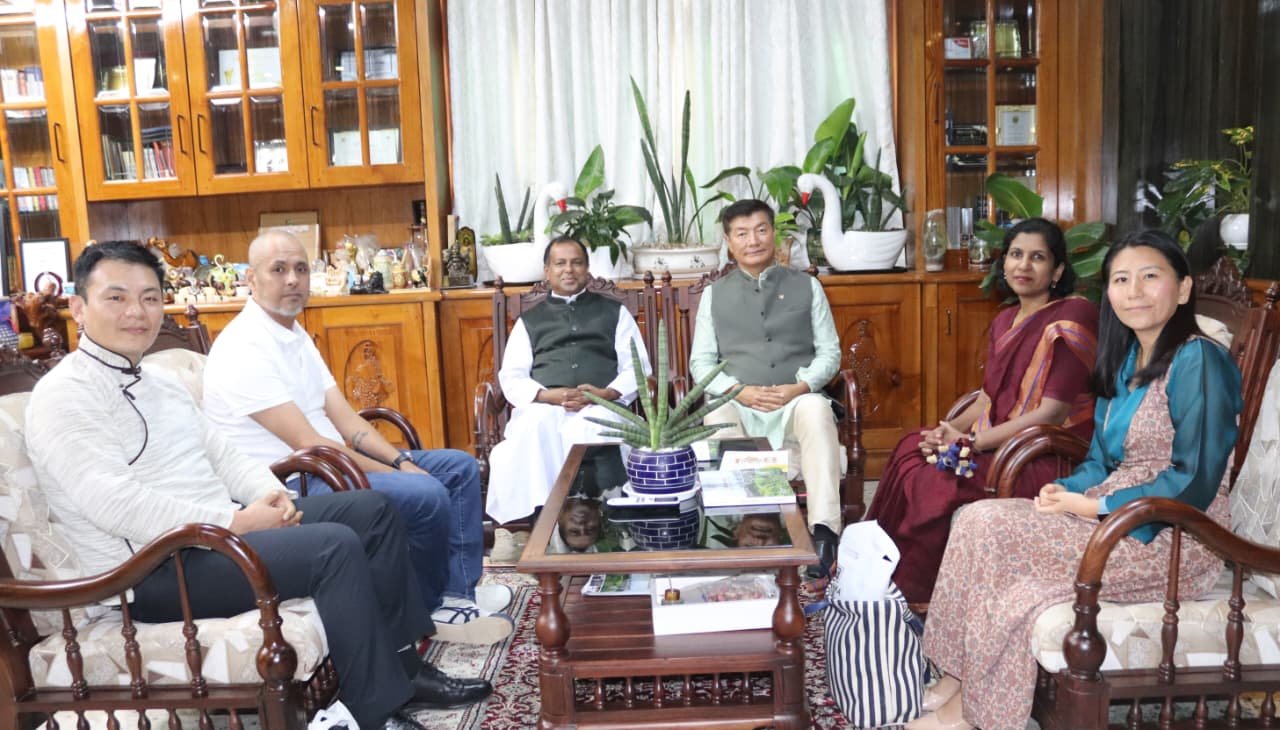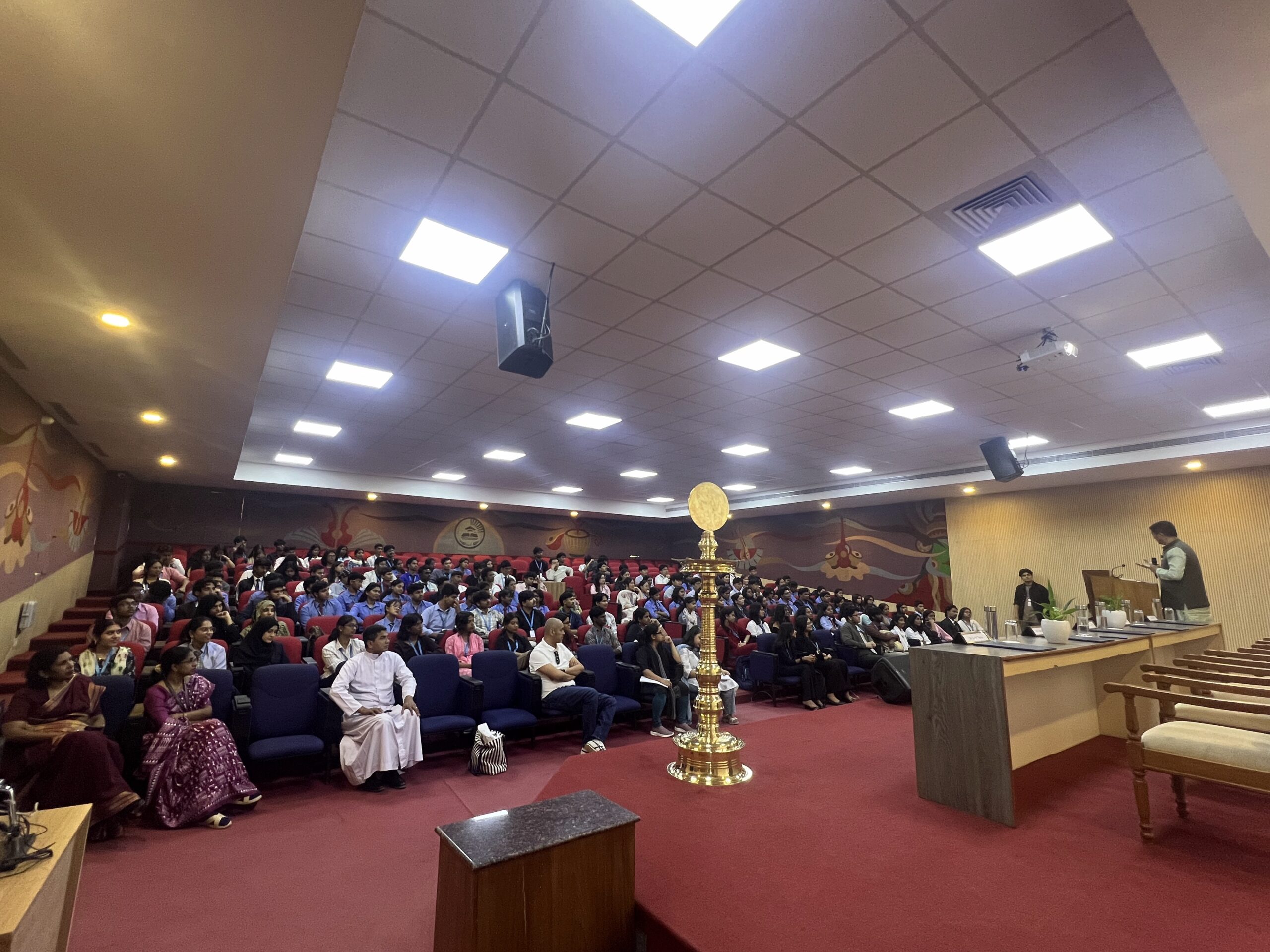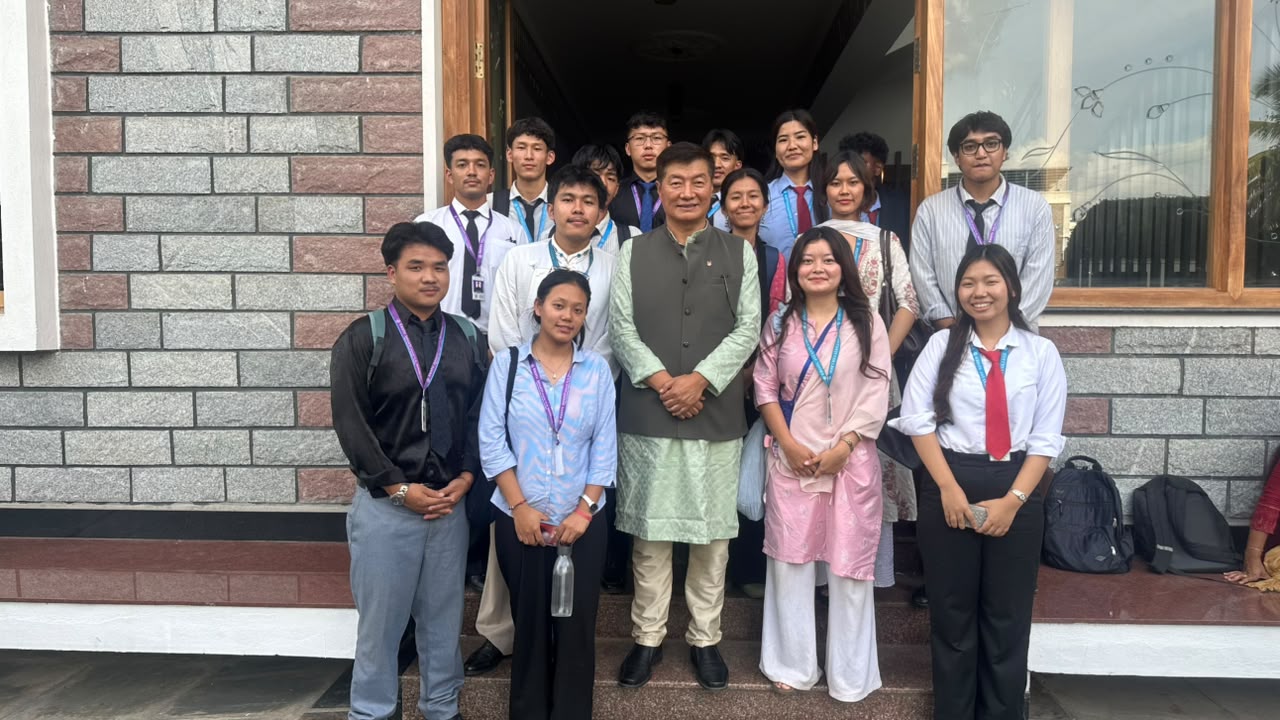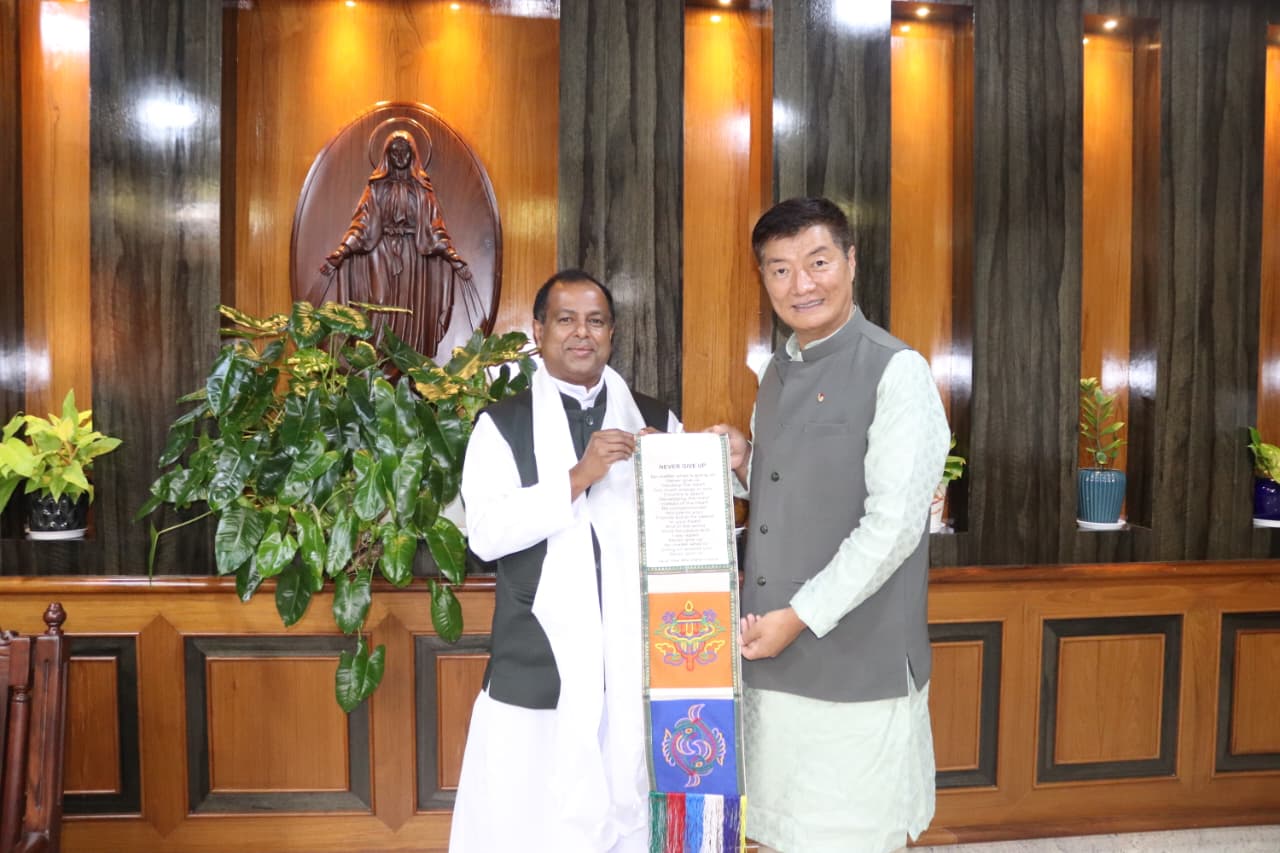
September 09, 2026: The 108 Peace Institute, in collaboration with Kristu Jayanti University, Bengaluru, organised a talk titled “Non-Violence as a Path to Lasting Peace,” featuring Dr. Lobsang Sangay, Lecturer at Harvard Law School.
Ashoka’s legacy: Peace as a foundation for prosperity
Dr. Sangay began by drawing attention to the reign of Emperor Ashoka, presenting it as an important historical example of how non-violence can become a foundation for peace, harmony and international influence. Following the devastating Kalinga War in present-day Odisha, Ashoka experienced deep remorse over the destruction and loss of life. He subsequently renounced violence and embraced the principles of peace and compassion. Ashoka’s transformation, Dr. Sangay explained, was reflected in his governance and foreign policy. He invested in roads and public infrastructure, established facilities for the welfare of human beings and animals. The spread of Buddhism to Sri Lanka and other parts of Asia, including through the planting of Bodhi tree saplings, became a significant aspect of India’s historical and cultural influence. As a result, many neighbouring societies embraced Buddhism and looked to India as a spiritual guide. Dr. Sangay noted that India’s economic share during Ashoka’s time has been estimated by some accounts at approximately 25–27 per cent of the global economy, with some estimates placing it even higher.
He encouraged students to reflect on Ashoka’s legacy when considering India’s aspirations to become a leading global power. Rather than measuring greatness solely through economic or political dominance, he argued, India could draw inspiration from its historical commitment to peace, harmony and non-violence.
A polarised world needs principled leadership
Turning to contemporary global affairs, Dr. Sangay observed that societies across India, the United States, Europe and other parts of the world are experiencing increasing political polarization. People face growing pressure to align themselves with opposing political camps, making constructive dialogue and mutual understanding more difficult. He expressed concern that authoritarian governments are becoming increasingly prominent and warned that authoritarianism often creates conditions conducive to violence, while democracy offers greater freedom and opportunities for peaceful political participation.
Describing the present as a particularly challenging period, he noted that the younger generation has inherited a world burdened by polarization, authoritarian rule, violence and numerous armed conflicts. Referring to estimates of active wars and conflicts, he emphasized the scale of the challenge facing humanity.
Dr. Sangay also questioned the contradictions in international peacemaking. Referring to Pakistan’s involvement in diplomatic efforts surrounding the Iran conflict while simultaneously engaging in hostilities with Afghanistan, he highlighted the irony of a country attempting to mediate international disputes while being involved in conflict itself. He argued that genuine peace building requires more than negotiations or transactional arrangements. It must be guided by values, principles and a clear framework for resolving disputes. In this context, he suggested that India, with its historical association with non-violence and its legacy of Mahatma Gandhi, could play a meaningful role in international peace efforts. He also invited students to reflect on Gandhi’s continuing relevance and the extent to which his teachings on ahimsa, or non-violence, are understood and respected today.
The Dalai Lama’s approach to peace and dialogue
Explaining his personal commitment to non-violence, Dr. Sangay said that his approach was deeply influenced by His Holiness the Dalai Lama and the Tibetan movement’s commitment to peaceful resistance. He emphasized that lasting peace depends on the means used to achieve it. If a movement relies on violence, its outcome is likely to reproduce violence. Therefore, he advocated dialogue, negotiation and the pursuit of common ground, even in the face of prolonged injustice.
Speaking about Tibet, he explained that the Dalai Lama has consistently supported finding a middle ground with the Chinese government through dialogue rather than violence. Dr. Sangay shared his own efforts to encourage dialogue by organizing nine Track III diplomacy initiatives at Harvard, bringing together Chinese, Tibetan, American and Indian scholars for discussions.
However, he expressed disappointment that the situation in Tibet had deteriorated, with repression becoming more severe despite such efforts. He reiterated that dialogue remains essential to resolving conflicts, even when progress is difficult and political conditions are unfavorable.
Surveillance technology and the challenges to freedom
Dr. Sangay also addressed the growing use of technology as a means of political control, warning that violence is not limited to physical force. Digital surveillance, tracking and the misuse of artificial intelligence and other technologies can also restrict individual freedom and undermine human dignity. Using China as an example, he discussed the extensive surveillance infrastructure, including facial-recognition systems and social-credit mechanisms that can be used to monitor citizens and restrict their activities. He explained how such systems can penalize individuals and limit their access to services, including travel.
According to Dr. Sangay, some of the surveillance technologies later deployed widely in China were first developed or refined in Tibet, particularly in Lhasa, before being adopted on a larger scale. He further stated that China had exported surveillance technology to 115 countries, many of which have authoritarian governments.
He warned that surveillance systems can strengthen authoritarian rule by enabling governments to monitor, track and control citizens. The challenge for future leaders, he argued, is to understand how technology can be misused and to safeguard freedom, privacy and democratic rights in an increasingly digital world.
Addressing the students as members of Generation Z, he urged them to look beyond their engagement with digital platforms and recognize their responsibility in shaping the political and social future.
Generation Z: From protest to political leadership
Dr. Sangay acknowledged the influence of Generation Z-led movements in countries such as Sri Lanka, Bangladesh and Nepal. These movements, he said, demonstrate that young citizens can challenge established power structures.
However, he cautioned that bringing down a government is not the same as building a better political system. Referring to the aftermath of political uprisings in different countries, he observed that revolutionary movements do not always produce democratic or stable outcomes. He cited the limited electoral representation of student protesters in Bangladesh, noting that only five Gen Z protesters had won seats in a parliament with approximately 340 seats. He also referred to the experiences of Egypt and Tunisia, where political transitions following popular uprisings resulted in new forms of authoritarianism, and to the continuing instability in Libya and Iraq. Nepal, he noted, offered a different example, with several young leaders entering government. Nevertheless, the country continued to face significant challenges, including the economic and reconstruction demands following devastating floods.
His central message was that Gen Z must develop a long-term political strategy that extends beyond protest. Young people need to organize effectively, participate in elections, build public trust and prepare themselves to govern. If they wish to transform their societies, they must translate their creativity, energy and idealism into sustained political participation and responsible leadership.
Courage rooted in compassion, not revenge
One of the key themes of the talk was the distinction between revenge-driven courage and compassion-driven courage. Drawing on his experience as a Tibetan freedom advocate, Dr. Sangay explained that non-violence should never be mistaken for weakness. It requires discipline, inner strength, patience and the courage to resist injustice without surrendering to hatred. He observed that courage motivated by revenge may generate intense energy in the short term, but it can eventually lead to exhaustion, stress and emotional distress. Such courage focuses on destroying an opponent and replacing those in power, without necessarily addressing the underlying problems. Compassion-based courage, by contrast, is rooted in a commitment to one’s community and the greater good. It seeks to overcome injustice and solve problems without allowing hatred or vengeance to determine the course of action.
Dr. Sangay encouraged students to recognize that many of the challenges faced by leaders across generations are universal. Although circumstances may change, people continue to confront adversity, loss, uncertainty and difficult decisions. A change in perspective, he suggested, can make problems more manageable and help individuals respond with greater resilience.
He also contrasted the insecurity of dictators, who may live in constant fear of retaliation because of the violence they have committed, with the possibility of becoming “happy warriors”, individuals who remain committed to their cause while sustaining compassion, inner strength and a sense of purpose.
Democracy in exile and the Tibetan struggle
Dr. Sangay spoke about his book, Democracy in Exile: How to Establish and Run a Government in Exile, and reflected on the democratic experience of the Tibetan exile community.
He described the Tibetan government-in-exile as an example of how democratic institutions can be maintained even when a people are deprived of their homeland. He emphasized the importance of democratic practices, institutional responsibility and collective commitment to a shared cause. Referring to the millions of people around the world who have been displaced by political persecution and conflict, he highlighted the difficulties faced by refugee communities that lack effective political representation or institutions capable of advocating for their rights. He argued that the Tibetan experience demonstrates the importance of preserving democratic values even under challenging circumstances.
Dr. Sangay reaffirmed his deep commitment to Tibet, explaining that his desire to serve the Tibetan people and contribute to their future had shaped his life’s work. His message to the students was that commitment to a meaningful cause, combined with perseverance, democratic principles and non-violent action, can help sustain a movement even when its objectives appear distant.
A call to become responsible global citizens
Dr. Sangay reiterated that non-violence is both a moral principle and a practical approach to achieving lasting peace. He urged students to recognize their responsibility for shaping a more peaceful and democratic world.
The talk concluded with a strong message that lasting peace cannot be imposed through force or sustained through fear. It must be built through principled leadership, dialogue, courage and a genuine commitment to the well-being of others. The talk was attended by nearly 150 students and faculty members, providing an opportunity for the university community to reflect on the role of non-violence, democracy and compassionate leadership in creating a more peaceful world.