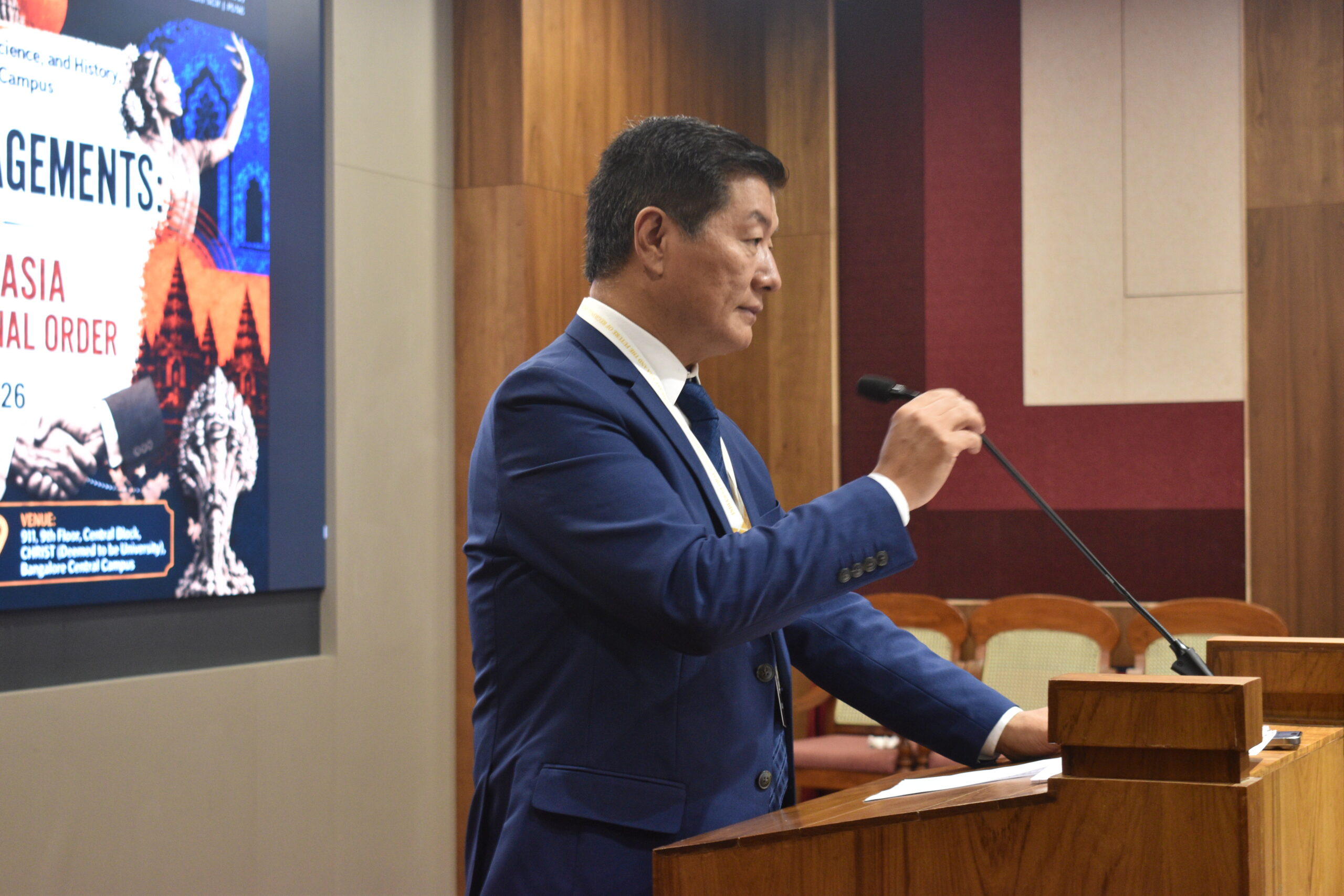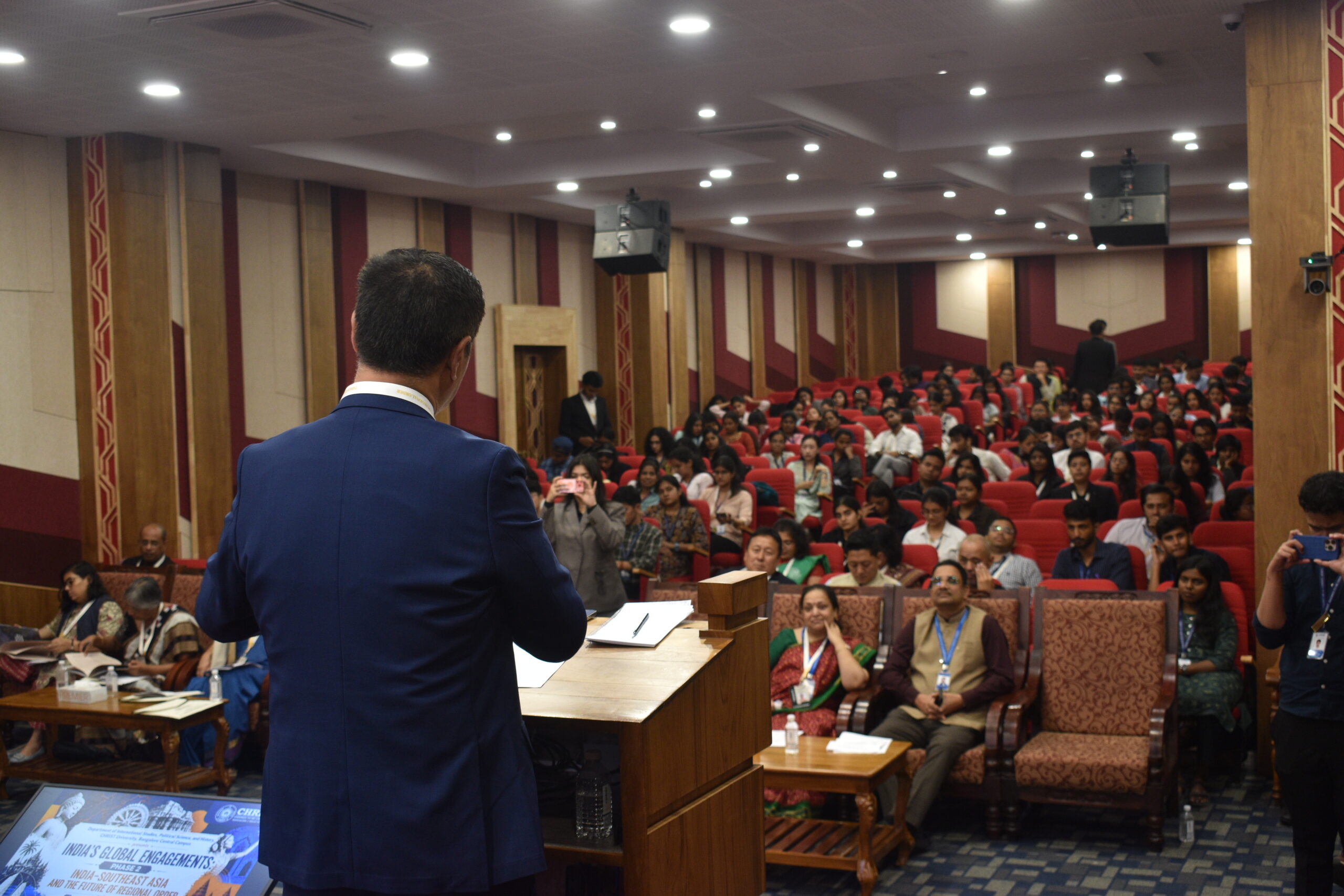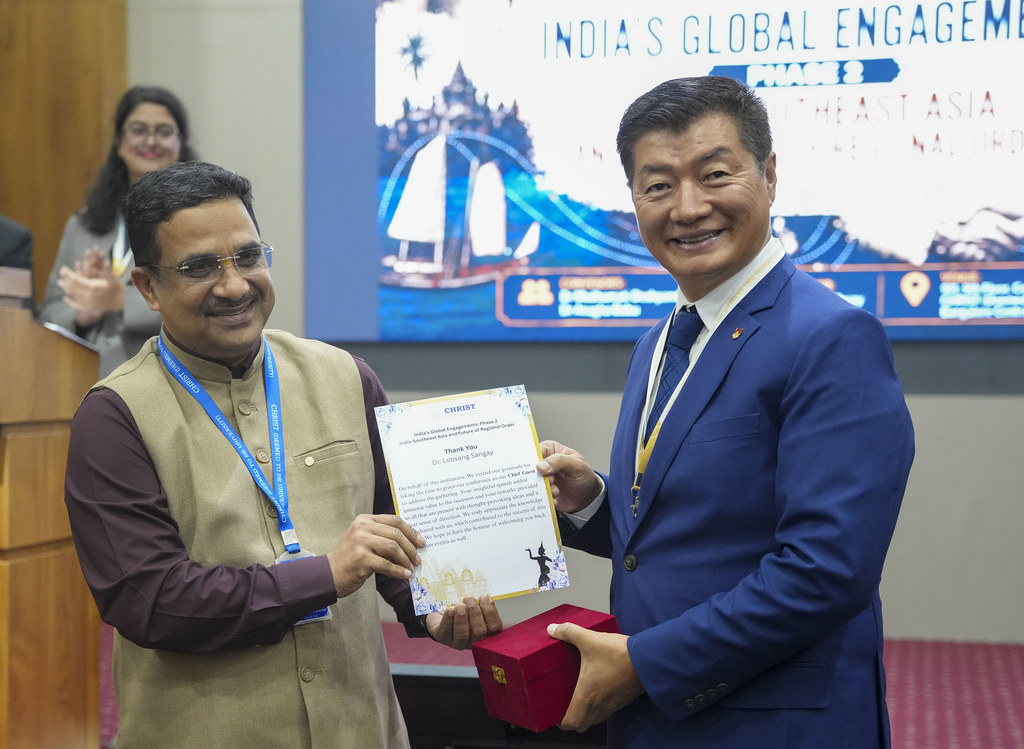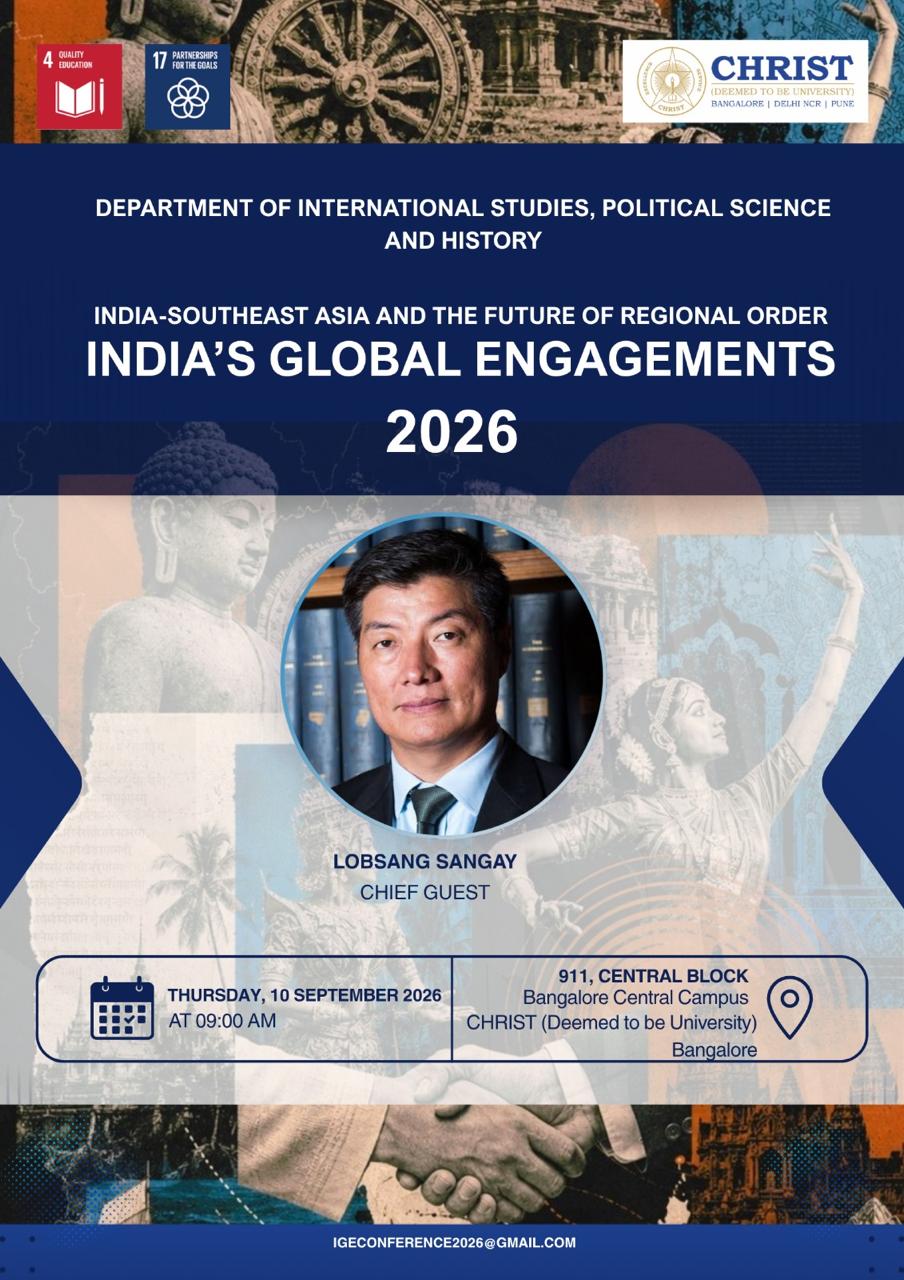
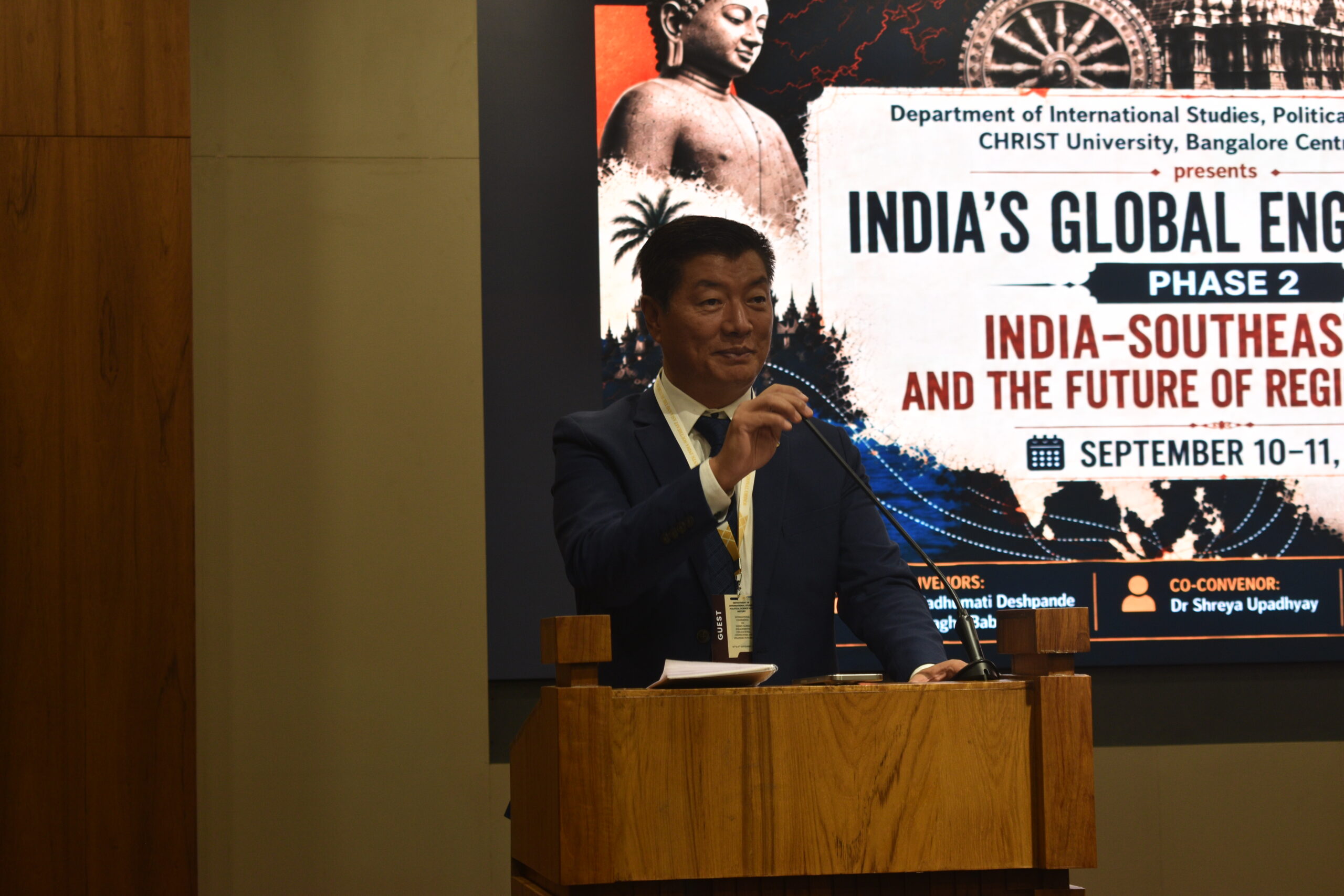
September 10, 2026: Dr. Lobsang Sangay delivered the keynote address at the International Conference on INDIA’S GLOBAL ENGAGEMENTS: PHASE 2 India-Southeast Asia And The Future Of Regional Order organized by Department of International Relations, Political Science, and History, Christ University, Bangalore.
Dr. Lobsang Sangay opened his address by examining the intensifying competition between India and China for global influence, the shifting balance of power in South Asia and Southeast Asia, and the growing role of regional connectivity, trade, education and cultural diplomacy in shaping India’s position in Asia. He argued that India’s ambition to emerge as a leading global power will increasingly depend on its ability to strengthen relationships with neighbouring countries and build deeper economic and people-to-people connections across the region.
Highlighting China’s expanding presence in South Asia, Dr. Sangay mentioned that while South Asia has historically been regarded as India’s traditional sphere of influence, China has made substantial inroads through trade, infrastructure, education and diplomatic engagement. He cited changing patterns of higher education among South Asian students as one indication of this shift, claiming that the share of students from South Asia coming to India for education declined between 2016 and 2019, while the number travelling to China increased substantially. Bangladesh, he said, sends significantly more students to China than to India.
Dr. Sangay emphasized the importance of regional economic integration and connectivity, and argued that India needs stronger trade links and greater economic integration if it is to realise its potential. Turning to Southeast Asia, he said India’s transition from the “Look East” to the “Act East” policy reflected New Delhi’s efforts to deepen its engagement with a region where China has already established a significant economic and infrastructure presence. China, he noted, has become a major trading and investment partner for Southeast Asian countries, while Chinese-backed infrastructure projects have expanded regional connectivity through railways, highways and other transport links under its Belt and Road Initiative. India, by comparison, still faces significant infrastructure gaps connecting South Asia with Southeast Asia, he said.
Dr. Sangay also raised concerns about transboundary rivers, environmental disasters and accountability, particularly in relation to countries downstream of rivers originating in Tibet. He argued that greater cooperation and timely sharing of hydrological information are essential for protecting vulnerable communities in countries such as Nepal and India. He questioned the availability and timely sharing of information from the Chinese side, arguing that China’s satellite and monitoring capabilities in Tibet should have enabled it to provide timely warnings to Nepal. Such information, he said, could have helped reduce the loss of lives and damage to property. He noted that the loss of lives and widespread destruction caused by the flood will have long-term consequences for generations to come, particularly for families who lost their homes and livelihoods.
The discussion further touched on questions surrounding China’s role in international institutions and global governance, including transparency and accountability following the COVID-19 pandemic.
Highlighting the potential of Buddhist diplomacy as a tool of Indian foreign policy, Dr. Sangay argued that India’s historical and civilizational links with Buddhist countries across Asia provide New Delhi with an important diplomatic resource that could be leveraged further. He invoked the legacy of Emperor Ashoka, particularly Ashoka’s embrace of non-violence following the Kalinga War, as a historical example of India projecting influence through culture, ideas and diplomacy rather than military power alone. Countries including Sri Lanka, Thailand, Cambodia and Laos maintain deep Buddhist connections with India, which he described as the land of Buddhism and an important cultural reference point for Buddhist communities across Asia. He called for greater investment in Buddhist diplomacy, including international conferences, cultural exchanges and stronger engagement with Buddhist leaders and institutions. India’s efforts through organisations such as the International Buddhist Confederation, he said, could help strengthen these connections.
Dr. Sangay contrasted this approach with what he described as China’s state-led management of religious institutions and its policy of “Sinicisation” of religion. He also criticised Beijing’s position on the reincarnation of the Dalai Lama, arguing that China, as an atheist state, has demolished Buddhist institutions and questioning its audacity to interfere in a deeply sacred and spiritual tradition.
Examining China’s demographic and economic challenges, including population decline, downturn in the real estate sector and youth unemployment, Dr. Sangay argued that India’s comparatively young population and large domestic market could provide it with significant opportunities in the coming decades. At the same time, he emphasised that India’s rise would depend on more than demographic or economic advantages alone. Greater infrastructure development, regional trade, technological capacity, education and sustained diplomatic engagement were identified as important components of India’s long-term strategy.
Dr. Sangay ultimately presented two contrasting approaches to national influence. He contrasted what he described as the “Chinese world order” under President Xi Jinping with what he called the “Ashoka model” for India, which he said should combine economic and infrastructure development with religious tolerance, cultural engagement and freedom of expression. Referring to political freedoms in China, he remarked that “one can criticize God but not Xi Jinping,” using the statement to highlight what he described as restrictions on freedom of expression under the Chinese system. He argued that India should instead promote an international order rooted in the values he associated with Ashoka and said that such a model would ultimately prevail over the Chinese world order.
Dr. Sangay underscored a broader challenge for New Delhi as competition with Beijing expands beyond borders and trade into education, infrastructure, culture and diplomacy. India’s ability to translate its historical and civilizational connections into contemporary regional partnerships could become an increasingly important element of its foreign policy.
The conference was attended by around 150 students and scholars from across the world, bringing together participants from diverse academic and geographical backgrounds for discussions on geopolitics, regional cooperation and India-China relations.