
Abstract:
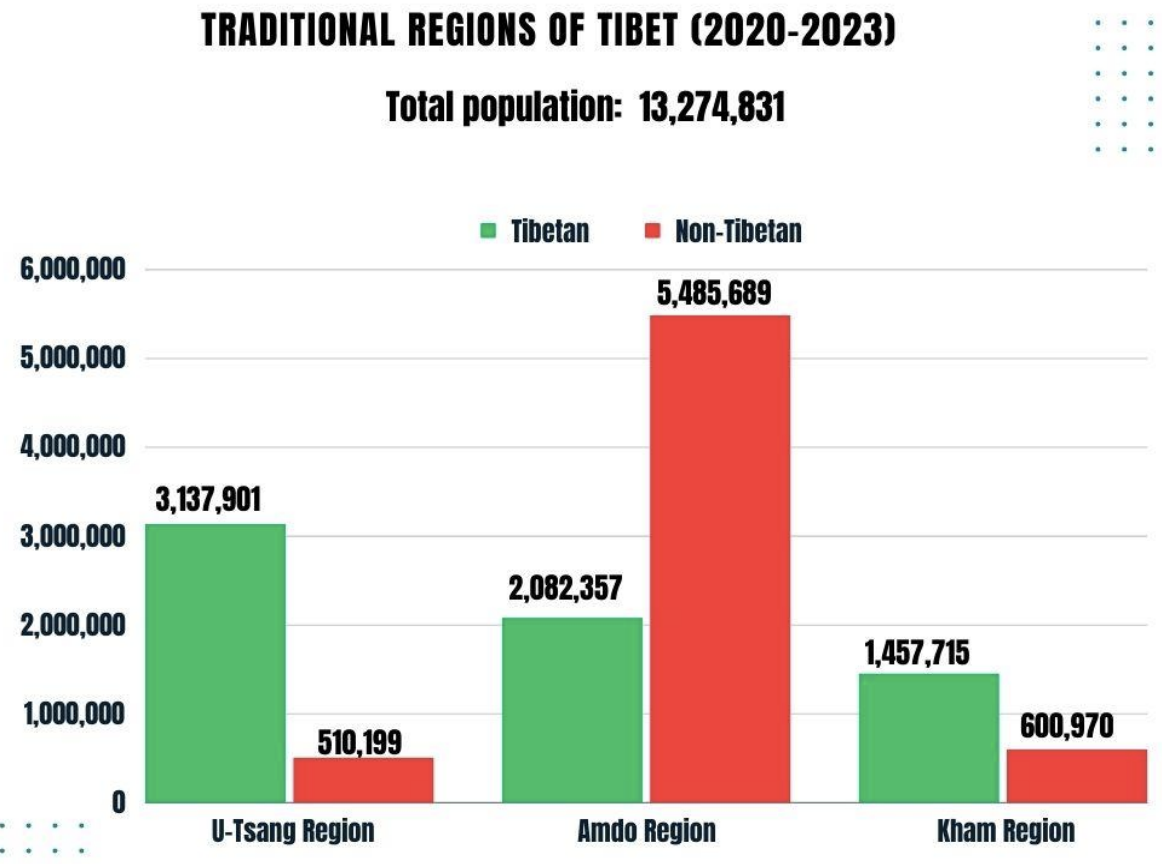
Drawing exclusively on China’s own official census data, this monograph presents the first comprehensive demographic analysis of all traditional Tibetan areas of U-Tsang, Kham, and Amdo region since China’s Seventh National Census of 2020. It finds that out of a total population of 13.274 million across traditional region of Tibet, Tibetans number 6.677 million (50.3 percent) against 6.596 million non-Tibetans with a margin of just 81,115 individuals. The study found that Tibetans already a clear minority in Qinghai and Tibetan areas in Yunnan Provinces. Of the 6.596 million non-Tibetan population, Han Chinese alone account for 4.346 million, constituting 65.88 percent of all non-Tibetans in Tibet. Military personnel stationed across the Western Theatre Command are excluded from these figures, meaning the true demographic balance is even less favourable to Tibetans than China’s own data suggest.
The study systematically dismantles Beijing’s “reciprocal migration” narrative, documenting that only 144,562 Tibetans — 2 percent of the total Tibetan population — reside on the Chinese mainland, against 4.346 million Han Chinese now permanently settled across traditional Tibetan areas. It argues this constitutes settler colonialism and poses both an existential threat to Tibetan identity and a long-term challenge to regional security.
By Tenzin Younten, Senior Researcher, 108 Peace Institute — Originally published as India Foundation Monograph No. 14, New Delhi, November 2024: Article Link