
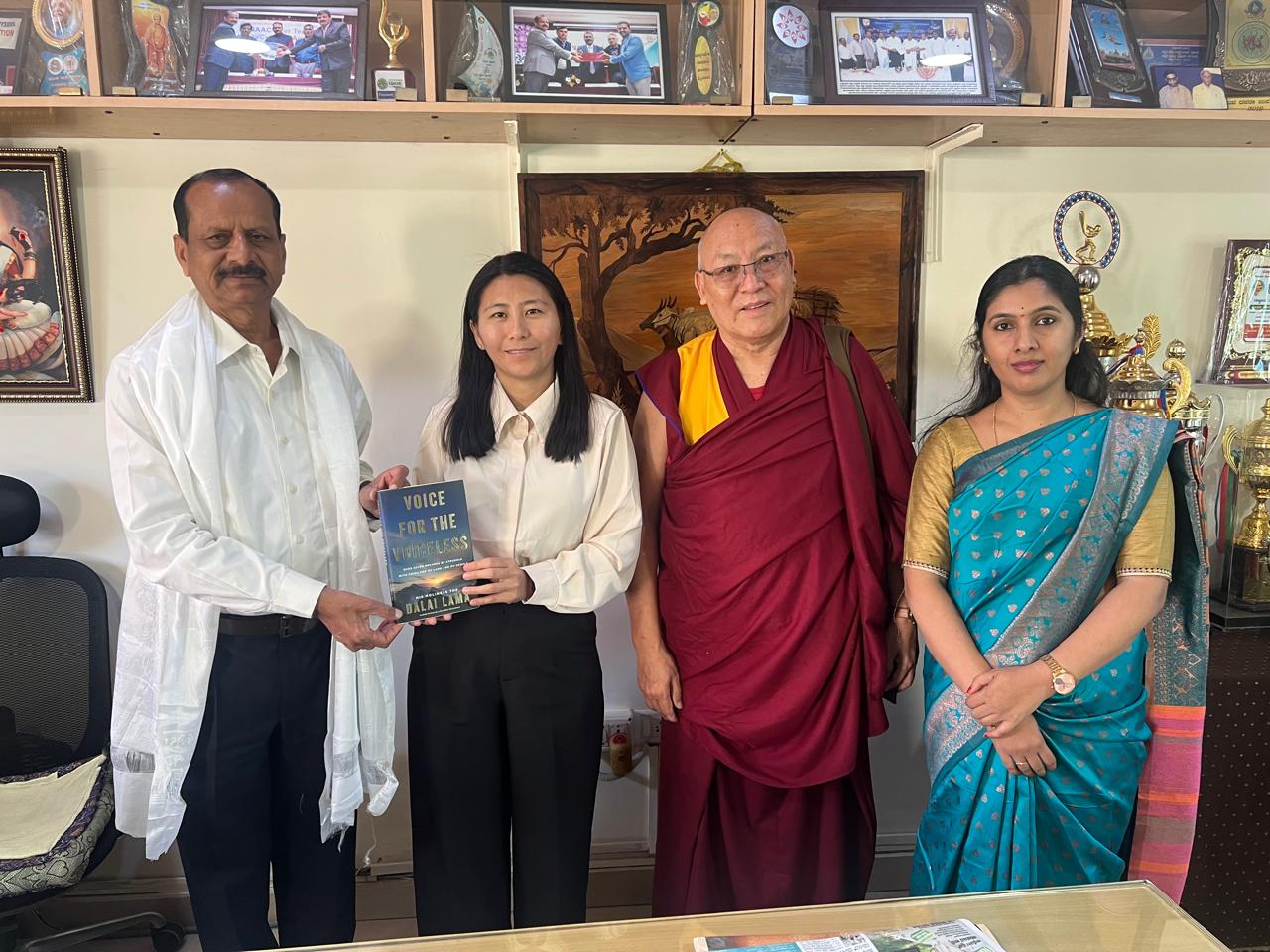
Four Principal Commitments of the Dalai Lama Discussed at Vidyavardhaka First Grade College

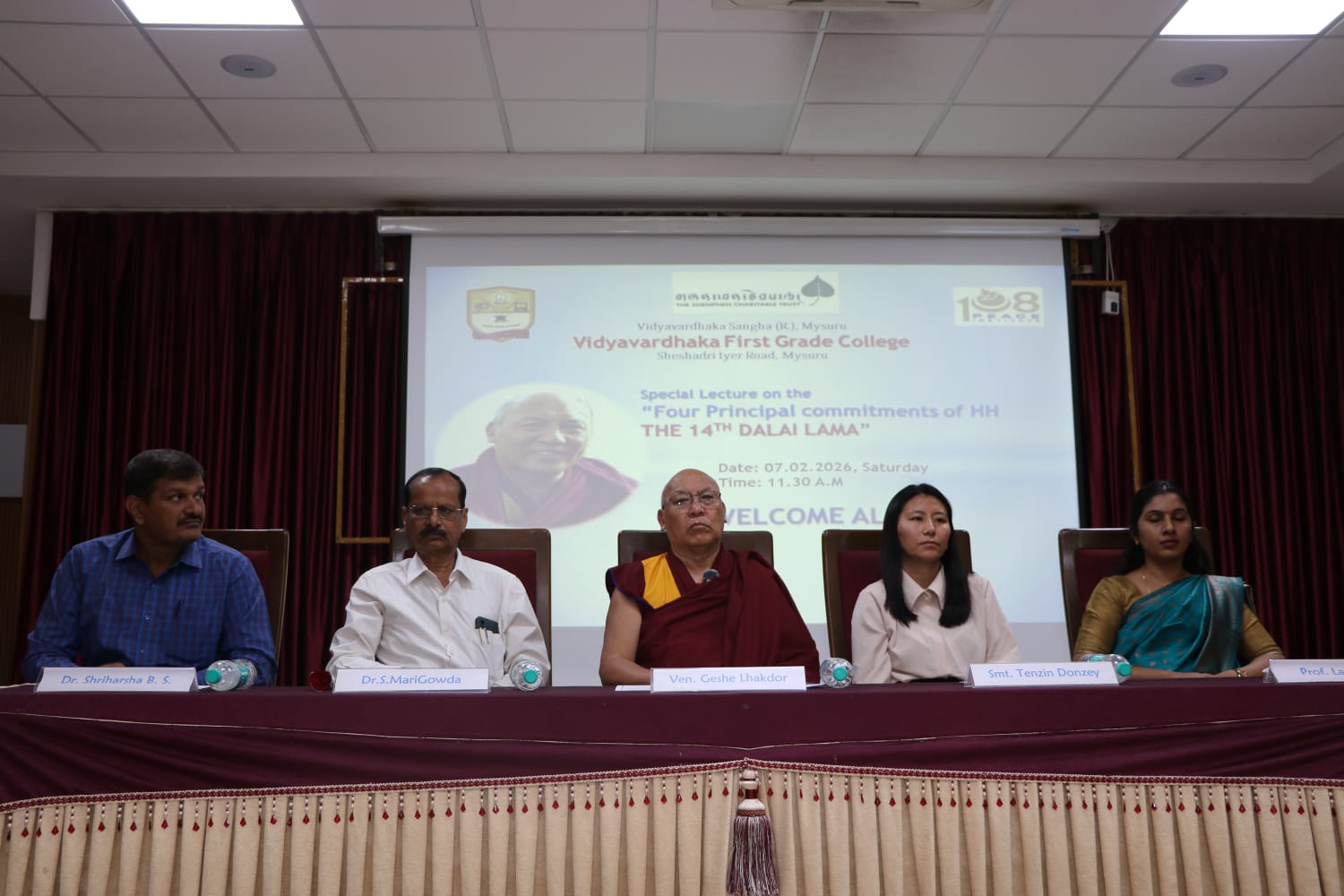
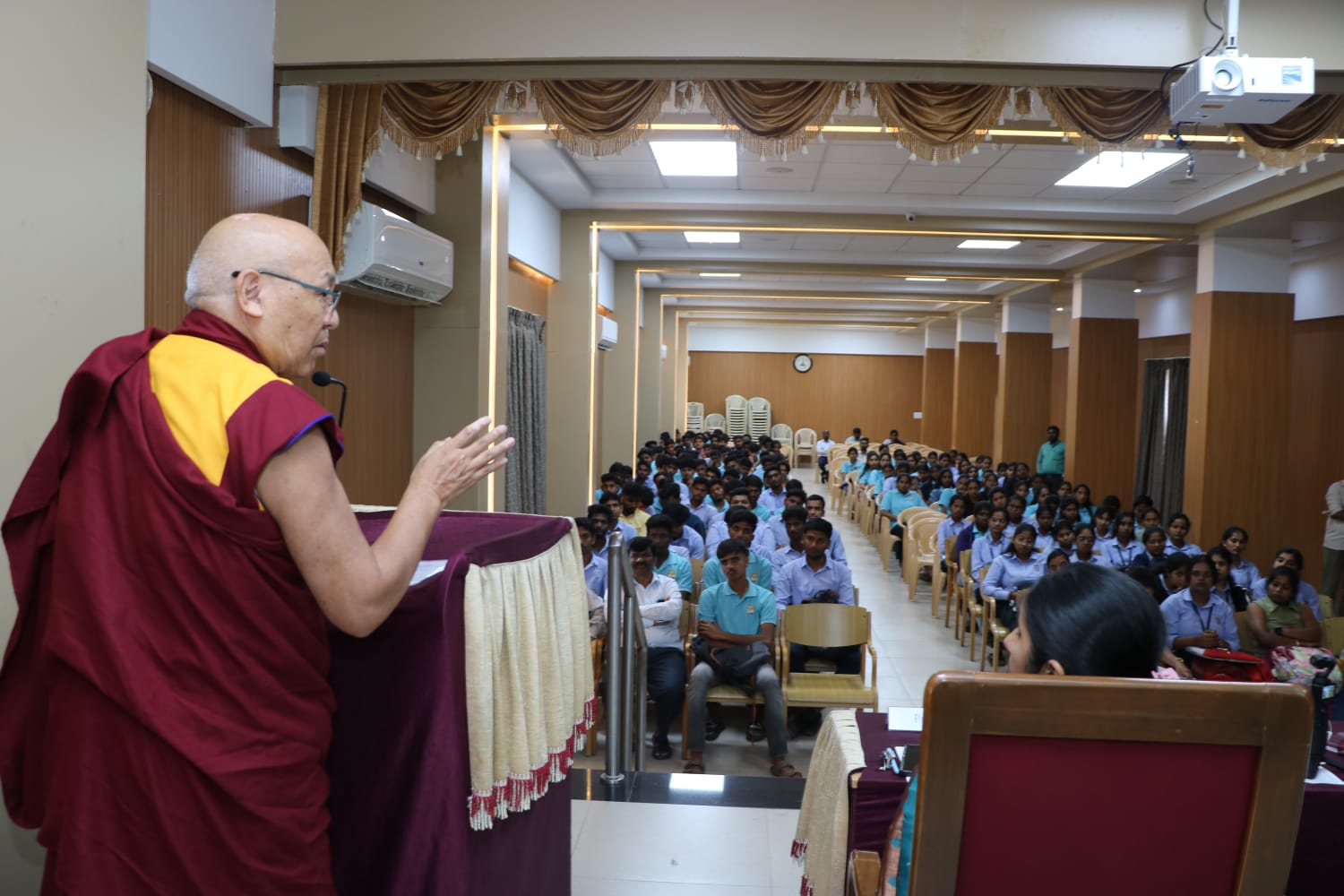
February 7, 2026: The 108 Peace Institute, in collaboration with Vidyavardhaka First Grade College, Mysore, and the Shenphen Charitable Trust, Mysore, organized a lecture session titled “Four Principal Commitments of His Holiness the 14th Dalai Lama” featuring Venerable Geshe Lhakdor, a distinguished Tibetan Buddhist scholar and Director of the Library of Tibetan Works and Archives.

Geshe Lhakdor began the talk by reflecting on the source of long-lasting happiness. He emphasized that His Holiness the 14th Dalai Lama, upholds several core commitments, the first of which is the preservation and promotion of universal human values such as loving-kindness, compassion, wisdom, patience, and a sense of responsibility.

He explained that every human being seeks happiness and wishes to avoid suffering. Since all people are interconnected and interdependent, nurturing human values becomes essential for a harmonious society. In this context, he stressed that education should not be limited to reading, writing, and obtaining certificates. Instead, true education should focus on human flourishing, teaching individuals how to live happily with others and avoid feelings of depression and loneliness. He highlighted the importance of cultivating a compassionate mind and maintaining a healthy inner way of thinking. In this regard, Geshe la, reiterated the importance of adopting the Social, Ethical, and Emotional Learning (SEE) curriculum introduced by His Holiness the Dalai Lama in schools. 

Geshe la also spoke about His Holiness’s second commitment: the promotion of interreligious harmony. Drawing an analogy with medicine, he explained that one cannot declare a single medicine as the best, since different illnesses require different treatments. A medicine may be expensive, but if it does not cure the disease, it is of no use. Similarly, he emphasized that individuals have different mental dispositions and spiritual inclinations, therefore follow different religions according to their interest. Therefore, it is not appropriate to claim that one religion is superior to others. Conflicts often arise when people fight in the name of religion. 

Geshe la further noted that His Holiness, being Tibetan, also feels a responsibility to preserve Tibetan culture, language, and environment. He stated that Tibet’s rich cultural and spiritual heritage faces serious challenges due to the illegal occupation by the Chinese Communist Party. Historically, Tibet was an independent and peaceful nation that shared a border with India, and there was little need for military presence along the frontier. However, following the Chinese invasion, thousands of troops now guard the border between India and Tibet. According to Geshe, both Tibet and India have been affected by this situation.

Finally, he spoke about His Holiness’s fourth commitment, the preservation of the Nalanda tradition, the ancient Indian tradition of scholarship and philosophical inquiry. He encouraged students to preserve India’s culture, traditions, and languages while learning from other cultures. While Western knowledge and ideas can be valuable, he cautioned against what he described as “westoxication,” urging students not to forget India’s rich civilizational heritage. He emphasized that India’s long tradition of training the mind through logic, reasoning, and psychology has the potential to make meaningful contributions to the world.

The lecture concluded with an interactive question-and-answer session. Around 200 students and faculty members attended the event.


partnership requests

Career and internship

General Inquiries

Tsering Youdon

Program Manager

Tsering Youdon is the Program Manager at 108 Peace Institute. She has 6 years of experience as a project officer and program coordinator in the Central Tibetan Administration’s Nepal branch. Her expertise includes planning, designing, and monitoring projects and supporting the capacity building of local organizations and individuals. Tsering is an MBA graduate from Rochester Institute of Technology (RIT) in New York.

Tenzin Donzey

Program Manager

Tenzin Donzey is a Program Manager at the 108 Peace Institute. She has served in the Department of Information and International Relations (DIIR), Central Tibetan Administration (CTA) as a Project Officer and Tibet Support Groups’ Liaison Officer. Tenzin has extensive experience in planning, designing, and managing programs. She is a recipient of the Tibetan Scholarship Program under which she obtained an MBA from Rochester Institute of Technology (RIT), New York.

Dr Lobsang Sangay

Founder and President

Lobsang Sangay is a Senior Visiting Fellow at East Asian Legal Studies Program, Harvard Law School. He was a democratically elected Sikyong (President) of the Central Tibetan Administration and served two terms (2011-21). Lobsang completed his BA and LLB from Delhi University. He did his LLM ’95 and SJD ‘04 from Harvard Law School and received the Yong K. Kim’ 95 Memorial Prize for excellence in dissertation and contributions to the understanding of East Asia at the Harvard Law School. While at Harvard, akin to track III, he organized seven rounds of meetings/conferences between Tibetan, Western, and Chinese scholars, most notably, the first-ever meeting between HH the Dalai Lama and Chinese scholars and students.

སྤྱིར་བཏང་གི་འདྲི་རྩད།

ལས་ཀ་དང་ཉམས་གསོག

མཉམ་ལས་ཀྱི་རེ་འདུན།

Lobsang Dakpa

Operations Director

Lobsang Dakpa currently serves as the Operations Director of the 108 Peace Institute. He was a democratically elected Member of the Tibetan Parliament-in-Exile from 2016 to 2021. Lobsang holds a BA and LLB, having studied at the National Law School of India University in Bengaluru and JSS Law College in Mysuru. He also earned his LLM from Christ University, Bengaluru. From 2015 to 2016, he worked as a senior Chinese-language reporter for Voice of Tibet. He is a founding member of the Tibetan Legal Association (TLA), where he served as General Secretary from 2013 to 2016 and was later elected as President, serving from 2016 to 2022. Throughout his career, Lobsang has provided legal awareness and education to thousands of Tibetans and non-Tibetans across settlements, monasteries, and schools. He has also offered free legal assistance to many individuals in need. During his term in Parliament, he was invited to participate in numerous national and international conferences, representing the Tibetan community and advocating for justice and human rights.

洛桑扎巴

运营总管

洛桑扎巴目前担任108和平研究院的运营总监。他曾于2016年至2021年间,作为民选代表在西藏人民议会任职。 洛桑拥有文学学士(BA)和法学学士(LLB)学位,曾就读于印度班加罗尔国家法学院(National Law School of India University)和迈索尔JSS法学院(JSS Law College)。他还在班加罗尔基督大学(Christ University)获得了法学硕士(LLM)学位。 2015年至2016年期间,他曾担任“西藏之声”电台的资深中文记者。他是西藏法律协会(Tibetan Legal Association, TLA)的创始成员之一,并于2013年至2016年担任该协会的秘书长,随后于2016年至2022年担任会长。 在其职业生涯中,洛桑致力于为西藏定居点、寺院和学校的成千上万名藏人及非藏人提供法律知识普及和教育。他还为许多有需要的人士免费提供法律援助。 在其议员任期内,他受邀参加了众多国内外会议,代表藏人社区发声,积极倡导正义与人权。

བློ་བཟང་གྲགས་པ།

ལག་བསྟར་སྤྱི་ཁྱབ་འགན་འཛིན།

བློ་བཟང་གྲགས་པ་ནི་༡༠༨ཞི་བདེ་ལྟེ་གནས་ཀྱི་ལག་བསྟར་འགན་འཛིན་ཡིན།ཕྱི་ལོ་༢༠༡༦ནས་༢༠༢༡དབར་ཁོང་གིས་བོད་མི་མང་སྤྱི་འཐུས་ཀྱི་ཕྱག་ལས་གནང་།ཁྲིམས་ལུགས་མཐོ་སློབ་ National Law school of India University, Bangalore དང་Mysore JSS Law School བརྒྱུདཁོང་ཉིད་་ཁྲིམས་ལུགས་རབ་འབྱམས་པ་ (LL.B) སློབ་མཐར་སོན། ཕྱི་ལོ་ ༢༠༡༤ ལོར་རྒྱ་གར་ཁྲིམས་ལུགས་མཐོ་སློབ་Christ Law School, Bangalore ནས་ཁྲིམས་ལུགས་གཙུག་ལག་རབ་འབྱམས་པ (LL.M) མཐར་ཕྱིན་པ་གནང་པ་མ་ཟད།ཁོང་ནི་བོད་མིའི་ཁྲིམས་ལུགས་རིག་པ་བའི་ཚོགས་པ་གསར་འཛུགས་གནང་མཁན་ཁོངས་ཀྱི་མི་སྣ་ཞིག་ཡིན་པ་དང་།ཕྱི་ལོ་༢༠༡༣ནས་༢༠༡༦བར་ཚོགས་པ་དེའི་སྤྱི་ཁྱབ་དྲུང་ཆེའི་ཕྱག་ལས་གནང་པ་དང་།ཕྱི་ལོ་༢༠༡༥ནས་༢༠༡༦དབར་ལོ་གཅིག་རིང་ནོར་ཝེ་བོད་ཀྱི་རླུང་འཕྲིན་ཁང་གི་རྒྱ་སྐད་གསར་འགོད་པ་རྒན་པའི་ཕྱག་ལས་གནང་ཡོད།ཕྱི་ལོ་༢༠༡༦ནས་༢༠༢༢དབར་བོད་མིའི་ཁྲིམས་ལུགས་རིག་པ་བའི་ཚོགས་པའི་ཚོགས་གཙོའི་ཕྱག་ལས་གནང་པ་རེད།དུས་ཡུན་དེ་དག་གི་རིང་།ཁོང་གིས་བཙན་བྱོལ་བོད་མིའི་དགོན་སྡེ་ཁག་དང་སློབ་གྲྭ་ཁག།གཞིས་ཆགས་ཁག་ཏུ་བསྐྱོད་ནས་བོད་མི་ཁྲི་སྟོང་མང་པོ་ལ་ཁྲིམས་ལུགས་ཀྱི་གོ་རྟོགས་སྤེལ་པ་མ་ཚད།ཁྲིམས་དོན་གྱི་དཀའ་ངལ་འཕྲད་པའི་བོད་མི་རྒྱ་ཕྲག་མང་པོ་ལ་ཕྱག་རོགས་གནང་ཡོད།ཁོང་གིས་བོད་མི་མང་སྤྱི་འཐུས་ཀྱི་ཕྱག་ལས་གནང་ཡུན་རིང་།རྒྱལ་ནང་དང་རྒྱལ་སྤྱིའི་ཚོགས་སྡེ་འདྲ་མིན་ཀྱིས་གདན་ཞུས་གནང་ཏེ་བརྗོད་གཞི་འདྲ་མིན་ཐོག་ཚོགས་འདུ་ཆེ་ཆུང་མང་པོ་ལ་ཆ་ཤས་གནང་ཡོད་པ་རེད།