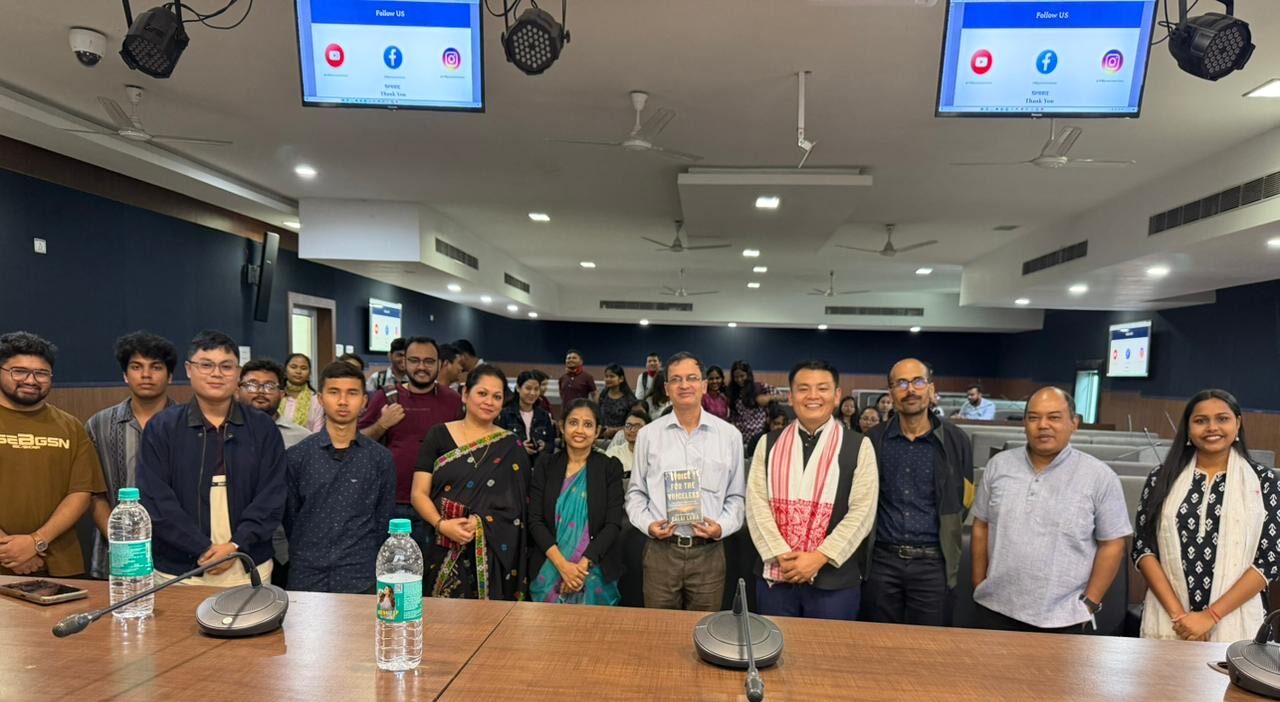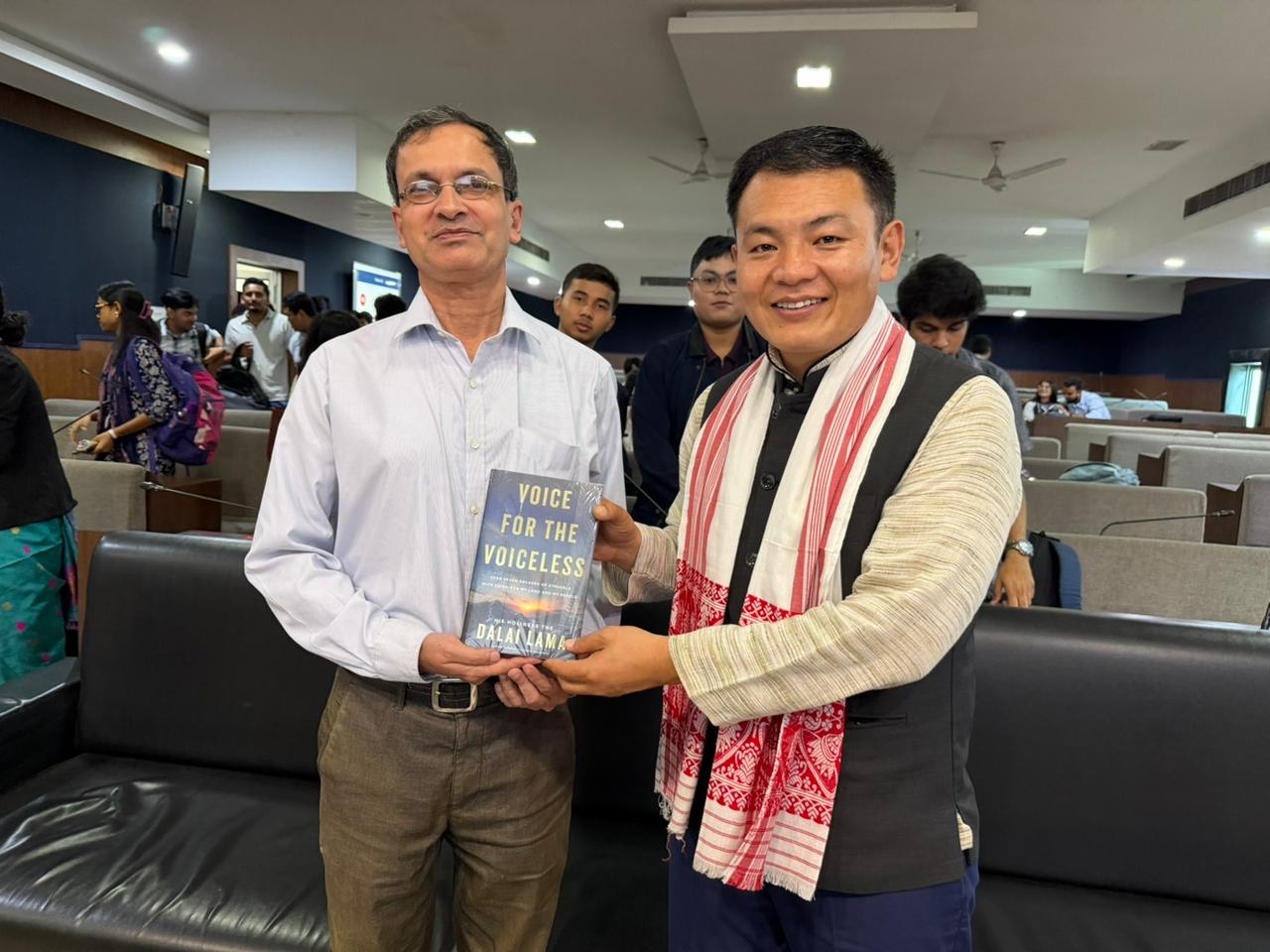
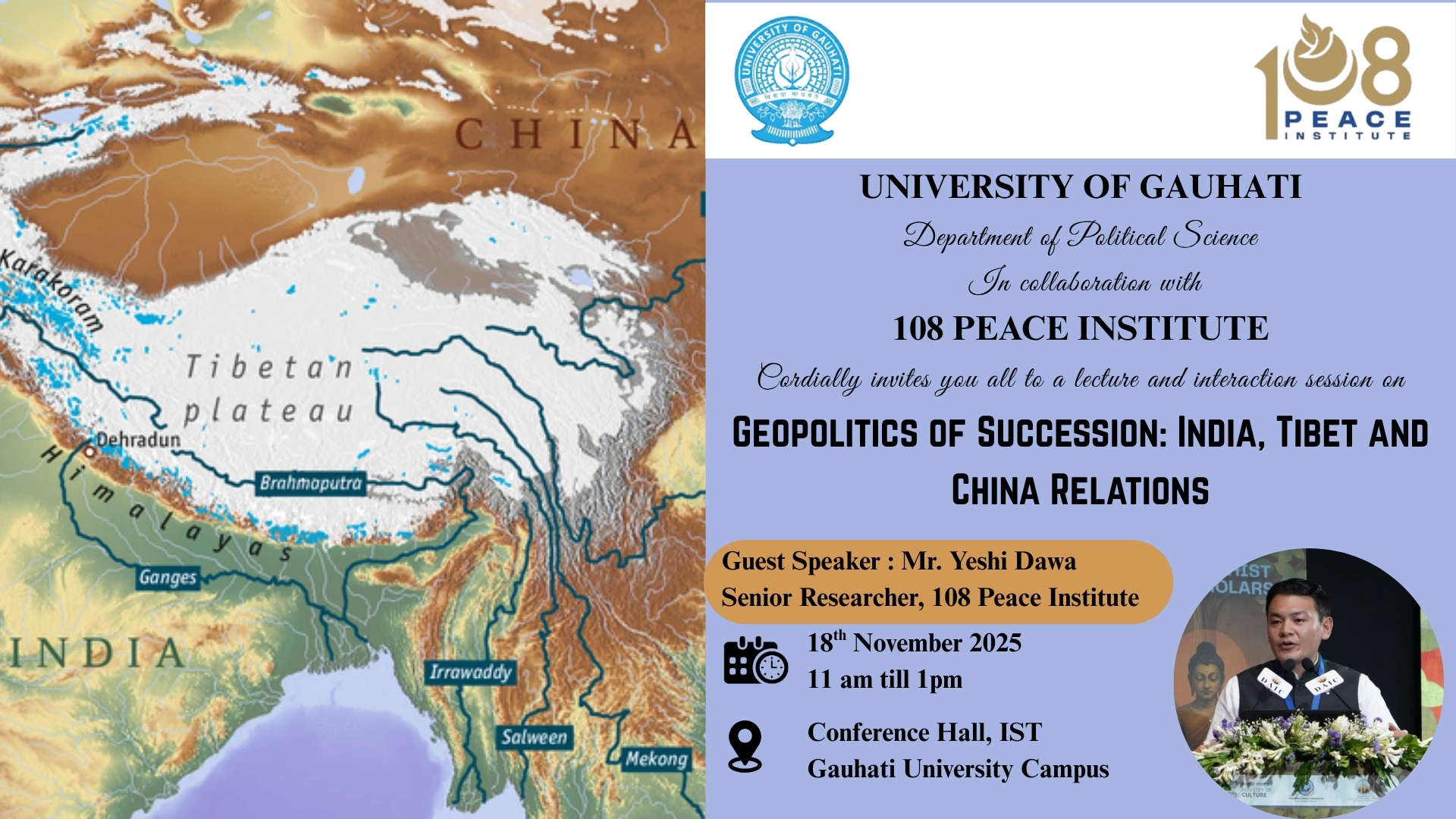
18th November 2025: The 108 Peace Institute, in collaboration with the Department of Political Science, University of Gauhati, Assam, hosted a lecture and interactive session on “Geopolitics of Succession: India, Tibet, and China Relations.” The talk was delivered by Mr. Yeshi Dawa, Senior Researcher at the Institute.
Mr. Yeshi outlined the significance of His Holiness the 14th Dalai Lama’s July 2025 announcement affirming the continuation of the Dalai Lama institution. He noted that His Holiness intends to leave clear written guidance for identifying his successor and has entrusted the Gaden Phodrang Trust with this responsibility. In his latest book, Voice for the Voiceless, his holiness mentions being born in a free country, outside China, said the speaker.
Addressing China’s attempts to control Tibetan reincarnation traditions, the speaker critiqued the Chinese Communist Party’s use of Order No. 5, misuse of the Golden Urn system, and ongoing suppression of Tibetan religious freedom. He highlighted the case of the disappeared Panchen Lama and the political grooming of the Chinese-appointed Panchen Lama as examples of Beijing’s efforts to influence Tibetan Buddhism.
The speaker stressed that the succession of the Dalai Lama carries major geopolitical implications, particularly for India’s Himalayan regions, where Tibetan Buddhism is widely practised. A Beijing-appointed Dalai Lama, he warned, could undermine India’s border stability, cultural ties, and moral influence.
He further emphasised the global implications of China’s involvement in the succession. With the Dalai Lama revered by millions worldwide and recognised as a leading voice for peace and compassion, political interference in the reincarnation process could influence Buddhist communities across Asia and the nearly 300 million Buddhists globally. Such a development, Mr. Yeshi noted, risks politicising a spiritual tradition and could shape international alignments, regional stability, and global peace efforts. He also drew attention to China’s construction of the world’s largest hydropower dam on the Brahmaputra, describing it as a potential strategic pressure point for India.
The lecture not only deepened participants’ understanding of the geopolitical stakes but also highlighted the urgent need for continued scholarship and dialogue on Tibet-related issues in academic spaces. Faculty members expressed hope that such engagements would inspire students to undertake further research on peace, security, and regional stability.
The session, attended by more than 85 students and faculty, concluded with a lively Q&A marked by thoughtful engagement.